
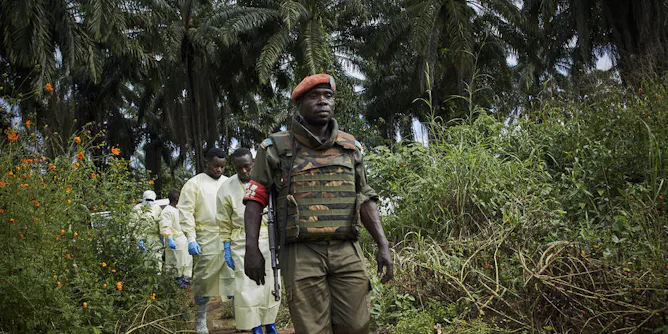
Local communities are wary of the sudden arrival of outsiders and of their interest in regions where there’s been violence for years
Articles on Ebola
Displaying 121 - 140 of 365 articles
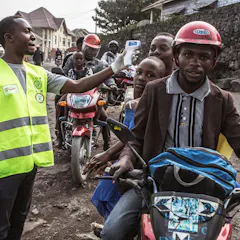
Epidemics can have massive social ramifications where prohibitions are imposed on travel, socio-cultural events and schooling.
Timing is everything when it comes to making a decision about declaring a disease outbreak a public health emergency of international concern.
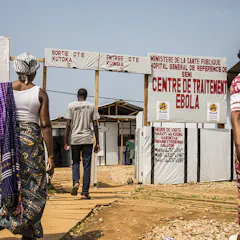
CC BY-NC-ND6.47 MB (download)
The Ebola vaccine alone is not enough to deal with the outbreak in the DRC.
CC BY-NC-ND5.04 MB (download)
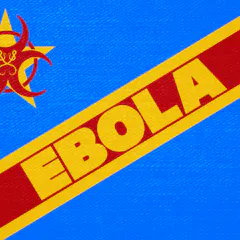
The current Ebola outbreak in the DRC is incredibly difficult to manage.

The DRC president’s direct involvement can rally people who have previously doubted the reality of the outbreak.
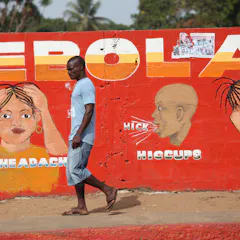
Do African decision-makers and leaders approach crises differently from counterparts elsewhere in the world?
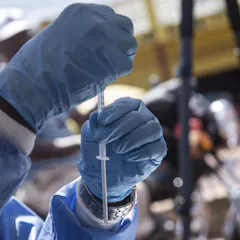
Uganda is the testing ground for a new vaccine that could work on more strains of the Ebola virus and other haemorrhagic fevers.
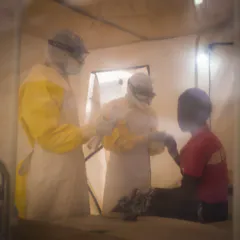
CC BY-NC-ND3.74 MB (download)
What happens when you have Ebola?
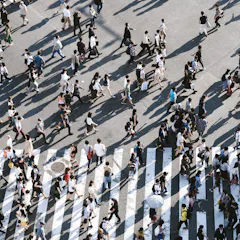
When a certain percentage of a population has been vaccinated, it prevents an infectious disease from spreading. But that threshold depends on the disease.

Applied Epidemiological Modelling has enormous potential to improve how decisions are made about public health in African countries.
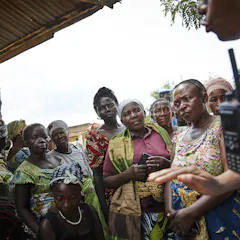
A review of research on both the Ebola and Zika outbreaks, found less than 1% of published research discussed gender issues.
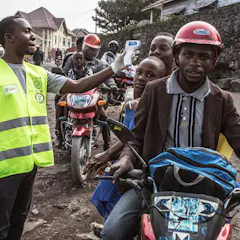
Ebola has now now spread to Goma – a city of 2m people.
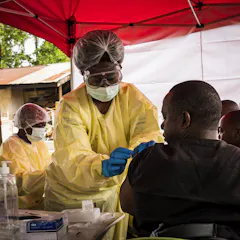
The Ebola outbreak in the DRC has been declared a Public Health Emergency of International Concern. What does this mean for the outbreak response?
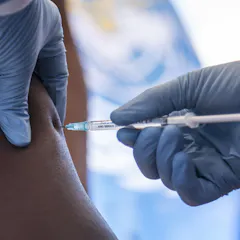
The threat posed by measles is on the rise again in a number of countries in the world. One of them is the Democratic Republic of the Congo.

Sharing data openly across regions and organisations can help to accelerate preparedness and responses to public health emergencies.
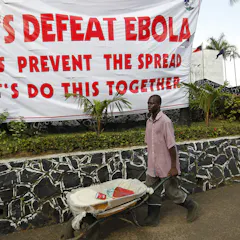
A proper understanding of community dynamics and local beliefs can inform medical interventions that are capable of establishing positive and productive relations with local communities.
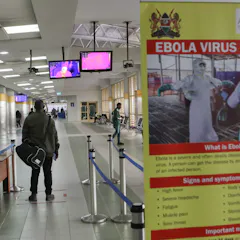
Kenya appears prepared for Ebola outbreaks, but a lot more can be done.
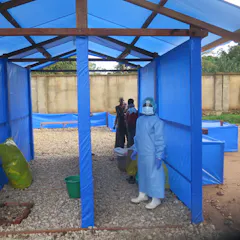
Borders are porous between North Kivu province of the DRC and neighbouring countries, so the potential for spread is highly likely.
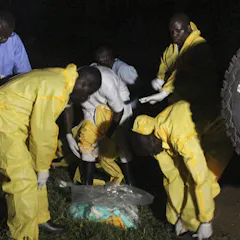
Ebola is difficult to contain because of human social and behavioural factors. But it can be if 100% of the infected people’s contacts are identified and monitored.
Top contributors
-

Lecturer in Virology, Queen's University Belfast
-
Professorial Fellow, University of Canberra
-
Professor in the faculty of Medicine, Mbarara University of Science and Technology
-
Part-time lecturer at the Global Health & Social Medicine, Harvard University, and Lecturer at the School of Public Health, College of Health Sciences, University of Liberia
-
Professor of Global Biosecurity, NHMRC L3 Research Fellow, Head, Biosecurity Program, Kirby Institute, UNSW
-
Lecturer, Biomedical and Life Sciences, Lancaster University
-
Principal Medical Scientist (PhD MPH), National Institute for Communicable Diseases
-
Senior lecturer, Njala University
-
Professor of Infectious Diseases, Monash University
-
Principal Scientist and Canada Research Chair in Zoonotic Virus and Animal Reservoirs at the Vaccine and Infectious Disease Organization and Co-Lead of One Health at the University of Saskatchewan, University of Saskatchewan
-
Senior Lecturer in Communicable Disease Epidemiology, University of Sydney
-
Research Scientist, African Population and Health Research Center
-
Head of the Center for Emerging and Zoonotic Diseases, National Institute for Communicable Diseases
-
Professor of Immunology and Infection, Edinburgh Napier University
-
Associate professor, University of Sydney