
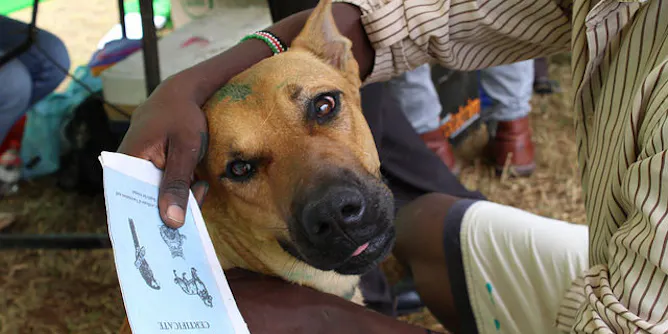
By tackling local threats and controlling existing diseases, countries are able to build the capacity needed to deal with future emerging disease threats.
Articles on Ebola
Displaying 181 - 200 of 365 articles

Outbreaks of foot and mouth, bluetongue and human Ebola can now be controlled with greater precision and speed.
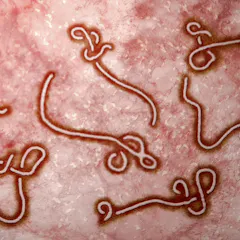
QuRapID can find Ebola in a drop of blood in just over an hour.
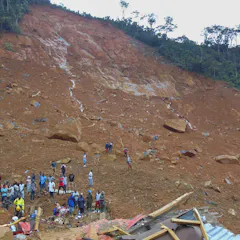
Mass graves are being dug for hundreds of those killed in a nation once more gripped by grief.

Massive online DNA databases can be used as a resource to discover viruses – even if the data had not been explicitly collected for that purpose.

Cold War, dictators and cover-ups – Ebola’s secret history.
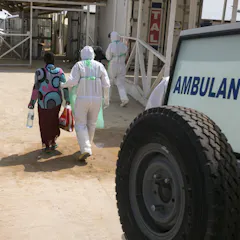
When an Ebola outbreak is detected, surveillance, community engagement , laboratory services and tracing infected persons should be activated to prevent rapid spread of the disease.
Almost one-third of human disease requires surgery, but most of those people who need surgery are not getting it. Here’s why we need to make surgery more accessible.
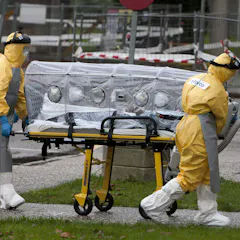
Professor Peter Doherty on infectious disease pandemics
The Conversation, CC BY-ND47.6 MB (download)
William Isdale speaks with the University of Melbourne's Professor Peter Doherty about infectious disease pandemics.
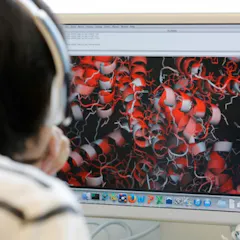
This antivirus software protects health, not computers. Researchers are beginning to combat deadly infections using computer-generated antiviral proteins – a valuable tool to fight a future pandemic.
African leaders need to up their health allocations to help the new World Health Organisation Director-General meet his health care targets for the continent.
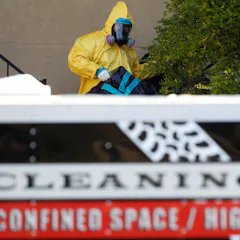
President Trump wants to slash global health funding at a time when more investment is needed, not less. This spending can protect Americans – as well as foreigners – from deadly diseases.
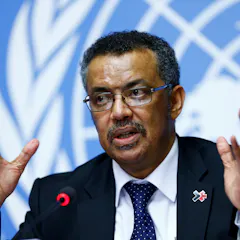
The new director-general of the World Health Organisation has set universal health coverage as a priority. There are several ways to make headway with this goal.

In the last decade, the United States has been the leading funder for preparing and responding to global infectious outbreaks, and the delivery of basic health care to low-income countries.
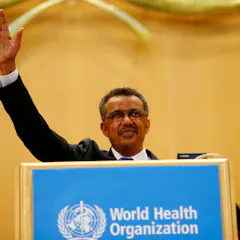
There are a number of challenges that the World Health Organisation’s new leader, Ethiopian-born Tedros Ghebreyesus, will have to navigate during his tenure.
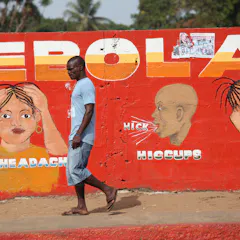
The Ebola virus is known to occur in the Democratic Republic of Congo and outbreaks are not entirely unexpected. But health authorities must take swift action to contain the outbreak.

A better understanding of science among ordinary people validates the vast amounts of public funds spent on scientific research.
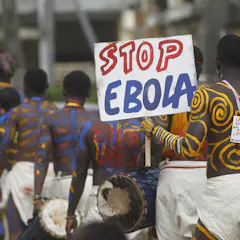
The power to overcoming Ebola was in public awareness by performing simple yet basic infection prevention and control measures like washing hands, isolation and reporting suspected cases.

Primate populations are declining around the world. The great apes are in danger of disappearing, and that bears a great risk for humanity itself.

Antibiotic resistance is a major health threat that causes almost 700,000 deaths a year, and its toll is expected to grow. Here are some things you can do to offer your own resistance.
Top contributors
-

Lecturer in Virology, Queen's University Belfast
-
Professorial Fellow, University of Canberra
-
Professor in the faculty of Medicine, Mbarara University of Science and Technology
-
Part-time lecturer at the Global Health & Social Medicine, Harvard University, and Lecturer at the School of Public Health, College of Health Sciences, University of Liberia
-
Professor of Global Biosecurity, NHMRC L3 Research Fellow, Head, Biosecurity Program, Kirby Institute, UNSW
-
Lecturer, Biomedical and Life Sciences, Lancaster University
-
Principal Medical Scientist (PhD MPH), National Institute for Communicable Diseases
-
Senior lecturer, Njala University
-
Professor of Infectious Diseases, Monash University
-
Principal Scientist and Canada Research Chair in Zoonotic Virus and Animal Reservoirs at the Vaccine and Infectious Disease Organization and Co-Lead of One Health at the University of Saskatchewan, University of Saskatchewan
-
Senior Lecturer in Communicable Disease Epidemiology, University of Sydney
-
Research Scientist, African Population and Health Research Center
-
Head of the Center for Emerging and Zoonotic Diseases, National Institute for Communicable Diseases
-
Professor of Immunology and Infection, Edinburgh Napier University
-
Associate professor, University of Sydney