
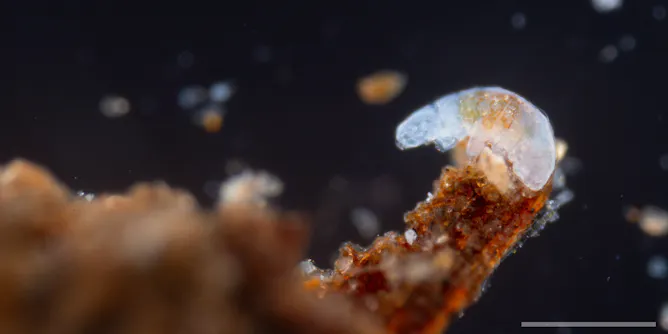
Tardigrades make a unique damage suppressor protein that researchers are working to harness for medicine, space, agriculture, data storage and more.
Articles on DNA repair
Displaying all articles
Researchers discovered a previously unknown function of RNA, potentially opening the door to new ways to treat cancer and neurodegenerative diseases.
Aging is a culmination of factors spanning from your cells to your environment. A number of interconnected processes determine how quickly your body is able to repair and recover from damage.

Circadian clocks regulate the timing of hundreds of processes in the cell, suggesting that matching medications with your biological clock could improve the outcome
The discovery made by three Nobel Prize winning chemists is one of biology’s most important safeguards against imperfection in DNA.
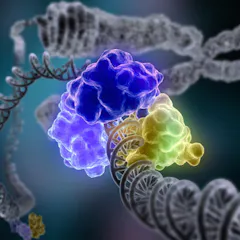
Cells must repair the thousands of bits of DNA damage they incur every day. These cellular mechanisms fend off cancerous tumors, and cancer researchers are working to harness their power.
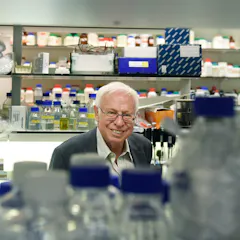
The recipients of this year’s Nobel Prize for Chemistry showed that DNA is far from static. Rather, it is bombarded by damaging forces, but our bodies know how to repair these precious strands.
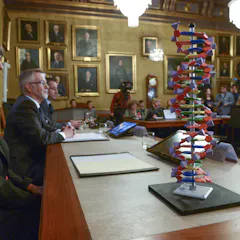
Without natural DNA repair processes we wouldn’t be here. This year’s Nobel Prize winners in Chemistry helped us crack how it all works.
Top contributors
-

Director, Institute for Cellular and Molecular Medicine & SAMRC Extramural Unit for Stem Cell Research & Therapy, University of Pretoria
-
Group Leader, Signal Transduction Laboratory, Queensland Institute of Medical Research
-
Professor of Biochemistry and Biophysics , University of North Carolina at Chapel Hill
-
QIMR Berghofer
-
Postdoctoral Researcher in Biochemistry and Biophysics, University of North Carolina at Chapel Hill
-
Assistant Professor of Pharmacology and Medicine, Boston University
-
Molecular Imaging Post-Doctoral Research Assistant, University of Hull
-
Research scientist, QIMR Berghofer
-
Assistant Professor in Molecular, Cellular, and Developmental Biology, University of Michigan
-
Professor of Biological Sciences, Georgia Institute of Technology
-
Graduate Research Assistant, University of Iowa