

We cannot fence the whole of Australia. Therefore, we need to know which species are most at risk from cats.
Articles on DNA analysis
Displaying 1 - 20 of 23 articles

Researchers have revealed the identities of six sailors and shed new light on the expedition that went missing more than 170 years ago.

Forensic genetics can help us trace the ancestral source of any wine grape – and may lead to bioengineered wines in the future.

The first detailed study of Australian tropical oyster reefs reveals the main species, yet to be named, is related to the Sydney rock oyster – and is just as delicious.
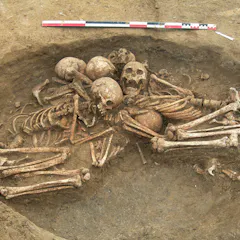
A new study reveals the final stage in the formation of the European genome, which is still present in many people today.
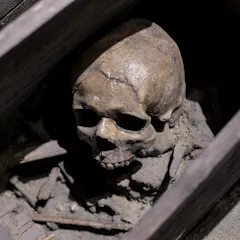
DNA volunteered by citizens worldwide is helping to restore the identity of human remains found across Australia.

Maui officials have asked relatives to provide DNA samples to help identify victims of the Lahaina wildfires. Time and exposure to the elements, however, can make DNA retrieval from remains difficult.

Beethoven was afflicted with health conditions for much of his adult life, and wished for their cause to be discovered and made public.

45,000 years ago, people first started arriving in what’s known as Europe today. We thought a worsening ice age made them disappear – but it seems some lineages survived.

Commercial tests often provide inconsistent results. Here are six questions to ask yourself before you pay for one.

Only half of New Zealand’s roughly 4,000 mollusc species have been seen alive. Now geneticists can decode DNA from shells in museum collections to trace the life histories of extinct or rare species.
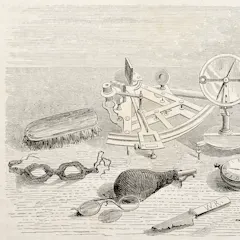
129 officers and crew died during the 1845 Franklin Northwest Passage expedition. DNA analysis from their remains of members can reveal the identity of the men who perished during the journey.

Research into contextual bias needs to be more rigorous so recommendations can be made about its effect on forensic analysis.
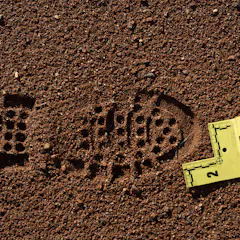
The debate about the reliability of forensic evidence reflects a lack of understanding of how forensic science is best used in the justice system, rather than a problem with forensic science itself.
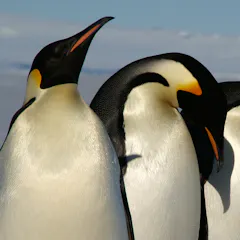
Genetic information extracted from fossil bones of two extinct penguin species shows the geological emergence of islands plays a role in penguin evolution.

Despite new findings, the deaths can’t be blamed on enteric fever alone.

Treating video like a mutating gene could improve surveillance software.
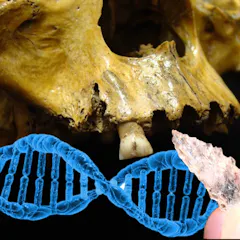
Archaeology is not only about stones and bones: it is mainly about the people of the past. DNA is one way to get from the stones and the bones to the people and their stories.

Converting a DNA sequence into an audio could help us learn something useful about it, like where mutations occur.

We live in a probabilistic world. The courts need to catch up – and start training juries in statistics.
Top contributors
-

Adjunct Assistant Professor, Anthropology, University of Waterloo
-
Matthew Flinders Professor of Biodiversity Genomics, Flinders University
-
Academic in Molecular Ecology, Flinders University
-
Associate Professor in Marine Biology, Flinders University
-
Senior Lecturer in Molecular Biology, Western Sydney University
-
Director of the Institute of Evolutionary Medicine, University of Zurich
-
Professor of Computer Science, Kingston University
-
Postdoctoral Fellow Molecular Ecology, Flinders University
-
Professor with Research Focus in Stone Age Archaeology, Palaeo-Research Institute, University of Johannesburg
-
Associate Professor of Quantitative Psychology, University of Montana
-
Professor of Law, City University of Hong Kong
-
Honorary Senior Lecturer in Bioanthropology, Australian National University
-
Directeur de Recherche CNRS, co-responsable d'équipe de recherche, Institut Jacques Monod, Université Paris Cité
-
Distinguished Professor of Forensic Science, University of Technology Sydney
-
Lecturer in International History, University of Sheffield