

It’s not just fitness trackers – mobile phones can reveal users’ whereabouts too, even with location tracking turned off.
Articles on Digital privacy
Displaying 41 - 60 of 111 articles

Will young Germans remember their history – and will older German embrace the digital future?

What scholars know, are learning and are predicting about the privacy of electronic data, online activity, smartphone use and electronic records.

Should police be able to use cellphone records to track suspects – and law-abiding citizens?

Facebook’s record raises serious questions about whether it can be trusted with our most intimate images.

When smartphone apps get permission to access your location or other activity, they often share that data with other companies that can compile digital profiles on users.
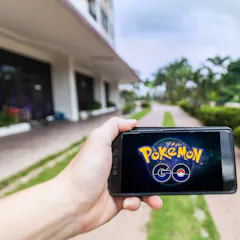
What if someone made your house a site for Pokémon battles?
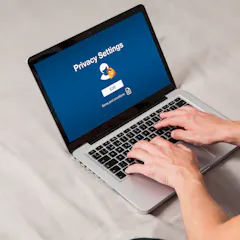
A simple kite mark could let you know that you aren’t signing away your rights when you download a new app.

Apple’s refusal to back down in its fight with the FBI is a sharp reversal from just a few years ago when it was the government urging tech companies to do more to protect consumer privacy.

Schools are collecting more and more data on children. They must make sure they comply with the law.

City dwellers have better access to more information about the people and places around them than ever before, but it has never been more difficult to preserve privacy as a result.
The rush to grant more surveillance powers doesn’t reflect what actually keeps us safe.
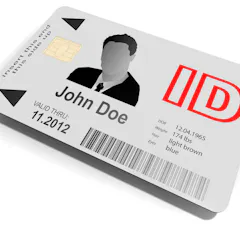
It’s time to bring our digital identity up to date with other developed nations. That might even mean a unified digital identity card with top notch security and privacy protections.
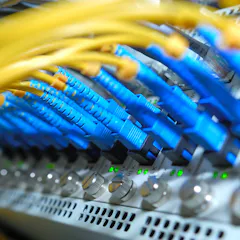
Unwarranted mass surveillance will shift the balance of power in favour of the spies - and that might not be good for us.
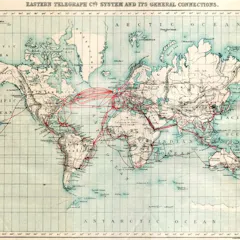
End of Safe Harbour agreement isn’t the end of the world, and it might just mean a far better replacement is on its way.
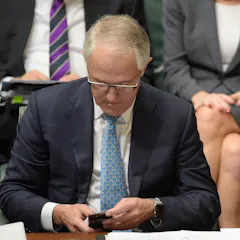
The use of private messaging apps that bypass government IT raise troubling issues for oversight and freedom of information.
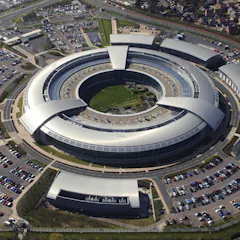
As Wikileaks reveals yet more details of the astonishing extent of GCHQ mass surveillance, where is the proof that bulk data collection even works?

If the Ashley Madison hack was an inside job, then it shows that even strong protection against outside attacks isn’t necessarily enough to prevent a leak of private data.

David Anderson’s report on surveillance isn’t a charter for online privacy but it could create problems for a government set on capturing all our data.

US intelligence agencies can no longer collect and store the telecommunications data of US citizens but other countries are strengthening their efforts.
Top contributors
-

Associate Professor, School of Law, University of Canberra
-
Senior Lecturer, Information Management, Te Herenga Waka — Victoria University of Wellington
-
Professor of Global Politics and Cybersecurity, UCL
-
Head, The Cyber Academy, Edinburgh Napier University
-
Distinguished Professor and C. Ben Dutton Professor of Law, Indiana University
-
Lecturer in Media Studies, Te Herenga Waka — Victoria University of Wellington
-
Professeur de Droit. co-Director of the MSc in Health Management & Data Intelligence. Droit international des affaires, Business and Compliance. Health management, EM Lyon Business School
-
Honorary Lecturer in Sociology, Australian National University
-
Professor in Human Resource Management and Employee Relations, Swinburne University of Technology
-
Professor specialising in Internet law, Bond University
-
Professor of Cybersecurity, Head of School of Computer Science and Informatics, De Montfort University
-
Fellow of the Faculty of Engineering and Information Technology, University of Technology Sydney
-
Associate Professor in Telecommunications Engineering, Swinburne University of Technology
-
Professor, Monash University
-
Senior Lecturer of Media Studies and Digital Media, University of Sussex