

New Zealand is among many countries debating a ban on under-16s having social media accounts. But making digital media literacy education a priority would be a better first step.
Articles on Digital literacy
Displaying 21 - 40 of 71 articles

A social media ban only delays young people’s exposure to these platforms. It does not help them learn how to deal with them.

So much of day to day life is not powered by technology, but what happens if you’ve been behind bars for years? It’s time prisoners better prepared inmates for life once they’ve served their time.

E-textbooks have potential to enhance inclusivity and engagement in engineering education.

Contrary to assumptions that seniors are technologically averse, many older adults now show remarkable agility in navigating digital media.

Many English teachers are thinking seriously about how gaming applies in their classrooms. But opinions are divided about how to approach it.

Youth in a study went from being passive deepfake bystanders to developing a sense of responsibility and readiness to help prevent deepfakes’ spread.

It’s the fourth most popular website in the world, but our new study shows toxic commentary can still thrive on Wikipedia. There’s a lot at stake if too many editors are driven away.
A new report from UNESCO analyzes the many challenges of the growing presence of technology in education and notes 14 per cent of countries have policies that ban mobile phones.

Generative AIs may make up information they serve you, meaning they may potentially spread science misinformation. Here’s how to check the accuracy of what you read in an AI-enhanced media landscape.

Our research in the port city of Makassar, Indonesia has found vocational schools can be the key to training young workers’ digital skills.

Teaching approaches should be rooted in learning objectives or students’ experiences, and these considerations aren’t the same as whether course components are online or in-person.

Classrooms should not be a free-for-all TikTok fest. But we need to support children to learn how to concentrate and function in a digitally-saturated world.

Some finds toys for toddlers based on digital devices a bit confronting. But really they’re just updated versions of traditional toys for make-believe play such as doctor and tradie tool sets.

We found men managed to bounce back quicker after lockdowns ended, in part due to their involvement in sporting and recreational activities.

There are around 201 known factors on which a website is analysed and ranked by Google’s algorithms.

If you don’t understand how your data is being used, and how to manage this, you’re not alone.

Refugee women reported less internet use than men across all online activities, including banking, education, health services and social services.
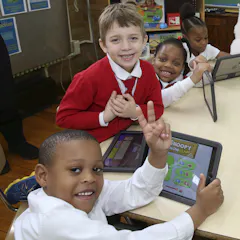
Before leaning to code, children must learn spatial orientation, how to communicate and how to solve problems. These resources and games help teach the foundational knowledge needed for coding.

That “friend of a friend” post you’re thinking about sharing on social media could make you an unwitting accomplice in a disinformation campaign.
Top contributors
-

Researcher, Digital Wellbeing, Western Sydney University
-
Associate Pro-Vice-Chancellor Research Environment and Postgraduate Research, University of Liverpool
-
Associate Professor, Educational Technology, Université Laval
-
Vice Provost for Academic Programs, SUNY Empire State College
-
Professor of Reading and Children’s Development, The Open University
-
Lecturer, University of Southern Queensland
-
Distinguished Librarian, University at Albany, State University of New York
-
Professor of Literacies and Digital Cultures, Australian Catholic University
-
Professor of Education (Innovation in Schooling & Educational Technology), University of Newcastle
-
Professor, School of Education, University of Southern Queensland
-
Research Scientist in Digital Economics, CSIRO
-
Associate Professor in Education & Technology, University of KwaZulu-Natal
-
Lecturer in the School of Education, University of Newcastle
-
Adjunct Senior Lecturer, Applied Ethics and CyberSecurity, Griffith University
-
Assistant Director of the Adult Literacy Research Center, Georgia State University