

AI may assist in the newsroom, but journalism must remain under human editorial control.
Articles on Digital communication
Displaying all articles

Do you love using the laughing-crying emoji? If so, you’re probably a Millennial.

It’s time to retire the email signature and take a hard look at improving our communication efficiency.

A recent update to the Unicode Standard means that Haíɫzaqvḷa can finally be fully written and read on all digital platforms.

A researcher explains developments in using light rather than electrons to transmit information securely and quickly, even over long distances.

Only a small percentage of women in rural areas have access to the Internet, so participation in online activism is limited to urban centres.

The Ukraine war shows how important agile and critical social media use can be. It’s a reminder that our English curriculum in schools is out of touch with our world of digital communication.

Communication breakdowns between doctors and their patients have real-life consequences and can result in poorer health outcomes and sicker patients.

The right to disconnect can be the catalyst an organization needs to review its workplace policies. But what’s really needed is a cultural shift that gives workers more control over how they work.

The creep of digital communications into our entire lives is not as harmless as we think.

Millennials’ favourite 😂 is the latest casualty of gen z’s emoji snobbery.
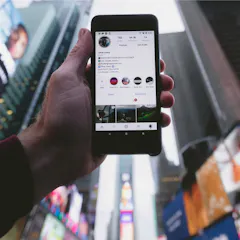
Digital communications could be a force for greater local democracy in urban planning and development, but many councils use the technologies in ways that mirror traditional consultation.

Emoji may be becoming more inclusive, but greater engagement with those that they intend to represent is still needed.

With the rise of digital communication, large greeting card companies have seen revenue declines. However, a smaller, vibrant craft industry in cards has emerged with a new younger customer.

Raising the status of the African languages to that of official languages in South Africa post-1994 led to an explosion of translation and interpreting work in local and foreign languages.

Australia has lagged behind some other countries in its investment in smart cities, but in retrospect that may not have been such a bad thing.

The Oxford Dictionaries’ word of the year is causing a bit of a stir – probably because it’s not a word at all.

Almost 1000 years after their ruler demanded every detail of serfs’ lives, the digital age and mass surveillance are creating a new and undemocratic imbalance between citizens and those with power over them.

Emojis are mainly used to enhance the meaning of words in texts – they won’t replace them altogether.
Top contributors
-

Professor of Linguistics
-
Professor of Urban Resilience and Pro Vice-Chancellor, University of Bristol
-
Professor of Culture and Economy, Loughborough University
-
Research Associate, UCL
-
PhD Researcher, Northumbria University, Newcastle
-
Professor of Urban and Cultural Geography, Western Sydney University
-
Director:Language Centre, Stellenbosch University
-
Associate Professor in Social and Behavioral Sciences, Arizona State University
-
ARC DECRA Senior Research Fellow in Environmental Sociology, RMIT University
-
Professor of General Internal Medicine, University of California, San Francisco
-
Associate Professor, Marketing, Toronto Metropolitan University
-
Professor, Language and Media/Digital Communications, Covenant University
-
Research Fellow in Organisational Psychology, Adelaide University
-
Assistant Professor, Professional Communication, Toronto Metropolitan University
-
Associate Professor of Physics and Optical Sciences, University of Arizona