
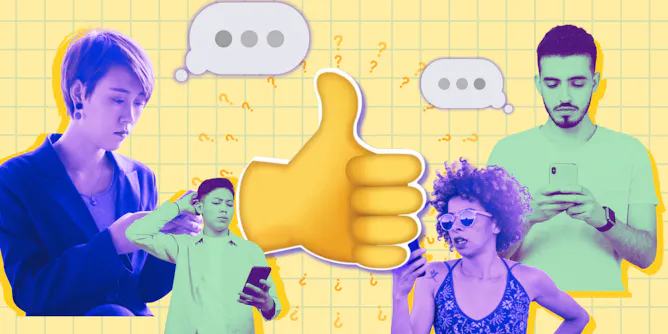
Do you love using the laughing-crying emoji? If so, you’re probably a Millennial.
Articles on Emojis
Displaying all articles

Avoid using the handshake emoji ‘🤝’ if you’re ever unsure. And always keep any business-like arrangements on a more formal footing.

If you’re a parent worried about your child’s unfamiliar online world, a fear-based response is unlikely to work. What is needed is open communication.

Laughter is one of the most ubiquitous and pleasurable things humans do, which is why companies online want to know what we find funny.

Millennials’ favourite 😂 is the latest casualty of gen z’s emoji snobbery.

In recent years, a growing body of academic research has emerged that outlines how emojis can be used in all forms of communication.

In the absence of face-to-face interactions, people are using emojis to help express themselves. New research suggests that emoji use can drive engagement and make content more viral.

Forensic linguists are called as expert witnesses in court cases to provide linguistic analysis of legal documents and other forms of oral and documentary evidence – including emojis.

Emoji may be becoming more inclusive, but greater engagement with those that they intend to represent is still needed.

Emoji add a sense of fun and nuance to digital communications. But where does the law stand when they’re used to suggest violence or threats?

At present the design and certification of new emojis is controlled by a single body.
Emoji provide a living language that is representative and inclusive in ways that words can’t always be. Just be careful if you use the eggplant or peach emoji.

Emoticons reveal subtle clues about your personality – but how do others interpret them?

The extraordinary words that capture the colourful diversity of the English language.
Top contributors
-

PhD Researcher, Northumbria University, Newcastle
-
Senior Lecturer in Psychology, Edge Hill University
-
Scholarly Fellow Academic (Health Education), Flinders University
-
Postdoctoral research fellow, School of Psychology, Australian Catholic University
-
Dean, School of Law, Deakin University
-
Associate Head of Psychology (Knowledge Exchange and Marketing), Edge Hill University
-
Senior Lecturer, Deakin University
-
Associate professor, Marketing, Carleton University
-
Senior Lecturer in Cultural Studies and Media, Macquarie University
-
Senior Lecturer in Comparative Culture, Literature and Translation, University of Sydney
-
Science Communication Researcher, Stellenbosch University
-
Professor of African Language Studies, University of the Western Cape
-
Postdoctoral research fellow (Forensic Linguistics/ Language and Law), University of the Western Cape
-
Associate Professor of Marketing, Saint Mary’s University
-
Senior Lecturer, La Trobe University