

Banning social media bans won’t fix the problem. The issue is the smartphone.
Articles on Digital addiction
Displaying 1 - 20 of 50 articles

There are simple changes you can make right now.

Big tech companies argue their platforms are communication tools not traps, and that addiction is a mischaracterisation of high engagement.

Avoiding boredom means we are denying ourselves access to our whole selves.

While our culture is very different from Shakespeare’s London, his plays — and those by others — still carry the potential to bring people together and help us think deeply about our shared experience.

While social media has the potential to empower storytelling, it can also spread misinformation and lead to brain rot.
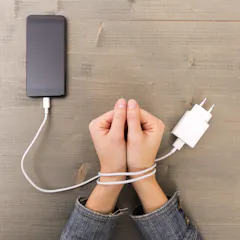
A new study reveals just how digitally dependent most New Zealanders are now. Disconnecting requires conscious effort – and it could even cost you money.

An anthropologist explains how smartphones have gradually replaced our every conversation with communication – a radically different concept.

The world’s largest online dating company – which runs Tinder, Hinge, OkCupid, The League and more – is being sued for making its apps too addictive. Are we swiping right into a trap?

Children are not equipped to deal with the information overload that comes from using digital devices

A meta-analysis of 34 studies has explored how disordered screen use may impact the cognitive performance of individuals.

Up to 50% of US teens feel they are addicted to their devices. But help is out there.

Humans have attempted to understand and treat mental illness for centuries – from ancient Greek medicine, Middle Ages exorcisms and the rise of asylums, to modern medical breakthroughs.

Addiction to social media can affect the emotional well-being of adolescents and young adults. But staying offline — even for only a few hours a day — can help.
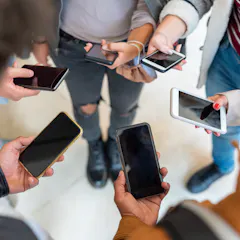
Screen addiction is already a household term, but is there any scientific basis for this phenomenon? We take a look at the methods used to measure it and its actual hold on the population.

Phubbing or ‘phone snubbing’ is when prioritise your phone over the people in your company – and it sucks. Here’s how to stop it.

Parents and teenager have the best chance of cracking internet addiction when adults acknowledge they have a problem too.

You’re probably wrong about how much time you spend on your devices, and that has big implications for the link between device use and mental health.

It might be more helpful to talk about excessive use of social media in relation to degrees of harm rather than as “disorder” in terms of addiction.

During lockdowns, we live our lives through our screens. Here, tech experts share their tips on when - and how - to switch off.
Top contributors
-

Professor of Information Systems, UMass Amherst
-
Professor, HBKU Qatar and Visiting Professor, Bournemouth University
-
Professor
-
Professor of Psychiatry and Neuroscience, Wayne State University
-
Lecturer, Australian Catholic University
-
Senior Lecturer of Rhetoric, Boston University
-
Professor in Psychology, Bournemouth University
-
Professor of Information Systems, Friedrich-Alexander-Universität Erlangen-Nürnberg
-
Professor, Macquarie University
-
Professor and Research Chair in Inclusive Societies, University of Sheffield
-
Clinical Psychologist, Lecturer and Research Supervisor, Graduate School of Health, University of Technology Sydney
-
University of Cape Town
-
Chief Program Officer, USC Annenberg School for Communication and Journalism
-
Research Fellow; Registered Psychologist; Deputy Chair, Cyberpsychology Research Group, University of Sydney
-
PhD/Masters Clinical Neuropsychology Candidate, Macquarie University