
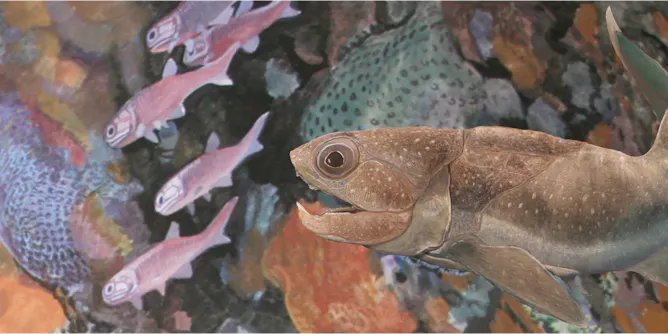
A new study of ancient, extinct fish known as placoderms provides another piece of the evolutionary puzzle about our deep time, aquatic ancestors.
Articles on Devonian period
Displaying all articles
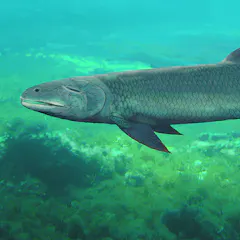
For decades, the sandstone in central Australia yielded tantalising segments of some sort of fossil fish. Now, we have finally pieced together a complete picture of this remarkable species.

New research on the Late Devonian extinction suggests the ozone layer could be naturally depleted as the temperature rises.

The arrangement of bones in our specimen’s fins are the same as those of ‘fingers’ in tetrapods. The only difference is the digits are locked within the fin, and not free moving.
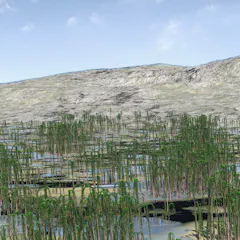
Remains of a 365m-year-old forest of extinct lycopsid trees has been found in China.
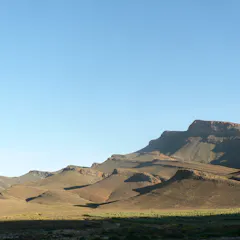
A record of sea-level change from 400 million years ago in South Africa, reveals how ecosystems and environments collapsed at the South Pole.
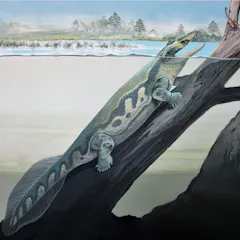
The discovery of two separate fossils tetrapod species proves that they lived all over the world by the end of Devonian.
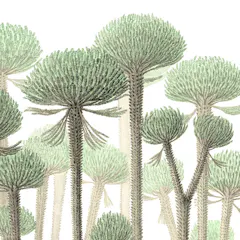
Cladoxylopsid trees were hugely complex and very different to those we have now.
Top contributors
-

Emeritus Strategic Professor in Palaeontology, Flinders University
-
Senior Researcher, University of the Witwatersrand
-
Palaeontologist, Albany Museum (supported by the Millennium Trust and the DSI-NRF Centre of Excellence in Palaeosciences, the NRF and the NSCF), Rhodes University
-
Postdoctoral Fellow in Vertebrate Palaeontology, Flinders University
-
Research Associate in the College of Science and Engineering, Flinders University
-
Professor of Palaeobiology, University of Leicester
-
Professor of Evolutionary Biology, Université du Québec à Rimouski (UQAR)
-
Professor of Earth Science, University of Southampton
-
Palaeontologist, Uppsala University
-
Senior Lecturer in Palaeobotany, Cardiff University
-
John Curtin Distinguished Professor, Molecular and Life Sciences, Curtin University