

A study found the emotional dynamic between young heterosexual partners can have a measurable physiological effect on men, but not on women.
Articles on Developmental psychology
Displaying 21 - 40 of 44 articles

Constructivism is an educational philosophy that underpins the inquiry-based method of teaching, where the teacher facilitates a learning environment in which students discover answers for themselves.

Do children understand the lesson that if you scratch my back, I’ll scratch yours? Developmental psychologists suggest they’re more likely to punish bad behavior than they are to reward good deeds.

Developmental psychology has uncovered some lesser-known, yet important ways that fathers improve their children’s lives.

Teens get a bad rap as selfish, dangerous risk-takers. But neuroscience and psychology research is revising that image: Adolescents are primed to help those around them, with positive benefits for all.

Human beings seem to be born wearing rose-colored glasses. Psychologists are interested in how this bias toward the positive works in the very young – and how it fades over time.

Teens’ brains develop different skills along a predictable timeline. These milestones should influence the legal age boundaries for voting, buying guns and being put to death.

Adolescents have important developmental work to do. Despite what worried grownups think, taking needless risks isn’t the goal for teens. Being risky is part of exploring and learning about the world.

At the ages of 6-7, when children are transitioning to starting school, 14% have high levels of emotional problems, including depression and anxiety. This percentage is higher in the later years.

There’s no need for parents to bust the Santa myth. Children figure out the truth themselves, at a developmentally appropriate time. In the process, they build their reasoning skills.

Psychology researchers bring infants into the lab to learn more about how shared book reading influences brain and behavioral development.
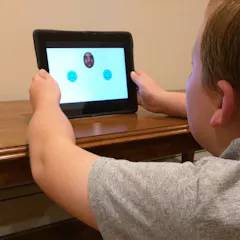
Racial bias is associated with dehumanizing social groups different from your own. Psychologists trained kids to differentiate individuals of another race – with lasting effects on their biases.

Persistence and self-control are valuable traits that can help kids succeed in school and beyond. A new study suggests infants can learn stick-to-itiveness by watching adults persist in a difficult task.

Psychologists observed young children in real time figuring out how not to tell the truth.

Most psychology research that forms the basis of parenting advice might not apply to you. So, how do you know whether to trust it?

A revolution in the tools and techniques developmental psychologists use to investigate kids’ knowledge and capabilities is rewriting what we know about how and when children understand their world.

Recent research raised concerns about girls’ stereotypes on their gender’s lack of ‘brilliance.’ But an overlooked finding suggests boys also hold hindering stereotypes about themselves in school.

Realizing that others’ minds hold different thoughts, feelings and knowledge than your own was thought to be something only people could do. But evidence is accumulating that apes, too, have ‘theory of mind.’

It’s a common quirk of human psychology to make the mental leap that the way things are is the way things ought to be. New research into how we explain the world around us sheds light on the phenomenon.

The quest to be a ‘perfect’ mother versus a ‘good’ mother may actually harm a mother’s parenting.
Top contributors
-

Professor of Psychology, University of California, San Diego
-
Formerly a lecturer in genetics, Lincoln University, New Zealand
-
Assistant Professor, Psychology, Simon Fraser University
-
Associate Professor of Psychology, USC Dornsife College of Letters, Arts and Sciences
-
Associate Professor, School of Psychology, The University of Queensland
-
Assistant Professor of Psychology, Johns Hopkins University
-
Doctoral Candidate in Clinical Psychology, University of Oregon
-
Ph.D. Student in Brain and Cognitive Sciences, Massachusetts Institute of Technology (MIT)
-
Ph.D. Student in Developmental Psychology, University of Illinois Urbana-Champaign
-
Professor of Psychiatry & Psychology, University of California, Los Angeles
-
Clinician, Australian Catholic University
-
Medical & Science Writer, University of Iowa
-
Senior Analyst, Strategic Research, University of Illinois Urbana-Champaign
-
Research Fellow in Educational and Developmental Psychology, Charles Sturt University
-
Professor of Psychology, Temple University