

We often think of conversation as effortless. In fact, it’s a finely tuned dance of listening and speaking.
Articles on Cognitive skills
Displaying 1 - 20 of 36 articles

Perhaps it’s time we stopped treating midlife as a countdown and started recognising it as a peak.

Employers and societies demand graduates who can evaluate information and make sound judgments.

Study finds a gap between policy and textbook that skews literacy test results.

Cutting back on small indulgences can have a lasting impact on social connections and local economies.

We’re told we need to think critically, to not fall for misinformation. Thankfully, it’s a skill we can practise and become better at.

In January, named for the two-faced Roman god Janus, it’s fitting to consider how schooling can address lesser-discussed non-cognitive skills like emotional intelligence.
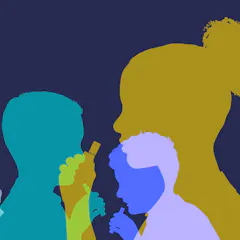
Online advertising featuring bright colors, cartoon figures and promotions by social media influencers entice adolescents to try tobacco.

Nearly half of South Africa’s 60 million people receive social grants. Health experts say they improve cognitive health among the elderly.
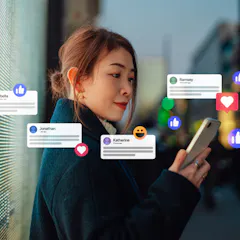
New research shows that scrolling through Instagram can effect our processing and language capabilities. Listen to The Conversation Weekly podcast.

Education, contacts and luck can play a considerable role when it comes to building up wealth.

To achieve perceptual expertise, you may need more than smarts and hard work. Research suggests there’s a general ability that may help you succeed in jobs that depend on perceptual decisions.
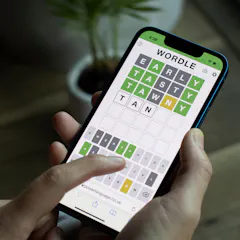
Like a Scrabble habit, a passion for Wordle isn’t likely to make you smarter or ward off brain aging. But it may give you a daily dose of complex cognition combined with social interaction.

Corvids and parrots might be the superstars of the bird world - but other species like gulls, geese and even chicken have shown some impressive skills too.

Encouraging a child to hold their paint brush to develop a pincer grip while the child is involved in painting is one example of guided play.

A bioengineer explains how a clearer picture of brain structure and function may fine-tune the ways brain surgery attempts to correct structure and medication tries to correct function.

Together the social and emotional ‘jobs’ of adolescence – developing intimate friendships and achieving autonomy – make teens uniquely resistant to calls for social distancing.

There are reasons to be skeptical, of both the quality of the evidence presented so far and the questionable assumptions that underlie claims of improved cognitive function after brain training.

A regular family ritual like a dinner and games night contributes to the rhythm and predictability of life and becomes part of a family’s unique DNA.

The old saying ‘the early bird catches the worm’ might be especially fitting when it comes to peak mental and physical performance.
Top contributors
-

Lecturer in Psychology, University of Liverpool
-
Professor, Werklund School of Education, University of Calgary
-
Professor of Decision Making and Expertise, University of Liverpool
-
Licensed psychologist, Karolinska Institutet
-
Lecturer in Sociology, University of Cologne
-
Professor of Neuroscience, University of Oxford
-
Visiting Assistant Professor, Simon Fraser University, Canada. Assistant Professor, Dayalbagh Educational Institute, India, Simon Fraser University
-
Professor of Psychology, Temple University
-
Professor in Psychology, University of Florida
-
Research Scientist, University of Washington
-
Senior Lecturer in Neuropsychology and Cognitive Psychology, Bangor University
-
Reader in Human Development and Education Policy, University of Strathclyde
-
Lecturer in Psychology and Cognitive Science, University of Sheffield
-
Professor of Psychology, University of California, San Diego
-
Master's Student in Educational Research, Language and Literacy Program, University of Calgary