
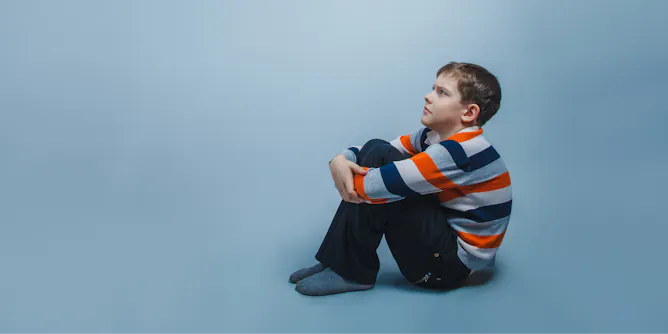
The idea that autistic people lack a ‘theory of mind’ has shaped ASD research for 40 years. The evidence never supported it – and it’s time to move on.
Articles on Theory of mind
Displaying 1 - 20 of 23 articles
Experts can combat misinformation by sharing their opinions, instead of just information.
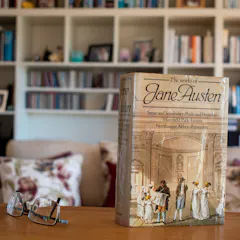
Jane Austen’s interconnected webs of thought and feeling help readers to better understand other people.

A lack of dopamine seems to directly cause social problems.

Sometimes we can’t help but consider the beliefs of others.

‘Mind-reading’ requires the ability to put yourself in someone else’s shoes, predicting their actions and reading their emotions.
if a machine can ascribe intent to the events and experiences befalling it, this raises the question of identity and what it means to be aware of oneself and others

It’s a too-common myth that autistic people are incapable of, or inept at, love. Autistic writer Kay Kerr explores 5 autistic people’s experiences of familial, friend and romantic love.
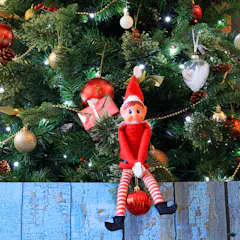
Elf-on-a-shelf and the ‘this is you as a baby’ Tiktok trend both involve tricking our kids. Can tricking your kids damage trust, or can it actually teach them something? And why do they believe us?
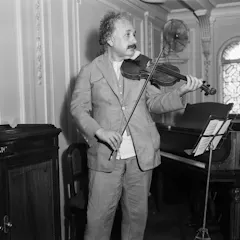
Are you good at changing perspectives? If so, it may benefit you in more ways than you imagine.

Cognitive neuroscientists use brain imaging and behavioral economic games to investigate people’s sense of fairness. They find it’s common to take care of yourself before looking out for others.

Where do the cooperative skills that hold together human societies come from and why don’t our selfish instincts overwhelm them? Evolutionary game theory suggests that empathy is a crucial contributor.
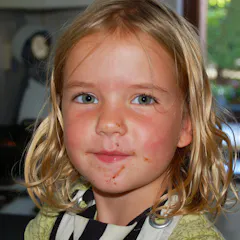
Children lying is rarely cause for concern and actually means your child is developmentally normal.

As Pink Shirt Day approaches, early childhood educators offer practical strategies for parents and teachers to create an inclusive environment and reduce bullying.

Psychologists observed young children in real time figuring out how not to tell the truth.
A revolution in the tools and techniques developmental psychologists use to investigate kids’ knowledge and capabilities is rewriting what we know about how and when children understand their world.

Empathy is associated with being drawn to the arts, but do they actively promote it or merely appeal to already sensitive souls?
While we need empathic skills to relate to others sometimes, too much empathy can be a bad thing.

Little kids cover their own eyes and feel hidden, even if they’re still fully visible. New research suggests this doesn’t mean children can’t understand others’ perspectives, as had been assumed.

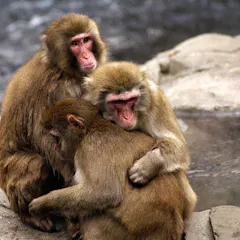
Realizing that others’ minds hold different thoughts, feelings and knowledge than your own was thought to be something only people could do. But evidence is accumulating that apes, too, have ‘theory of mind.’
Top contributors
-

Associate Professor at the Institute for Social Neuroscience in Melbourne, Australia, The University of Melbourne
-
Associate Professor of Psychology, USC Dornsife College of Letters, Arts and Sciences
-
Professor of Psychology, University of California, San Diego
-
Assistant Professor of Marketing, IESE Business School (Universidad de Navarra)
-
Adjuct Faculty University of Guelph, Former Chair, Early Childhood Studies and Founder of The Love Model Inc.
-
Senior Lecturer in Early Childhood, Macquarie University
-
Ph.D. Student in Developmental Psychology, USC Dornsife College of Letters, Arts and Sciences
-
Associate Head of Early Childhood Studies, University of Guelph-Humber
-
Professor of Psychology, The University of Melbourne
-
Lecturer, University of Sheffield
-
Postdoctoral Reseracher in Cognitive Neuroscience and Psychology, Universität Wien
-
Professor of Psychology, and Psychiatry and Behavioral Neuroscience, University of Chicago
-
Senior Lecturer in Psychology, University of the Sunshine Coast
-
Lecturer in Psychology, University of Hull
-
Postdoctoral Scholar in Social Cognitive Neuroscience, University of Chicago