
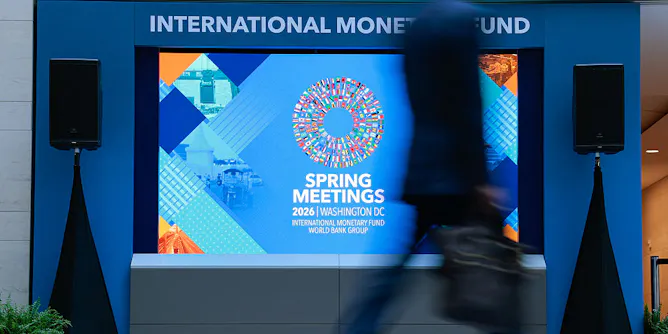
The IMF is not a neutral arbiter on any discussions relating to preferred creditor status. It is itself a direct beneficiary of the creditor hierarchy.
Articles on Development Banks
Displaying all articles

Africa does not lack household savings, but only a small share of these are placed in formal institutions.

African countries must work collectively to seize opportunities in new digital and green economies where the continent’s critical minerals are so important.
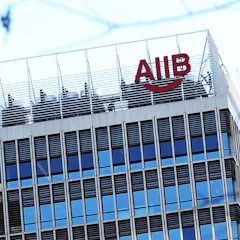
The AIIB is a paradox: an institution connected to the rules and norms of the liberal international order, but one created by an illiberal regime.
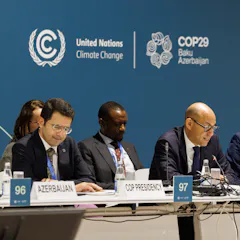
The climate fight needs huge sums, and private investment, carbon markets and development banks can provide them.
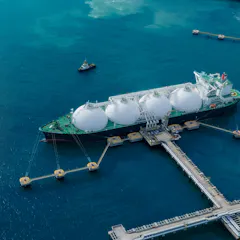
Banning public funding for overseas fossil fuel projects will boost Australia’s climate leadership. But can it take the next step and do it domestically?
Thirty years ago the World Bank recognised that its position was untenable. It put in place mechanisms to make the bank more accountable to ordinary people.
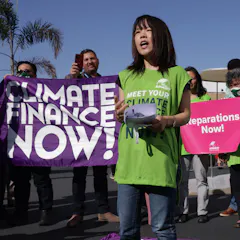
The biggest issues at COP27 involve financing for low-income countries hit hard by climate change. A former World Bank official describes some promising signs she’s starting to see.

Many small island nations are struggling to protect their land from rising seas while also facing paralyzing debt.
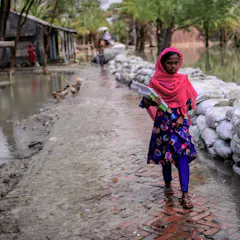
The damage from storms, droughts and sea level rise is in the news almost daily. Some money is flowing to help poor countries, but what isn’t clear is how much impact the funds are having.

African countries can’t afford to tread water waiting for the global multilateral and private financing system to become more equitable.
Top contributors
-

Chief Research Officer: Climate and Development - Nelson Mandela School of Public Governance, University of Cape Town
-
Postdoctoral Research Fellow, Australian National University
-
Professor of Political Science, School of Regulation and Global Governance, Australian National University
-
Professor/Senior Research Fellow, Centre for Advancement of Scholarship, University of Pretoria
-
Junior Research Fellow in Climate Policy, The Fletcher School, Tufts University
-
Assistant Director, Global Economic Governance Initiative, Global Development Policy Center, Boston University
-
Professor of Financial Management, IESE Business School (Universidad de Navarra)
-
Professor, American University School of International Service
-
Professor of Practice in Climate Policy, University of Oxford
-
Professor at the Nelson Mandela School of Public Governance, University of Cape Town
-
Chargé de recherche, Fondation pour les Etudes et Recherches sur le Développement International (FERDI); Chercheur associé au CERDI (UMR UCA-CNRS-IRD), Université Clermont Auvergne (UCA)
-
Post Doctoral Researcher, Graduate School of Business (GSB), University of Cape Town