
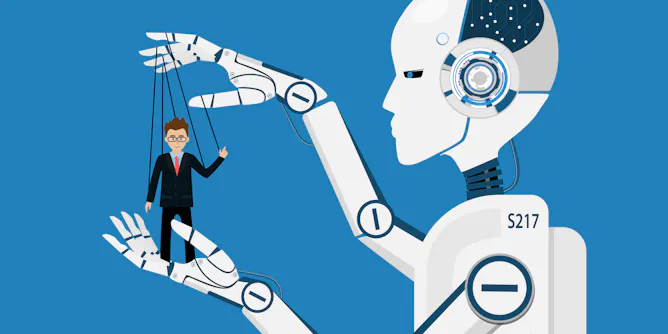
Handing management to algorithms creates ‘black-box bosses" whose decision-making is hard to understand or question.
Articles on Deliveroo
Displaying 21 - 40 of 48 articles
To achieve universal basic income, changes would be needed in terms of public and political support. Could the Covid-19 pandemic turn the tide?
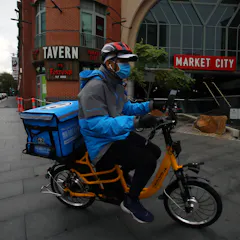
Food delivery workers are now essential workers. But they’re still not treated as employees.

This might be the craziest game in venture capitalism.
Uber’s London licence has been a political football for several years, but that’s not really the point.

Some initiatives aim to develop more ethical and equitable models.

Flexibility is just a euphemism for exploitation.
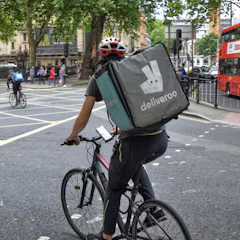
The tensions between platforms and their workers can be better understood by studying the mutual expectations of both parties.
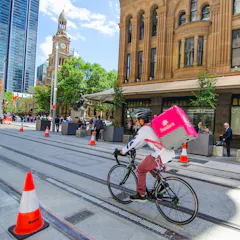
It is the Australian Tax Office, not the Fair Work Commission, making the big waves with the Foodora case and the future of the gig economy.

The crucial question is not whether gig workers are employees or independent contractors, but what rights they ought to have as contractors.
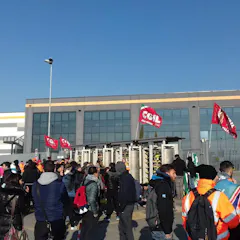
Tech companies overseas are signing collective agreements with their employees. Might Australia be next?
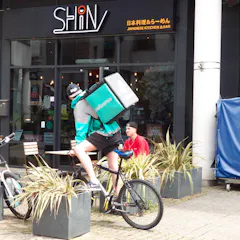
Many vulnerable workers aren’t covered for work-related injuries and illness. Employment law is largely a federal matter while compensation schemes are state-run, but there’s a way to fix the problem.
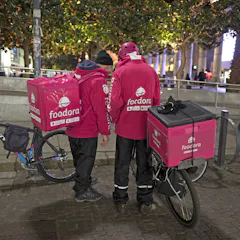
That the Fair Work Ombudsman brought a case against Foodora suggests its workers are most likely to be classified as employees. This could dissuade other platforms from offering similar benefits.

New technologies do not discriminate between the promotion of a healthy or unhealthy diet. It’s how we apply them that matters.
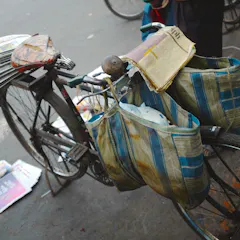
Cycling is a low-cost and non-polluting way to make deliveries in congested cities. Slow cyclists should be recognised as good for the economy and environment, not treated like second-class citizens.
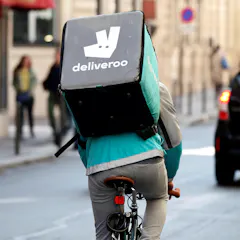
With more Australian workers joining the gig economy, questions about how these workers will fare in their retirement are becoming more pressing.

When people get locked into the gig economy, it adversely affects other areas of their lives, from health to housing
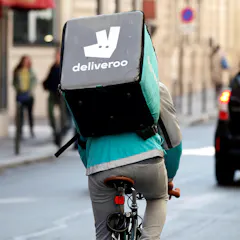
Whether or not food delivery workers feel exploited is irrelevant, because they have few other options.

Not only did trade union membership peak in the 1970s – so did their way of doing things.

We all miss out when corporates keep themselves to themselves.
Top contributors
-

Associate professor, University of Sydney
-
Senior Lecturer, Management and Organisations, UWA Business School, The University of Western Australia
-
Senior Lecturer, Management and Organisations, The University of Western Australia
-
Professor of Practice, Associate Dean, Warwick Business School, University of Warwick
-
Associate Professor UTS Centre for Business and Social Innovation, University of Technology Sydney
-
Dean of Programs, EM Lyon Business School
-
Sessional Lecturer, Australian Catholic University
-
Lecturer in Management, Employment and Organisation, Cardiff University
-
Affiliate Research Associate, School of Political and Social Sciences, University of Glasgow
-
Associate Professor in Managing People and Organisations, University of Sydney
-
Research Associate, Keele University
-
Sleep Researcher, Appleton Institute, HealthWise Research Group, CQUniversity Australia
-
Associate Professor, Faculty of Law, University of Technology Sydney
-
Maîtresse de conférences en sciences de gestion, Université Côte d’Azur
-
Research Assistant, Industrial Relations, The University of Melbourne