
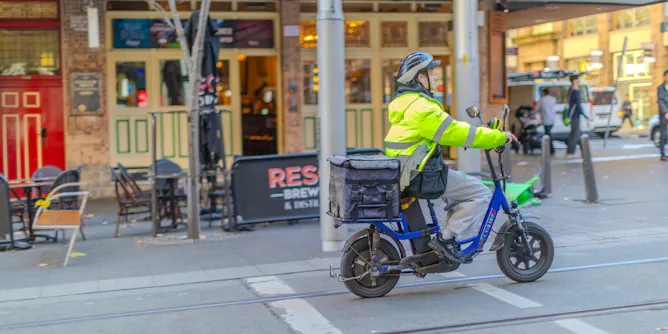
Will prices rise to cover better pay and standards? Yes, almost certainly. But it also means your next food delivery can come with a side of a little less guilt.
Articles on Uber Eats
Displaying all articles
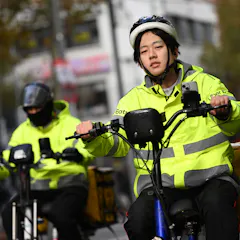
News of the proposed deal broke a day before rival delivery company Menulog’s closure in Australia – with its customers set to be redirected to Uber Eats.

From Monday gig workers will be classified as ‘employee-like workers’ and given many of the protections afforded to employees, but not all.
Workers’ power is being recast as precarious workers in Africa experiment with new ways of organising in the digital age
A suite of protections for gig workers will be contained in legislation to be introduced into parliament next week, and will also include measures on rights for casual workers and stopping wage theft
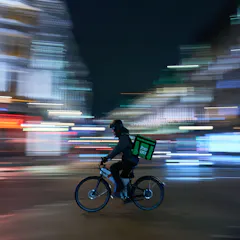
Our study of food delivery workers in one English city highlights the daily challenges facing undocumented migrants in this sector.
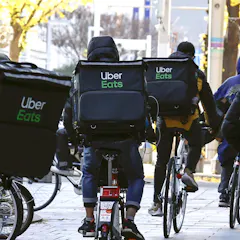
Australia’s largest private-sector employers are steadily integrating gig workers into their operations.

A third platform for ordering cannabis in Ontario provides little to no benefit to consumers or retailers.

Delivery services and cafes commonly prompt customers to leave a specific tip – for example, 15%, 20%, 25% – at the point of sale rather than after completing the service.
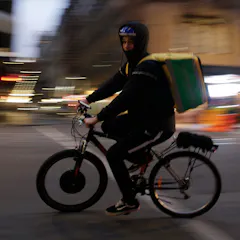
Food-ordering platform Menulog has declared it will break with the standard contractor business model. But let’s not get too excited yet.

Food delivery apps are here to stay. That means governments must support restaurant association efforts to create a no-commission-fee delivery app option — during the pandemic and beyond.
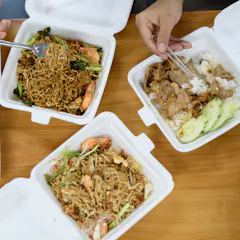
Of the five cuisines examined, packaging from burger meals was responsible for the most emissions.
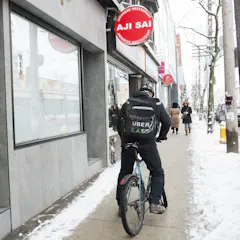
Food delivery apps charge significant fees for orders, meaning restaurants already challenged by the pandemic can be squeezed into negative margins to access customers. Will cutting fees help?
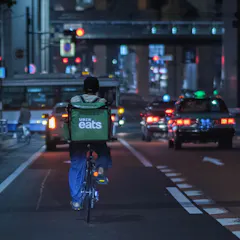
Delivery riders are paying the ultimate price for the fact that our cities, their infrastructure and the rules governing them make cycling much more dangerous than it should be.
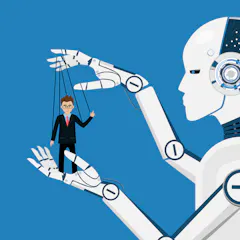
Handing management to algorithms creates ‘black-box bosses" whose decision-making is hard to understand or question.
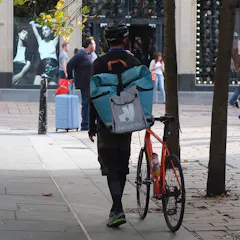
To achieve universal basic income, changes would be needed in terms of public and political support. Could the Covid-19 pandemic turn the tide?
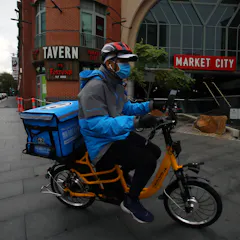
Food delivery workers are now essential workers. But they’re still not treated as employees.

This might be the craziest game in venture capitalism.
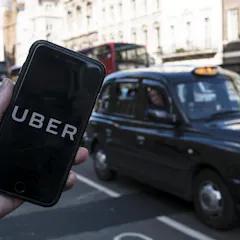
We need to see uberisation in the context of all forms of precarious and insecure work becoming more acceptable.
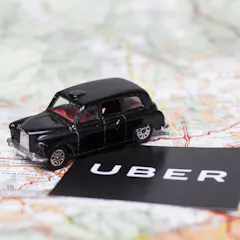
Uber’s London licence has been a political football for several years, but that’s not really the point.
Top contributors
-

Associate professor, University of Sydney
-
Senior Lecturer, Management and Organisations, UWA Business School, The University of Western Australia
-
Senior Lecturer, Management and Organisations, The University of Western Australia
-
Professor of Practice, Associate Dean, Warwick Business School, University of Warwick
-
Associate Professor of Work and Employment, Heriot-Watt University
-
Postdoctoral Research Fellow, Strategic Management, The University of Queensland
-
Distinguished Reserach Professor, Southern Centre for Inequality Studies, University of the Witwatersrand
-
Vice Chancellor Fellow, Northumbria University, Newcastle
-
Lecturer in Management, Employment and Organisation, Cardiff University
-
Professor in Work and Employment, Nottingham Trent University
-
Associate Professor, University of Technology Sydney
-
Associate professor, The University of Queensland
-
Professor, Food Economics, University of Guelph
-
Lecturer and Ambassador for Cannabis Education, Entrepreneurship and Strategy Department, Toronto Metropolitan University
-
Professor of Construction and Environmental Assessment, The University of Melbourne