
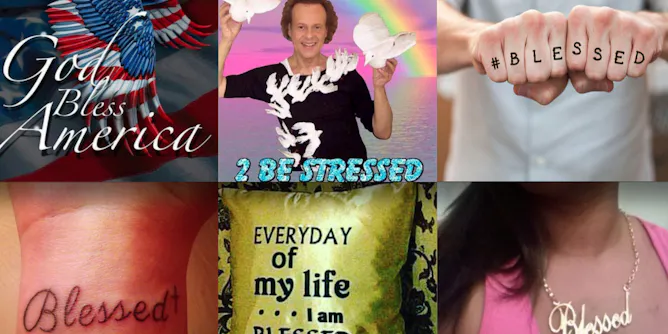
The prosperity gospel – a uniquely American strand of Christian theology – creates a dilemma for its adherents.
Articles on Death
Displaying 361 - 380 of 441 articles
The assisted dying debate usually focuses on the moment of death - not those leading up to it.
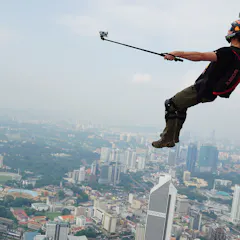
After a selfie-snapping man was mauled to death by a bear, a psychologist wonders why people feel so compelled to capture and share images of themselves.

Many onlookers were shocked when a bus blew up on a London bridge for a film stunt, but at least no one was hurt. There is a long history of serious accidents and fatalities on set.
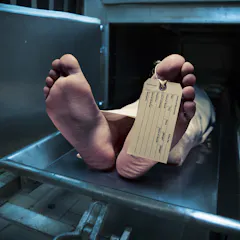
Two reviews of the UK’s coroner service said that an independent national coroner service was needed. So why hasn’t the advice been heeded?
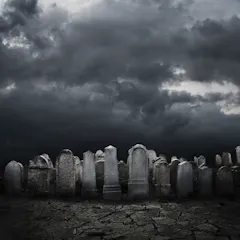
Why thinking about death makes us more religious, conservative and prejudiced.
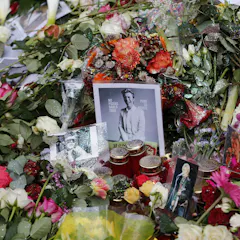
January seems to be characterised by deluge of public mourning. But why do we do it?

The dark, disturbing imagery of Bowie’s final album recalls how the artist inspired the goth movement of the 1970s and 1980s.
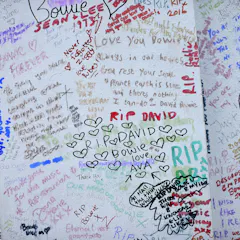
Privately, we grieve for those we’ve loved. Publicly, we grieve for those we’ve never even met.

Rock and roll is getting old. And with this ageing, we are increasingly seeing different types of death claiming our idols.
It’s a myth that hair and nails continue to grow after you die. What else have science discovered about death?

Children who hawk goods on their heads on Nigeria’s streets face an array of health hazards and physical dangers. The government must take steps to reduce this practice.
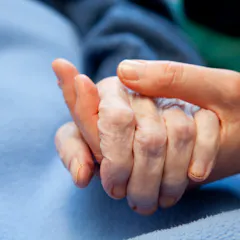
The UK’s palliative care is excellent - but that hasn’t prevented scandals like the Liverpool Care Pathway and Mid-staffs.

CSI and its franchise has achieved something unique: making forensics glamorous and sexy and fuelling public fascination with the dead.
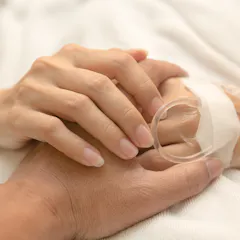
Most people in western societies die in hospital or in institutional care. Keeping death out of sight and out of mind means few people have real experience of death and dying.
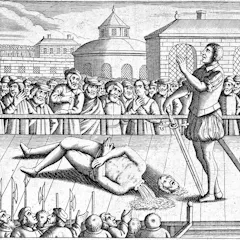
People found out about crime and punishment in that most spectacular era of public executions, the Renaissance, through melody.

It can’t compete with the US, but the UK became part of mega-memorial culture after the London bombings.
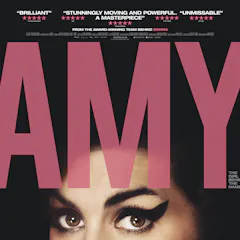
Asif Kapadia’s documentary shows what it means for a life to be up for public consumption.
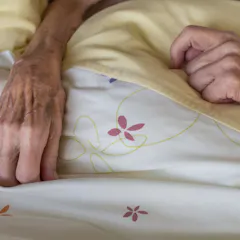
We all die eventually, of course, but these days it’s very hard for doctors and loved ones to let patients and relatives die without doing “whatever it takes”.
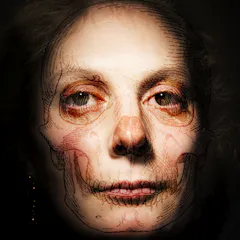
We have – in some of the world – sanitised death, but the custom of post-mortem photography reminds us death is closer to us than we might like to think. This article contains images of dead people.
Top contributors
-

Associate Professor of Philosophy, Deakin University
-
Distinguished Professor, Professor of End-of-Life Law and Regulation, Australian Centre for Health Law Research, Queensland University of Technology
-
Professor Emeritus of Death Studies, University of Bath
-
Professor, Social Work, University of Waterloo
-
Reader in Education with Psychology and Centre for Death and Society, University of Bath
-
Professor of Law, Australian Centre for Health Law Research, Queensland University of Technology
-
Professor of Law, Wake Forest University
-
Professor of Social Work, CQUniversity Australia
-
Associate Professor, Music Industry, RMIT University
-
Research Fellow, Coventry University
-
Professor of Property Law and Death Studies, Queen's University Belfast
-
Senior Lecturer, Criminology, University of York
-
Chen Su Lan Centennial Professor in Medical Ethics, National University of Singapore; Distinguished Visiting Professor in Law, University of Melbourne; Uehiro Chair in Practical Ethics, The University of Melbourne
-
Reader in Sociology, University of Bath
-
Reader of Health Psychology, Queen's University Belfast