

Inside every smartphone and laptop are tiny specks of valuable materials, many of which are still lost even when you take your old electronics to a recycling center.
Articles on DARPA
Displaying all articles

A scholar reveals the ins and outs of how research gets funded, including the checks and balances that ensure high scientific standards and financial integrity at every stage of a grant’s lifecycle.

A European DARPA might answer the challenges listed in the 2024 Draghi Report, provided that the governance and management of European innovation programmes are drastically modified.
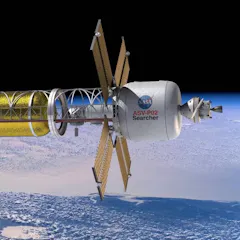
Sending a nuclear fission reactor into space means lots of technical questions. One research group is coming up with models that could improve how a nuclear rocket starts up and powers down.

From warfare to entertainment and VR, brain-computer interface development has extended beyond prosthetics for patients with disabilities. Missing is full ethical consideration of the consequences.

Renee Wegrzyn will lead the new Advanced Research Projects Agency for Health, which is tasked with speeding up how fast basic science is translated into real-world applications.

Common sense is a broad and diverse set of abilities that help define what it means to be human. AI researchers are struggling to endow computers with it.

The ubiquity of mobile phones is a defining feature of the 21st century, but it’s been possible to place a phone call on the go since shortly after World War II.

Most computer security focuses on software, but computer processors are vulnerable to hackers, too. An experimental secure processor changes its underlying structure before hackers can figure it out.

Humans often stumble when they encounter the unexpected, but they tend to adapt and move on. Artificial intelligence systems, not so much.

An update of 50-year-old regulations has kickstarted research into the next generation of rockets. Powered by nuclear fission, these new systems could be the key to faster, safer exploration of space.
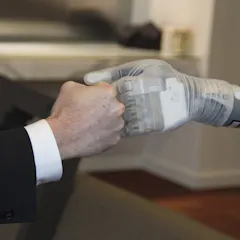
The US research funder is widely admired, but does the UK have the guts to start its own version?

A 90-minute presentation in 1968 showed off the earliest desktop computer system. In the process it introduced the idea that technology could make individuals better – if government funded research.
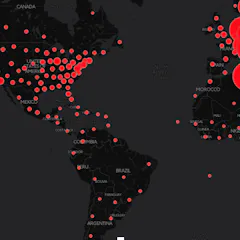
The deep and dark web can be a scary place, but modern open-source technologies funded by the Defense Department can help explore it.
The world’s largest technology companies are making public the programming and hardware designs at the center of their businesses.
Top contributors
-

Research Assistant Professor of Industrial & Systems Engineering, University of Southern California
-
Director, Information Retrieval and Data Science Group and Adjunct Associate Professor, USC and Principal Data Scientist, NASA
-
Professor of History, University of Washington
-
Assistant Professor of Neurological Surgery, School of Medicine, University of Washington
-
Professor of Electrical Engineering and Computer Science, University of Michigan
-
Assistant Dean of Translational Health Sciences, School of Medicine, University of Washington
-
Director of the Center for National Security Initiatives and Professor of Aerospace Engineering Sciences, University of Colorado Boulder
-
Head of Inclusive Innovation, Nesta
-
Ph.D. Candidate in Computer Science & Engineering, University of Michigan
-
Professor of Electrical Engineering, Arizona State University
-
Professor of Bioethics and Humanities, School of Medicine, University of Washington
-
Associate Professor of Nuclear and Radiological Engineering, Georgia Institute of Technology
-
Professor, strategic management and innovation management, co-director of the new PICchair at the Paris School of Business - VP EURAM Dialogue with Practitioners, European Academy of Management (EURAM); PSB Paris School of Business
-
Enseignant chercheur en management de l'innovation et de la créativité, PSB Paris School of Business; European Academy of Management (EURAM)
-
Associate Dean for Research, Innovation, and Partnerships in the College of Education, University of Maryland