
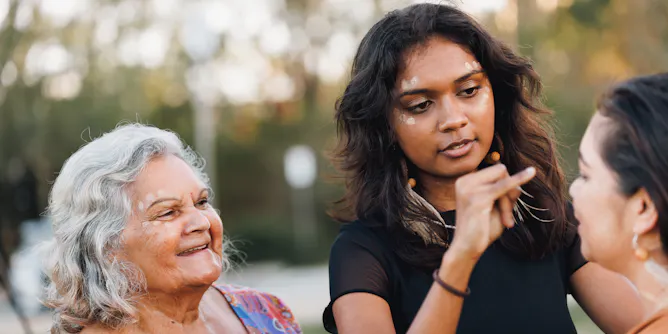
When Indigenous people are displaced from or denied access to Country, measurable declines in mental health, physical health and emotional wellbeing follow.
Articles on cultural safety
Displaying all articles
When First Nations people get the right support in the health system, their physical and mental health improves.
Several health conditions affect Māori and Pacific people disproportionately. Culturally competent healthcare addresses these ethnic discrepancies.
Indigenous Australians are less likely to use health services than non-Indigenous people – even when needed. So health services need to change.
How did speech rules developed and promoted by the left become tools that could be wielded against it?
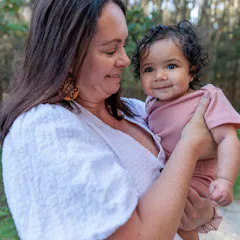
Many Indigenous families around the world say hospital staff often don’t understand their cultures or even give them basic rights during maternity care.
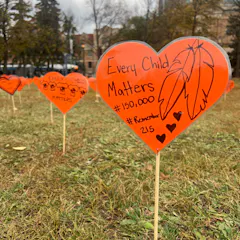
When universities declare commitments to reconciliation, these commitments must accompany changes necessary to ensure Indigenous students are truly welcomed and celebrated on campuses.
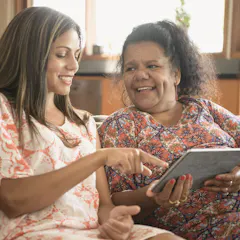
Researching what digital health interventions work for Indigenous people is effective when it’s Indigenous-led, based on trust, and engages local values and protocols.
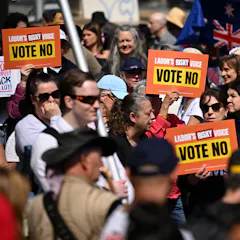
Indigenous Australians living in areas with stronger opposition to the Voice have poorer health and are less likely to access health care.

Universities can be hostile, overwhelming and unwelcoming places for many First Nations Peoples working in academia. More needs to be done to ensure culturally safe workplaces.

Our study found a better way to treat eye problems in Indigenous communities – and some key considerations for undertaking culturally safe clinical trials.
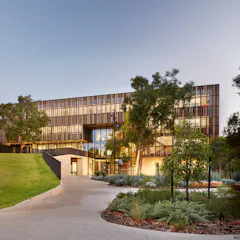
Culturally safe spaces are pivotal in the academic success of First Nations students.
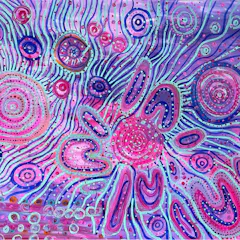
The COVID-19 pandemic is a stressful time for all, and even more so for people experiencing trauma-related stress. How can public health emergency responses avoid further trauma for vulnerable people?
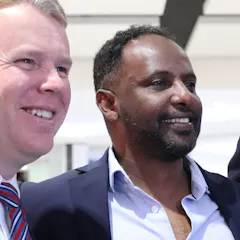
As the country’s first ever African MP, and only the second refugee to win a seat, Ibrahim Omer is ideally placed to tackle the big problems facing immigrant communities.
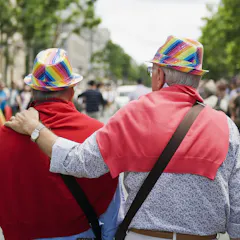
We interviewed older gay men, lesbian women, and trans women about their perceptions of residential aged care. Our research shows we need to make aged care safer for LGBTI+ people.
Top contributors
-

Research Fellow in Youth Mental Health, The Kids Research Institute
-
Senior Lecturer, School of Indigenous Studies, The University of Western Australia
-
Assistant Dean Indigenous Strategy & Leadership, University of Newcastle
-
Senior Research Fellow, Division of Health Research and Social Work, Lancaster University; La Trobe University
-
Associate Professor of Primary Health Care and General Practice, University of Otago
-
Professor, The University of Melbourne
-
Distinguished Fellow and CEO, The Lowitja Institute
-
Clinical Associate Professor of Ophthalmology, The University of Western Australia
-
Professor of Race Relations, Deakin University
-
Research Fellow, School of Medicine and Public Health, University of Newcastle
-
Associate Dean Education, Gnibi College, Southern Cross University
-
Research Fellow, Australian National University
-
Research Fellow, The University of Melbourne
-
Lecturer in Social Anthropology and International Development, University of Sussex
-
Professor & Director, Centre for Aboriginal Medical and Dental Health (CAMDH), The University of Western Australia