
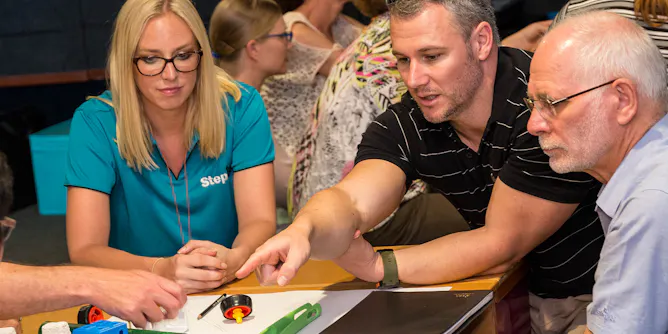
The recently released Gonski report contains a recommendation to supporting teacher collaboration. Researchers in Queensland have been conducting research on how design thinking can foster this.
Articles on Creativity
Displaying 141 - 160 of 228 articles

Classroom meditation shows promise for improving student attention, focus, happiness and self-awareness.

The mindset, tools and techniques of designers can make us better leaders. Here’s how.

We shouldn’t save play for the playground.
The establishment of science centres for young people is one of many initiatives hoped to fix South Africa’s education system.

The world is changing fast and education is not equipping children with the kind of minds they are going to need.

A new study has found copyright law can act as a deterrent to creation, rather than an incentive for it.

The science is clear but to improve plastic literacy, we need the arts. Here’s why.

Universities must train scientists to engage with the ethics of emerging technologies, rather than functioning as cogs in the engine of economic development. Integrating the arts into STEM can help.

A voyage through the Arctic inspires a composer to create music that expresses wonder, loss, discovery and culture.

Creative people seem to possess a unique connection between three brain networks that typically work separately.
Modern science backs Picasso, who once said ‘Learn the rules like a pro, so you can break them like an artist.’

In a new book, philosophers argue that Lego’s coloured bricks are not just a toy, but a tool that raises challenging questions about creativity, conformity and culture.

If leaders of educational institutions are concerned about the employability of graduates, they should avoid over-investing in STEM subjects and stop snubbing liberal arts.

Blade Runner 2049 misses modern strides in artificial intelligence, which is now capable of performing creative work alongside humans.

Engineering has long been a male-dominated profession. Now engineering schools globally are making extraordinary efforts to attract the creative female talent they really need.

We constantly use electronic devices to distract ourselves from the tedium associated with waiting. Yet being bored can be a creative activity.
While today we sweat, early modern Europeans froze. Furs to the rescue.

Bringing nature into the workplace can lead to a number of benefits, including reduced stress and increased creativity.
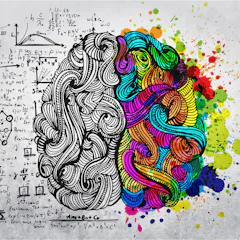
Technology requires humanity to innovate at a faster pace, but it also hampers true creative thinking. The good news? Nurturing creativity in children is easier than most people think.
Top contributors
-

Professor of Computer Science and Director of the Art & AI Lab, Rutgers University
-
Professor of Philosophy and Director of Applied Ethics Center, UMass Boston
-
Visual Artist and Lecturer in Teacher Education, University of Canberra
-
Associate Professor of Developmental Psychology & Psychopathology, University of Leeds
-
Professor Emerita of Linguistics, American University
-
Professor of Psychological and Brain Sciences, Drexel University
-
Professor of Experimental Psychology, University of Iowa
-
Professor of Engineering Innovation, Adelaide University
-
Professor of Personality Psychology, The University of Melbourne
-
Senior Lecturer in Psychology, Oxford Brookes University
-
PhD student, University of Warwick
-
Professor of Creative Arts, Griffith University
-
Professor, Innovation Design Engineering, Royal College of Art
-
Postdoctoral Fellow in Philosophy, UMass Boston
-
Professor of Educational Psychology, University of Connecticut