

Scholars link the emergence of the term boredom to European industrial modernity, and the standardization of time, repetitive labour and development of leisure time associated with it.
Articles on Creativity
Displaying 121 - 140 of 228 articles

From Cape Town to Kisumu and Greater Manchester, cities around the world are seeing the benefits of festivals that celebrate traditions and people.
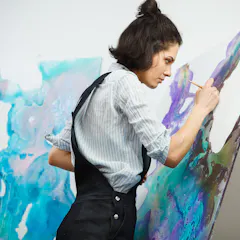
In a new research study, more than 900 people from around the world explain the challenges and benefits of microdosing LSD and psilocybin-containing mushrooms.

There is a long list of bands that fell apart over artistic differences. But conflict between band members – and even some creative sledging – can be crucial to making better music.
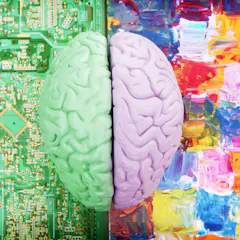
Autistic and artistic, you can be both.
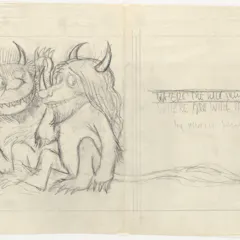
The book took eight years from conception to publication. In the earliest dummy, the monsters that millions have grown to love actually started out as horses.
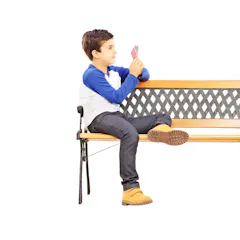
Playing with imaginary friends in childhood is linked to being more creative as an adult.

How theatre and artwork allowed us to better address severe air pollution.
We talk about artistic inspiration all the time – but science demands inspiration too.
The poet Percy Bysshe Shelley believed that we can exercise our moral imagination ‘in the same manner as exercise strengthens a limb’. Here, then, are some tips for fostering empathy through art.

The Bill & Melinda Gates Foundation is on a mission to get schools to adopt a “high-quality” curriculum. But the effort will constrain teachers and stifle creativity, an education scholar argues.

Children with imaginary friends tend to be creative and have more empathy.

Our contemporary education systematically trashes creativity and unwittingly punishes students for exercising their imagination.
Everybody can think creatively – including you.
Creativity should be about more than just coming up with one solution.
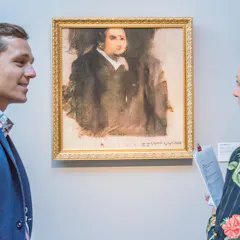
It might look like an unfinished piece but it’s the work of artificial intelligence, the first artwork of its kind to be sold at auction.
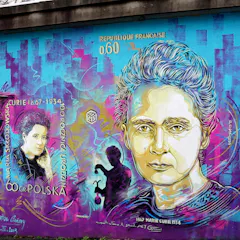
To become a successful innovator, follow Marie Curie, Mahatma Gandhi and today’s female social entrepreneurs – focus on ideas and social value, not money.
Even people who claim to hate routines probably follow quite a few.
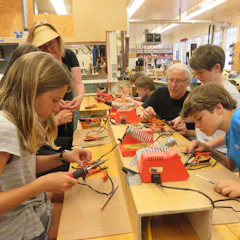
The A in STEAM stands for arts, and it has important influences in science, technology, engineering and maths.

To assess problem-solving, creative and critical thinking skills on NAPLAN would fit with broader movements in education internationally, but there are some questions to address first.
Top contributors
-

Professor of Computer Science and Director of the Art & AI Lab, Rutgers University
-
Professor of Philosophy and Director of Applied Ethics Center, UMass Boston
-
Visual Artist and Lecturer in Teacher Education, University of Canberra
-
Associate Professor of Developmental Psychology & Psychopathology, University of Leeds
-
Professor Emerita of Linguistics, American University
-
Professor of Psychological and Brain Sciences, Drexel University
-
Professor of Experimental Psychology, University of Iowa
-
Professor of Engineering Innovation, Adelaide University
-
Professor of Personality Psychology, The University of Melbourne
-
Senior Lecturer in Psychology, Oxford Brookes University
-
PhD student, University of Warwick
-
Professor of Creative Arts, Griffith University
-
Professor, Innovation Design Engineering, Royal College of Art
-
Postdoctoral Fellow in Philosophy, UMass Boston
-
Professor of Educational Psychology, University of Connecticut