
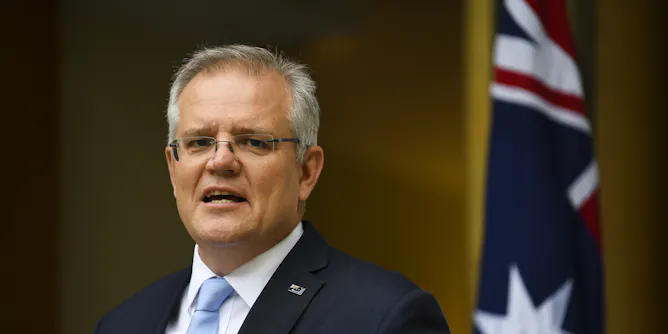
Scott Morrison will unveil a $1.1 billion package to make Medicare telehealth services available during the coronavirus pandemic and to support mental health, domestic violence and community services.
Articles on COVID-19 myths
Displaying 21 - 29 of 29 articles

According to Google Trends, the top globally trending topic this week is ‘orthohantavirus’, as spurious sites claim it’s next pandemic on the horizon. The claim is baseless.

After two decades of constant turmoil, is it anyone wonder people are struggling to manage their behaviour in the fight against coronavirus?
The media is regurgitating an international narrative that may not be fit for localised purpose.

Why have conspiracy theories so easily circulated during the COVID-19 pandemic? What do these theories tell us about societies and what challenges do they present?

It’s hard to adopt a set of hard and fast rules with the advice changing so quickly. So it’s important you have a set of evidence-based principles to guide your decision-making about social contact.

How do you know what you’re reading and hearing about COVID-19 is based on fact not myth? Here are the basics, and we’ve created an at-a-glance infographic to make it easier to digest.
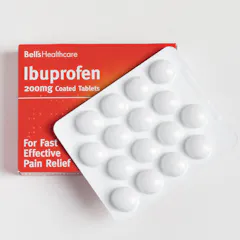
There is currently no evidence showing it makes COVID-19 symptoms worse.

There’s no shortage of myths, scams and spurious claims circulating about coronavirus.
Top contributors
-

Assistant Professor of Behavioral and Community Health Sciences, University of Pittsburgh
-
Assistant Professor of Public Health, University of Pittsburgh
-
Department of Media & Culture, Faculty of Humanities, University of Amsterdam
-
Senior Lecturer in Marketing, University of Hull
-
Assistant Professor of Pediatrics, University of Pittsburgh
-
Associate Professor of Communication and Information, Nanyang Technological University
-
Provost Professor of Psychology and Marketing and co-director of the Dornsife Mind & Society Center, USC Dornsife College of Letters, Arts and Sciences
-
Researcher, UQ Critical Thinking Project, The University of Queensland
-
University of Oxford
-
Research Associate Professor - Economics, University of Tennessee
-
Assistant Professor, Religious Studies, McMaster University
-
Professor of American Studies, University of Manchester
-
Clinical Associate Professor of Pharmacy Practice, Binghamton University, State University of New York
-
Professor of Infectious Diseases, Monash University
-
Clinical Psychologist and Associate Professor, School of Medicine and Psychology, Australian National University