

Geographers are documenting slave-built infrastructure, from railroads to ports, in use today. Such work could influence the reparations debate by showing how slavery still props up the US economy.
Articles on Cotton
Displaying 21 - 35 of 35 articles

Black Friday sales reveal fast fashion extremes. But how does it affect the planet?
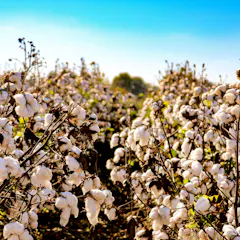
Burkina Faso’s genetically modified cotton success narrative was built on studies with methodological problems.
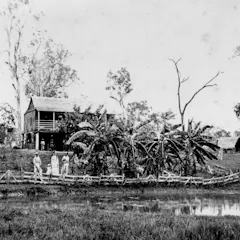
As the American Civil War interrupted cotton production, plantation owners looked to the new colony of Queensland.
While natural fibre textiles like cotton have generated an environmentally friendly reputation in recent years they might be just as bad as microplastic textiles like polyester and Nylon.
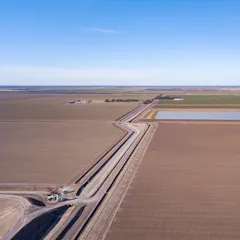
Knee-jerk responses to water insecurity won’t fix the basin. The harder and longer path is delivering real water reform, including transparent water planning enshrined in law.

Crisco’s main ingredient, cottonseed oil, had a bad rap. So marketers decided to focus on the ‘purity’ of factory food processing – a successful strategy that other brands would mimic.

A new clothing recycling process can counter the environmental costs of fast fashion.

Consumers are only benefitting from cheap clothes at considerable cost to the environment and by exploitation of a poor, vulnerable garment workers.

Crises in the Darling River have raised questions about cotton and rice farming in the Murray Darling Basin.
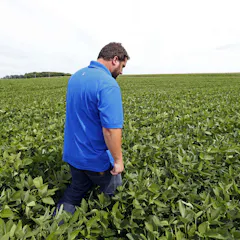
The Trump administration’s promise of $12 billion in aid to offset losses from retaliatory tariffs will not make up for the long-term consequences of a prolonged trade war.

Water pollution, toxic chemical use and textile waste: fast fashion comes at a huge cost to the environment.

Our clothes are cheaper, flimsier and shorter-lived than ever. But jeans, a staple of the modern wardrobe, are actually designed to be long-lasting – provided you take proper care of them.
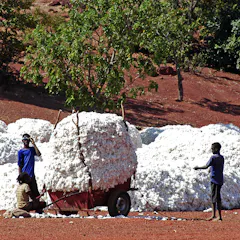
Burkina Faso, one of the largest GM cotton producers in the world, has begun a phase out of all Bt cotton production.
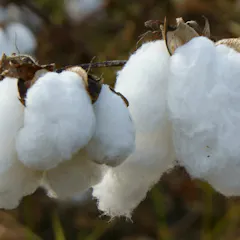
Arguments surrounding the use of genetically modified crops and whether they are the solution to the world’s problems of food supply and public health are no nearer to resolution than when GM was introduced…
Top contributors
-

Professor, Fenner School of Environment & Society, Australian National University
-
Australian Laureate Professor of Economics, Crawford School of Public Policy, Australian National University
-
Associate Professor, International Studies Department, University of San Francisco
-
Professor and Dean of the School of Fashion and Textiles, RMIT, RMIT University
-
Research Associate, Queensland University of Technology
-
Associate professor, Deakin University
-
Emeritus Professor of Social Statistics, University of Manchester
-
Lecturer in Sustainablity, Fashion and Retail, University of Leeds
-
Professor, School of Mathematical And Physical Sciences, University of Technology Sydney
-
PhD Candidate, The University of Melbourne
-
Professor of Operations Management, Lancaster University
-
Professor of Human Movement, University of Sydney
-
Associate Professor of Sleep and Wellbeing, University of Sydney
-
Reader in Postcolonial Literature, Leeds Beckett University
-
Associate Professor Department of International Development Studies, Dalhousie University