
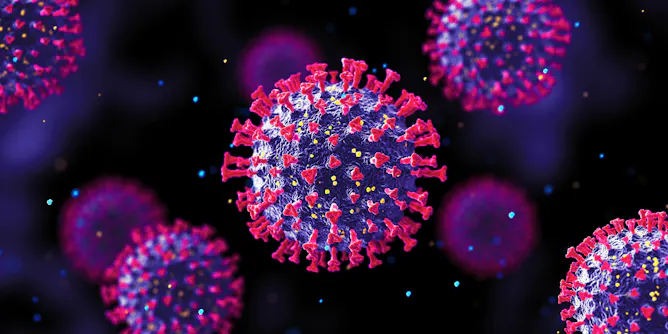
The latest addition to the omicron lineage has been making waves in Europe. Whether it will do the same in the U.S. depends on rates of vaccination and prior infection.
Articles on Coronavirus
Displaying 161 - 180 of 5498 articles
Children’s education, the population’s mental health and much more bear the scars of the pandemic.
Some of the most persistent myths about COVID-19 vaccination have been false rumours that it can affect fertility in men or women. There has never been any evidence to support this misinformation.
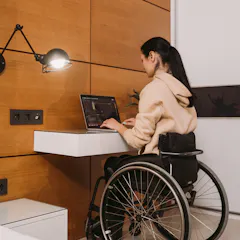
COVID-19 planning needs to take disability justice seriously. Universities must design courses to be accessible to all learners, and offer ongoing remote learning.

Hybrid viruses that are part delta and part omicron have been found in Europe and North America.

The Russian invasion is creating conditions in which it’s easy for the virus to spread.
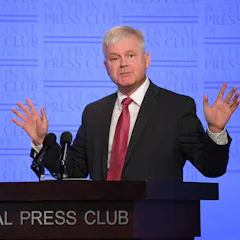
Politics with Michelle Grattan: Stay calm, petrol is headed down, budget is improving – economist Chris Richardson
Michelle Grattan speaks with Deloitte Access Economics director Chris Richardson about the Australian economy, the budget, and petrol prices

Cuba is acting on the scientific fact that humanity will be safest when all who can be vaccinated are vaccinated. It is following the science and earning its trusted reputation.
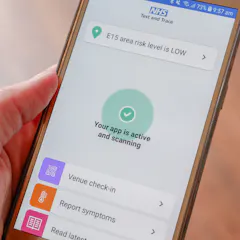
With COVID isolation scrapped in England, it’s unclear what’s next for the NHS’s much-discussed app.

Routines can be powerful tools to help people build a ‘new normal’ as pandemic restrictions lift. Routines can support creativity, boost health and provide meaningful activities and opportunities.
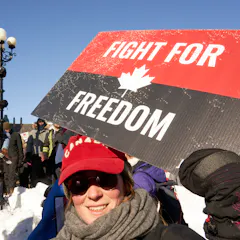
Framing vaccines as an infringement of liberty is a powerful tactic, but obscures health and political factors that may actually drive resistance.
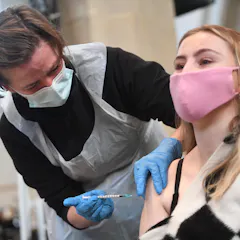
In the two years since COVID was declared a pandemic, vaccines and treatments have been rapidly developed – yet millions worldwide have died.
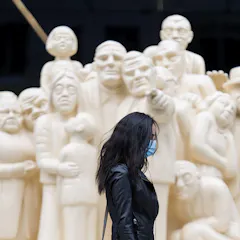
Decreases in respiratory infections during the pandemic suggest there may be a continued role for the selective, non-mandated use of measures like masks and social distancing even post-COVID-19.

In early 2020 we didn’t know whether a COVID vaccine was possible. And we changed our minds on face masks and surface transmission.
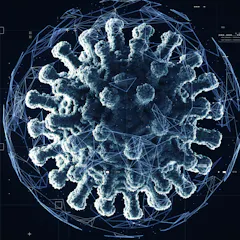
A highlight of this pandemic is how quickly effective vaccines were developed and rolled out.
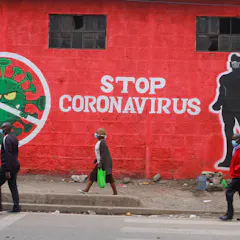
It’s a huge cause for concern that, two years into the pandemic, the disparities and unequal power structures in global health are still intact.
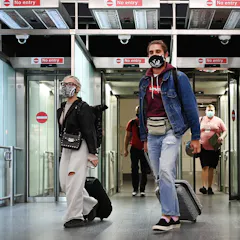
COVID has disrupted how we work, socialise and shop, but there are some signs we’re returning to doing things like we used to.
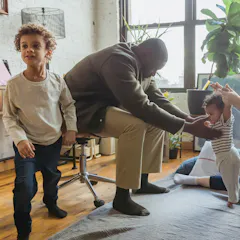
Making daily time to connect with their children is an important way of nurturing family experiences and relationships and to find restoration.

We asked over 1,000 people whether the lifting of restrictions in England signals the end of the pandemic – the majority thought it didn’t.

The drug has been authorised for the use in the UK and elsewhere, but some are calling for further testing.
Top contributors
-

Professorial Fellow, University of Canberra
-
Associate Professor, Epidemiology, Deakin University
-
Professor of Global Biosecurity, NHMRC L3 Research Fellow, Head, Biosecurity Program, Kirby Institute, UNSW
-
Chair in Epidemiology, Deakin University
-
Senior Research Fellow in Global Health, University of Southampton
-
Professor of Biostatistics and Epidemiology, Adelaide University
-
Professor of Research Ethics, University of Portsmouth
-
Professor of Public Health, University of Sheffield
-
Honorary Enterprise Professor, School of Population and Global Health, and Department of General Practice and Primary Care, The University of Melbourne
-
Professor, Director of Research, Nursing and Midwifery, Monash University
-
Professor of Medicine, University of East Anglia
-
Professor of Mathematical Biology and Public Engagement, University of Bath
-
Consultant Neonatologist and Professor of Ethics, University of Oxford
-
Visiting Fellow, Crawford School of Public Policy, Australian National University
-
Professor of Medicine, University of Virginia