
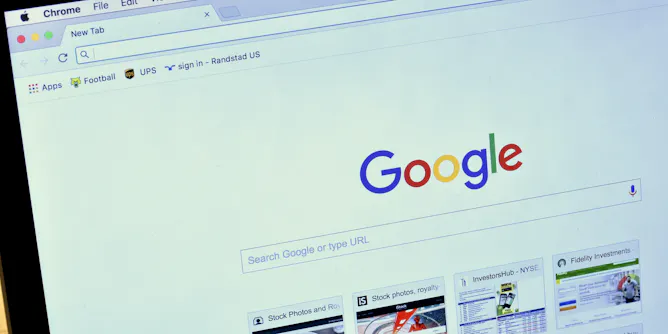
When a search query is loaded with implicit false assumptions, Google’s results don’t always promote the truth.
Articles on Conspiracy theories
Displaying 301 - 320 of 336 articles

Researchers have found that today’s students, despite being ‘digital natives,’ have a hard time distinguishing what is real and what is fake online. Metaliteracy might provide the answers.

The Antill 7: On belief
The Conversation, CC BY-ND46.9 MB (download)
Four stories on belief: from the allure of cults and conspiracy theories, to the effect of trauma on faith, to the way dogma has influenced science – and if technology can actually shift our beliefs.

Democracy rests heavily on the idea that, though we may not like those who govern, they gained that power by fair means. Donald Trump is undermining that idea.

A volunteer force that provides humanitarian aid in the worst of conditions, the White Helmets are the target of some very caustic conspiracy theory.
The same forces that drive belief in conspiracy theories are the ones driving the rise of Donald Trump. So it’s no wonder that, less than two months until the election, he continues to dabble in and promote them.

How does Donald Trump get away with the type of campaign he’s running? Why, if he’s a narcissistic demagogue, has he found an audience who respond to his politics?

Contrary to the claims of One Nation Senator-elect Malcolm Roberts’ that climate change is not happening, there is abundant evidence it is, but it might not be enough to persuade him.

Whether it’s Hillary Clinton’s courting the UFO vote or Donald Trump’s lending credibility to various conspiracy theories, the “triumph of reason” seems to have gone by the wayside.

Shortly after Glen MacPherson started hearing strange humming noises, he created the World Hum and Database Project so people around the world could document their own experiences with the Hum.

They may not be the Illuminati but there is a different kind of conspiracy at play at the secretive annual Bilderberg meeting of global elites.
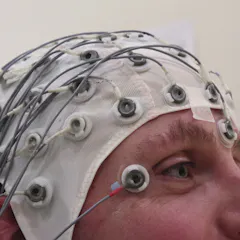
We now have access to an Internet containing a vast store of information much bigger than any individual brain can carry - and that’s not always a good thing.

No laughing matter: privacy fears were stoked in the 19th century even as people relished the tale of a Nosy Parker.
How do rational people get sucked into believing conspiracies? According to research, we’re more susceptible than you’d think.
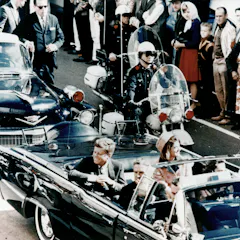
Kennedy’s murder has spawned countless books, films, television documentaries and websites, each devoted to solving the crime. And yet any agreement on the ‘truth’ seems as unlikely as ever.

It might seem crazy to believe the world is flat. But for some people it reinforces a narrative that gives their lives meaning.
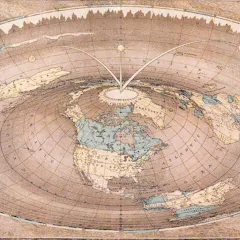
We often hear that most people throughout history believed the world was flat. But that’s not entirely true.
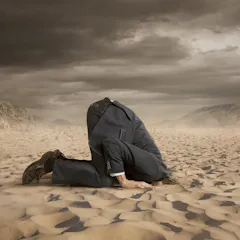
No matter how much evidence scientists present in support of climate change there are those who refuse to believe it. They think it’s all part of the consprarcy theory.

In the post-9/11, post-Iraq television landscape we’re familiar with government and terrorist conspiracy shows. How will aliens hold up?
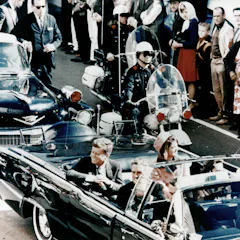
For a growing number of people, the truth will never be enough.
Top contributors
-

Associate Professor in Social Psychology, School of Psychology, University of Nottingham
-
Professor in Applied Cognitive Psychology, Manchester Metropolitan University
-
Senior Lecturer and Researcher in Cognitive and Parapsychology, Manchester Metropolitan University
-
Host of The Anthill Podcast, The Conversation
-
Professor of Social Psychology, University of Kent
-
Chair of Cognitive Psychology, University of Bristol
-
Professor of American Studies, University of Manchester
-
Senior Lecturer in Social Psychology, La Trobe University
-
PhD candidate Individualized Program, 2020-2021 Public Scholar, Concordia University
-
Senior Research Fellow, Melbourne School of Psychological Sciences, The University of Melbourne
-
Department of Media & Culture, Faculty of Humanities, University of Amsterdam
-
Senior Lecturer in Philosophy and Education; Curriculum Director, UQ Critical Thinking Project, The University of Queensland
-
Senior Lecturer in Psychology, The Open University
-
Associate Professor in Psychology, Te Kunenga ki Pūrehuroa – Massey University
-
Associate Professor of Sociology, University of Dayton