

Family members of Sandy Hook victims sued media personality Alex Jones over his claims that the killings were a hoax they participated in. Current law makes their lawsuit unnecessarily hard to prove.
Articles on Conspiracy theories
Displaying 281 - 300 of 336 articles

Conspiracy theorists have an à la carte attitude to data and trust, so what can scientists do about it?

Conspiracy theorists are commonly seen as fundamentally irrational, with an all-encompassing obsession. But new research suggests they may have quite different motivations, beliefs and attitudes.

Proof of time travel, false memories or a parallel universe? A look at the wacky world of the ‘Mandela Effect’.

Some journalists have claimed that ‘thousands’ of documents which have gone missing at the National Archives are proof of ‘history theft’. It’s probably just old-fashioned incompetence.

Dealing with a co-worker or manager who says demonstrably false things can be a challenge, particularly at holiday office parties. Here’s a guide to handle a colleague in denial.

Easy experiments that show the Earth is round.
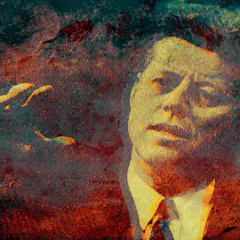
In the minds of many, the assassination remains a tragedy cloaked in mystery. How does this lack of closure – and the general distrust it fomented – resonate in American culture and politics today?
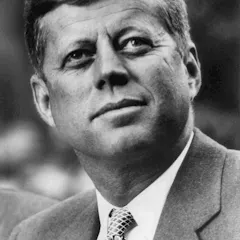
It’s been a good year for conspiracy theorists, so they say.
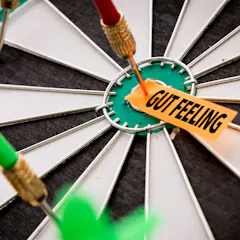
Intuition is just one of many factors that shape what you believe.

To succumb to conspiracy is to be human.
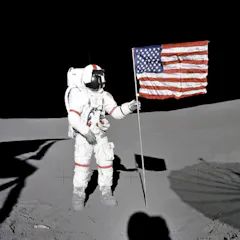
Rational arguments and myth busting often won’t help you change the mind of a conspiracy theorist. But there are other ways.

Some people have objected to childhood vaccination since it was introduced in the late 1700s. And their reasons sound remarkably familiar to those of anti-vaxxers today.

They’re not just about aliens and moon landings.

Election results almost always come with conspiracy theories attached, but India’s latest round of recriminations goes deeper than usual.

In Russia, social networks have given a new life to the conspiracy theory that HIV-AIDS is a global hoax.

Twenty years ago, the paranoia that consumed cults like Heaven’s Gate existed on the margins of American society. Now it’s moved toward the center of the nation’s political life.

Reassuring people “not to worry” about public health issues like vaccination or fluoridated water doesn’t work. Nor does telling people “don’t panic”. So, what does?

The reporting of crackpot theories as news by mainstream news outlets only damages the credibility of the media and science, and undermines public trust in both.
Unrestricted access to information is vital to a vibrant democracy.But if this information is inaccurate, biased or falsified, the fundamental freedom of informed choice is denied.
Top contributors
-

Associate Professor in Social Psychology, School of Psychology, University of Nottingham
-
Professor in Applied Cognitive Psychology, Manchester Metropolitan University
-
Senior Lecturer and Researcher in Cognitive and Parapsychology, Manchester Metropolitan University
-
Host of The Anthill Podcast, The Conversation
-
Professor of Social Psychology, University of Kent
-
Chair of Cognitive Psychology, University of Bristol
-
Professor of American Studies, University of Manchester
-
Senior Lecturer in Social Psychology, La Trobe University
-
PhD candidate Individualized Program, 2020-2021 Public Scholar, Concordia University
-
Senior Research Fellow, Melbourne School of Psychological Sciences, The University of Melbourne
-
Department of Media & Culture, Faculty of Humanities, University of Amsterdam
-
Senior Lecturer in Philosophy and Education; Curriculum Director, UQ Critical Thinking Project, The University of Queensland
-
Senior Lecturer in Psychology, The Open University
-
Associate Professor in Psychology, Te Kunenga ki Pūrehuroa – Massey University
-
Associate Professor of Sociology, University of Dayton