
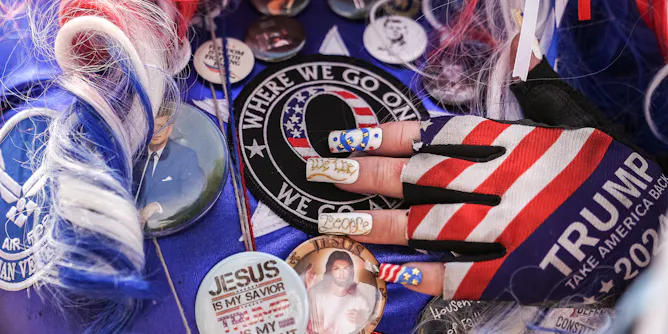
Ideas from QAnon’s conspiracy theory have appeared on government social media sites during Trump’s second term and continue to divide America amid social and economic crises.
Articles on Pizzagate
Displaying all articles
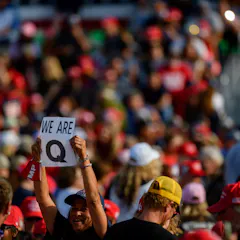
The foundational belief of many of the QAnon followers is that Donald Trump is the heroic figure fighting the elite pedophile ring.

The culture wars have been around forever, but keep taking new forms, and US variants threaten to spill over to Australia – as seen in the recent (overturned) ban on same-sex parenting books in Sydney.
Trust in brands may be eroded as awareness of misinformation increases according to new research.
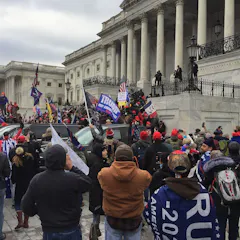
Conspiracy theories may be baseless, but they can have a range of harmful real-world consequences, including spreading lies, undermining trust in media and government and inciting violence.

The key to understanding online conspiracy theorists is to understand how the line between fantasy and reality can become blurred.
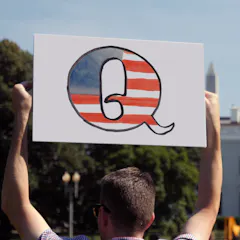
Many of those who believe conspiracy theories do not necessarily act on those beliefs. Nevertheless, conspiracy theories can still spread dangerous misinformation that can cause harm.
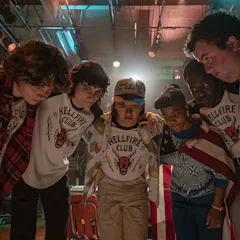
The latest season of Stranger Things features a town in the grip of a ‘Satanic Panic’. This reflects the very fears that existed in 1980s America, which still exist in different forms today.
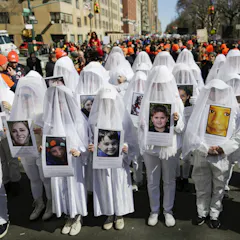
Conspiracy theories surrounding the Sandy Hook school shooting continue to reverberate in the US, but now there are legal consequences.
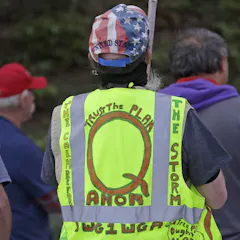
Computational methods could help identify conspiracy theories as they emerge.
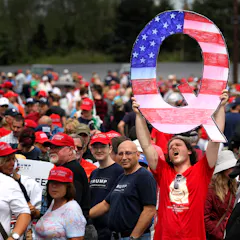
Donald Trump said followers of conspiracy theory ‘are very much against pedophilia.’ What he didn’t mention was the demonic imagery and language that peppers QAnon posts.
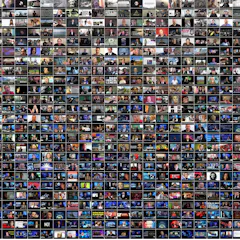
Researchers have been able to track how radical communities on the fringes of the web essentially manufacture conspiracy theories.

With the rise of internet groups for conspiracy theorists, it may feel like Americans live in a unique time. But conspiracy theories have been common for decades.
There’s never been greater need for the study of what we don’t know, and why we’re not supposed to know it.
Unrestricted access to information is vital to a vibrant democracy.But if this information is inaccurate, biased or falsified, the fundamental freedom of informed choice is denied.
Top contributors
-

Professor and Head of Department of Political and Conflict Studies, Nelson Mandela University
-
Chercheuse en développement durable, sciences sociales et technologie, GEM
-
Full professor, GEM
-
PhD Student, Philosophy, Dalhousie University
-
Lecturer in Marketing & Strategy, Cardiff University
-
Chair and Professor of Religious Studies, Radford University
-
Assistant Professor of Journalism, University of Connecticut
-
Research Fellow, Institute for Religion and Critical Inquiry, Australian Catholic University
-
Department of Media & Culture, Faculty of Humanities, University of Amsterdam
-
Professor of the Practice of Data Science, Washington University in St. Louis
-
Senior Lecturer, Discipline of English and Writing, University of Sydney
-
Assistant professor in information systems, IÉSEG School of Management
-
Professor of Danish Literature and Culture, University of California, Berkeley
-
Postdoctoral Fellow, Philosophy, University of Toronto
-
Associate Professor of Sociology, University of Dayton