

The bigger movement in the data over the past quarter-century is at the other end of the age spectrum: A reliable base of older Conservative Party voters is largely gone.
Articles on Conservative Party of Canada
Displaying 1 - 20 of 44 articles

Instead of assessing parties along familiar ideological lines, many Canadian voters approached the 2025 election based on who could best protect the country from the U.S. That’s seemingly still the case.

Canada’s three main political parties — the Liberals, Conservatives and NDP — have banded together to avoid privacy laws aimed at protecting voter data.

Governments around the world are clamping down on Grok’s production of nonconsensual sexual images. Why does Canada seem to be missing in action?

New research suggests the government’s intention to reduce the size of the federal public service could very likely drive some Liberal voters back to the NDP in the next federal election.
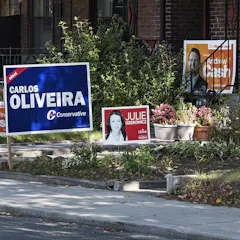
For now, the Canadian polarization story is one of caution, not crisis. Our political differences are real, but haven’t yet deeply divided us.
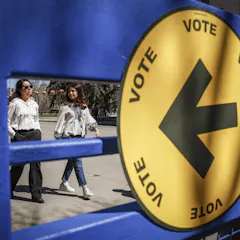
Canada’s voter gender gap is not just about party preference — it reflects deeper ideological divides shaped by cultural values, policy priorities and gender identities.
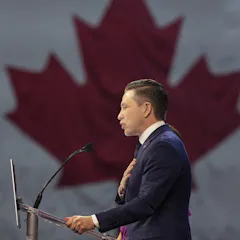
Despite losing the federal election, Pierre Poilievre brought the party its greatest electoral performance in decades and has generated a unique degree of energy and enthusiasm among supporters.

With women comprising more than half of the electorate, the Conservative Party of Canada’s focus this election on working-class men risked alienating female voters.
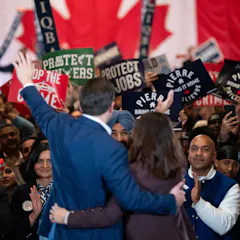
For some children of immigrants, voting Conservative isn’t a contradiction — it’s a strategy for being seen as fully Canadian.

Donald Trump’s trade war with Canada has sparked a rise in Canadian patriotism. Canadian conservatives can harness that patriotism by reconnecting with their historical roots of anti-Americanism.

As Canada grapples with intensifying climate-related challenges, the next government will need to be able to effectively communicate its vision to voters.

Pierre Poilievre’s recent 100-minute interview with controversial media commentator, Jordan Peterson, provided some clues about the Conservative leader’s political ideology.

The carbon tax, once seen as a policy achievement for the Liberals, may be a liability in this year’s election. Here is how the Liberals can counter the “axe the tax” narrative.

Canada’s current carbon tax system is unpopular and not as effective as it should be. A progressive carbon tax system would help.

The stunning byelection loss in a reliably Liberal Toronto riding doesn’t bode well for the political future of Prime Minister Justin Trudeau.

Both Liberals and Conservatives have invested a lot of resources into an upcoming Toronto byelection. If the Liberals lose the riding, it will be an ominous sign for Justin Trudeau’s Liberals.

Pierre Poilievre’s “tough-on-crime” rhetoric relies on discredited ideas that can lead to overly harsh penalties and actually increase crime.
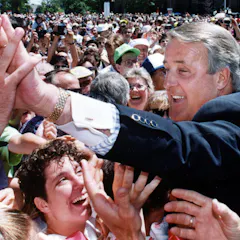
The death of former Canadian prime minister Brian Mulroney will lead to a wide examination of his legacy. A lasting policy of the Mulroney regime is free trade with the United States.
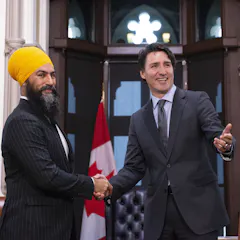
The supply-and-confidence agreement between the Liberals and NDP has helped both parties develop and take credit for the expansion of social policies across Canada. But is it on life support?
Top contributors
-

PhD Candidate, Political Science, Western University
-
Associate Professor Human Rights and Political Science, Wilfrid Laurier University
-
Postdoctoral Researcher, University of Calgary; University of Toronto
-
Climate Associate at the Information Integrity Lab and Adjunct Professor in Political Studies, L’Université d’Ottawa/University of Ottawa
-
Professor, Department of Political Science, McMaster University
-
Professor, School of Public Policy and Administration, York University, Canada
-
Professeur en sociologie politique, Université du Québec à Montréal (UQAM)
-
Sessional Instructor, Political Science, University of Guelph
-
Professor, Labour Studies, Brock University
-
Associate Professor of Labour Studies, Brock University
-
PhD Candidate, School of Labour Studies, McMaster University
-
Professeure titulaire, Département de géographie, Université Laval
-
Research Fellow & PhD Candidate, Political Science, Cevipol, Université Laval
-
Associate Professor of Political Science, Western University
-
PhD Candidate in Political Studies, Queen's University, Ontario