
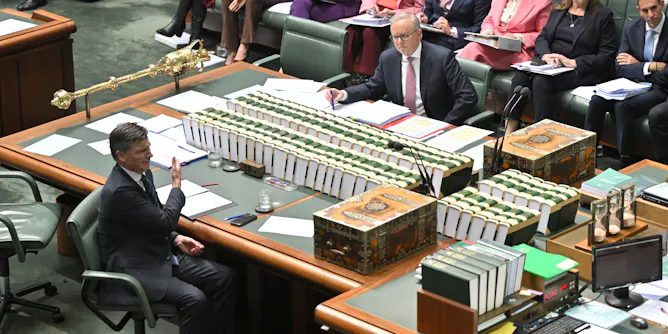
Recent polls carry good news and bad news for all parties – and their leaders.
Articles on Canadian politics
Displaying 1 - 20 of 84 articles
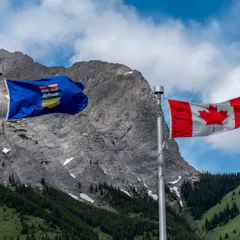
Alberta is not the only place in the world where questions of self-determination are live.

Delivering on Ottawa’s AI for All strategy will require governments to build wraparound supports for workers, businesses and communities.

Pierre Poilievre’s leadership review was less about absolution than affirmation: a collective judgment that the party is closer to power with him than without him.

New research suggests the government’s intention to reduce the size of the federal public service could very likely drive some Liberal voters back to the NDP in the next federal election.
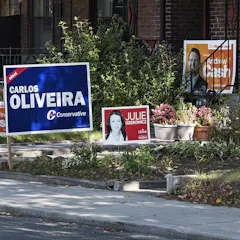
For now, the Canadian polarization story is one of caution, not crisis. Our political differences are real, but haven’t yet deeply divided us.

Now that Pierre Poilievre has won a byelection to return to the House of Commons, will he maintain his libertarian-flavoured populism of the last few years? Or will he pivot to broaden his base?

Intergovernmental relations in Canadian federalism are notoriously weak and lack the legitimacy and transparency to bring about effective collective action. Here what needs to change.
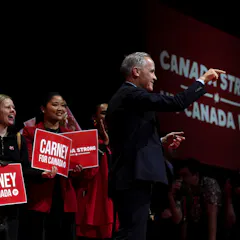
In the face of U.S. tariffs, the new Canadian government should take prudent, urgent and bold steps to strengthen the nation’s economy.
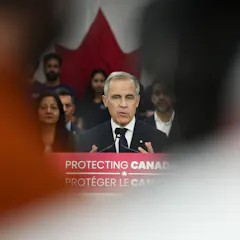
Canada faces interconnected challenges of climate instability and social inequality, and our current economic approach may be part of the problem.

Canada’s overall population is older than ever. As more baby boomers retire in the coming years, policymakers will need to consider how they can meet the needs of an older population.

As Canada grapples with intensifying climate-related challenges, the next government will need to be able to effectively communicate its vision to voters.

While the announcement of a high-speed rail line between Québec City and Toronto is a milestone, multiple hurdles must be cleared for this project to see the light of day.

Sport is being used as an expression of nationalism in a time of increased tensions between Canada and the United States.

Justin Trudeau’s resignation has opened up a vacuum in progressive leadership in Canada. It will likely be filled by left-leaning provincial premiers in the months and years ahead.
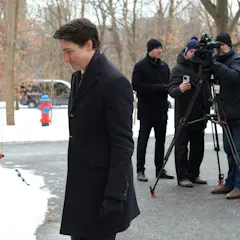
After a decade as prime minister, Justin Trudeau has succumbed to unpopularity at home, infighting in his party – and questions over his response to the incoming US administration.
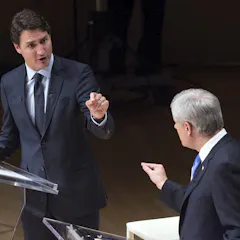
There have been major similarities between Justin Trudeau’s approach to foreign policy and Stephen Harper’s. But Canadian governments have limited flexibility in how they manage external affairs.

New research has found there is a concerning trend in Canadian political discourse: the tendency to treat politics as little more than sensational entertainment.

Liberal strategists plan to increase the prime minister’s exposure, thrusting the most unpopular politician in the country right in the face of Canadians. Here’s why it isn’t likely to work.

NDP Leader Jagmeet Singh has pulled his party out of the supply-and-confidence agreement that’s helped keep Prime Minister Justin Trudeau’s minority Liberals in power. What’s behind the move?
Top contributors
-

PhD Candidate, Political Science, Western University
-
Professor, School of Public Policy and Administration, York University, Canada
-
Professor of Political Science, Carleton University
-
PhD, Political Science, Western University
-
Professor, Political Science, McGill University
-
Assistant Professor, Public Administration, Queen's University, Ontario
-
Harold Tanner Dean of the College of Arts & Sciences, Cornell University
-
Associate Professor Human Rights and Political Science, Wilfrid Laurier University
-
Professor, Department of Political Science, McMaster University
-
Postdoctoral Researcher, University of Calgary; University of Toronto
-
Lecturer, Political Science, University of British Columbia
-
Professor of Political Science, University of Calgary
-
PhD Student, Political Science, L’Université d’Ottawa/University of Ottawa
-
Associate Professor in North American History, University of Birmingham
-
Postdoctoral Associate, Cornell University