

Whenever you hear about a new bit of science news, these suggestions will help you assess whether it’s more fact or fiction.
Articles on Confirmation bias
Displaying 21 - 40 of 46 articles

Cognitive shortcuts help you efficiently move through a complicated world. But they come with an unwelcome side effect: Facts aren’t necessarily enough to change your mind.

To fight climate change, we need to take people’s cognitive biases into account.

Whether in situations relating to scientific consensus, economic history or current political events, denialism has its roots in what psychologists call ‘motivated reasoning.’

Involving family and friends in decisions or rethinking the meaning of “getting back to normal” helps protect against cognitive bias and its harmful consequences.

Fear is a central emotional response during a pandemic and it’s why most people have complied with lockdown conditions. But as anxiety eases and boredom sets in, people’s resolution may fray.
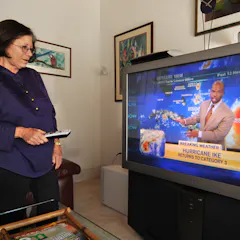
Media reports are starting to directly connect climate change to its weather effects in local communities. But how you respond to those linkages depends on what you already think about climate change.
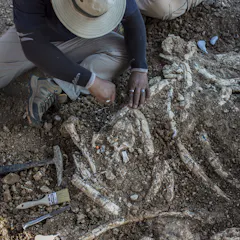
A new statistical test lets researchers search for similarities between groups. Could this help keep new important findings out of the file drawer?

The ‘illumination hypothesis’ – suggests that criminals like enough light to ply their trade, but not so much as to increase their chance of apprehension.

We can’t simply try to work out what’s going to happen during the fourth industrial revolution.
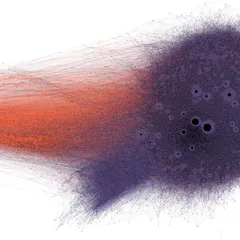
Information on social media can be misleading because of biases in three places – the brain, society and algorithms. Scholars are developing ways to identify and display the effects of these biases.
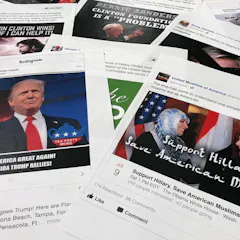
A scholar asks whether democracy itself is at risk in a world where social media is creating deeply polarized groups of individuals who tend to believe everything they hear.
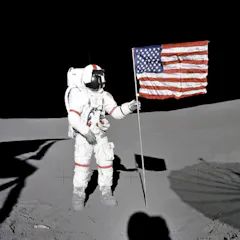
Rational arguments and myth busting often won’t help you change the mind of a conspiracy theorist. But there are other ways.

Reports of facts’ death have been greatly exaggerated. Effective communication jettisons the false dilemma in favor of a more holistic view of how people take in new information on contentious topics.

Millions of Americans believe brown cows produce chocolate milk? The way the media reported this factoid raises questions about science literacy – but different ones than you may think.
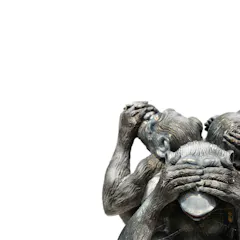
If someone sees or hears something they don’t want to believe…they probably won’t believe it.
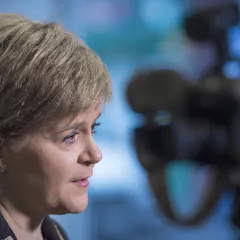
With a second Scottish referendum ‘all but inevitable’, here’s a strange pill for the nationalists to swallow.
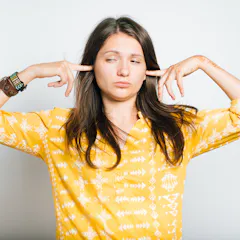
Quirks of human psychology can pose problems for science communicators trying to cover controversial topics. Recognizing what cognitive science knows about how we deal with new information could help.

Technology exacerbates the news echo chamber, but it can also be the solution to overcoming our deep-seated psychological biases.
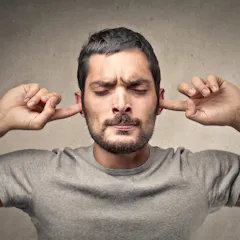
We like to think that our political views are well reasoned and backed by evidence. But research shows how easily we all succumb to cognitive biases to justify our own deeply held views.
Top contributors
-

Senior Research Fellow, Melbourne School of Psychological Sciences, The University of Melbourne
-
Associate Research Professor of Social Psychology, Louisiana State University
-
Director of External Research for frank, College of Journalism and Communications, University of Florida
-
Associate Lecturer, School of Psychology, University of Wollongong
-
Reader in Astrophysics, UCL
-
Adjunct Instructor in Cybersecurity, Johns Hopkins University
-
Associate Professor of Philosophy, Director of Center for Professional and Applied Ethics, University of North Carolina – Charlotte
-
Professor of Psychology, University of Michigan
-
Professor of Mathematics and Statistics, University of Maryland, Baltimore County
-
Postdoctoral Research Associate, University of Maryland
-
Professor of Biological Sciences, University of Maryland, Baltimore County
-
Lecturer in Psychology and Cognitive Science, University of Sheffield
-
PhD Psychology / Public Health, Australian College of Applied Psychology
-
Associate Professor at the Institute for Social Neuroscience in Melbourne, Australia, The University of Melbourne
-
Research Professor of Psychology, Tufts University