
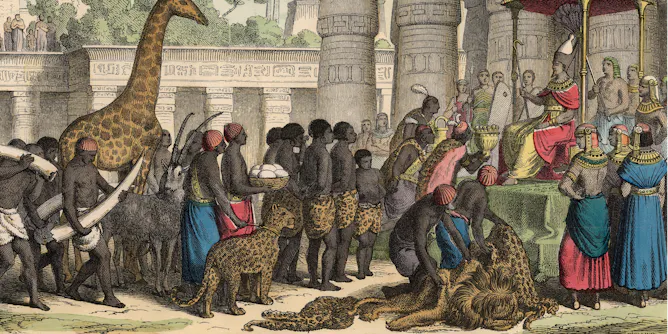
There was a reason Southern businessmen and thinkers were inspired by ancient Egypt: To them, it served as proof that all great civilizations were hierarchal societies sustained by enslaved labor.
Articles on Confederacy
Displaying 1 - 20 of 50 articles
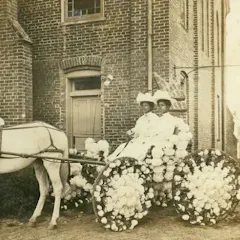
As one critic asked, has Juneteenth devolved ‘into an exploitative and profit-driven enterprise for companies that disregard the true significance of this day to the Black community?’

Rewriting the map can influence the public psyche in ways subtle and not so subtle.
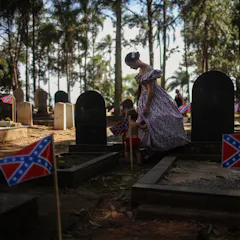
‘Ours is the only city in Brazil where the Confederate flag flies,’ said a city council member in Santa Bárbara d’Oeste. A new law there bans ‘symbols that promote racist and segregationist ideas.’
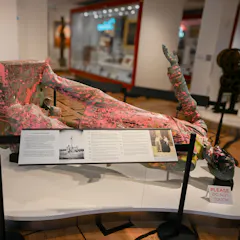
Protesters toppled and damaged a statue of Jefferson Davis in Richmond, Virginia, in 2020. It is now displayed at a museum just as they left it: prone and paint-splattered, with a toilet-paper noose.

The themes in the hit television series echo the social and political issues that the state has grappled with for decades.

Historically allowing opt outs of conscription has created tension in the population.

Keeping the United States together meant more than defeating the Confederacy. Lincoln first had to unite a fractured North.
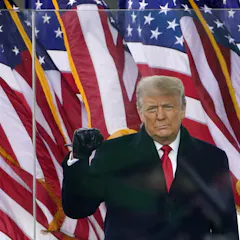
US law has long held that those who support rebels and insurrectionists are just as guilty of treason as those who support foreign enemies.
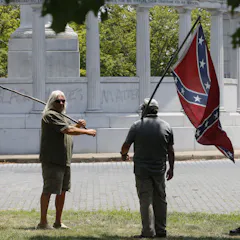
The drive to remove Confederate monuments links those monuments to modern racism. An economic historian shows that the intent and effect of those monuments from inception was to perpetuate racism.
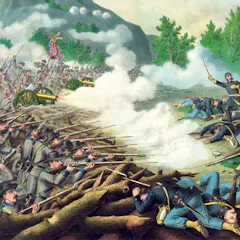
There was one central reason the Civil War happened.
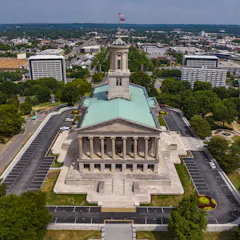
An official proclamation issued by two Tennessee lawmakers commemorates Confederate History Month, fails to mention slavery and instead honors what it calls a “heroic struggle for states’ rights.”

Danielle Smith’s grasp of Indigenous issues seems rooted not in genuine allyship and justice but in the appropriation of Indigenous experiences to advance white grievance politics.
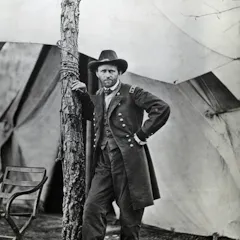
Known as the military leader who saved America, Ulysses S. Grant left a legacy of fighting for the rights of enslaved people during and after the Civil War.
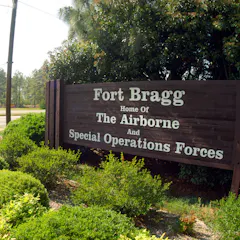
One of the last relics of ‘lost cause’ ideology is nearing its end as a federal panel has recommended renaming US military bases now honoring Confederate generals.
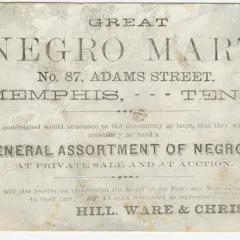
By the time slavery ended, over 1 million enslaved people had been forcibly moved in the domestic slave trade across state lines. Hundreds of thousands more were bought and sold within states.
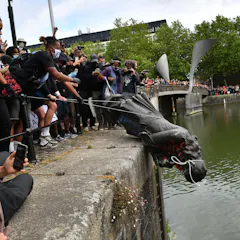
The question of what should happen to symbols of oppression has re-emerged a hot-button issue now that the graffiti-covered figure has moved to Bristol’s M Shed museum
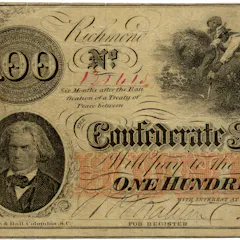
Confederate paper money was a promise to exchange the bill for gold or silver, but only after the Confederacy won the war.

Why did Confederate flags start appearing in the country’s anti-lockdown protests?
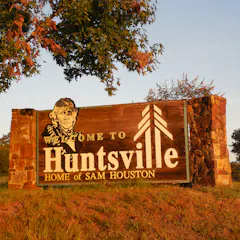
Texas’ most famous statesman, Sam Houston, was a slave owner who opposed the Confederacy. But white Texans tend to omit his dissent in current debates over removing Confederate markers.
Top contributors
-

Visiting Assistant Professor of Geography, Macalester College
-
Professor and Chair of History Department, Colorado State University
-
Derek H. Alderman is a Friend of The Conversation.
Chancellor's Professor of Geography, University of Tennessee
-
Associate professor emeritus, Journalism, Virginia Commonwealth University
-
Paul and Charlene Jones Chair in Law, University of Alabama
-
Professor, Dean of the School of Arts & Sciences, Tufts University
-
Professor Of Modern American History, University of Sussex
-
Associate Professor of Political Science, University of Oregon
-
Distinguished Professor of History, University of Arkansas
-
Associate Professor History, University of Maryland, Baltimore County
-
Professor of History and Director of the Undergraduate Program in Judaic Studies, Fairfield University
-
Professor of History, Morehouse College
-
Associate Professor of English, Virginia Tech
-
Professor of Curriculum & Instruction, University of Connecticut
-
Adjunct professor, Baylor University