
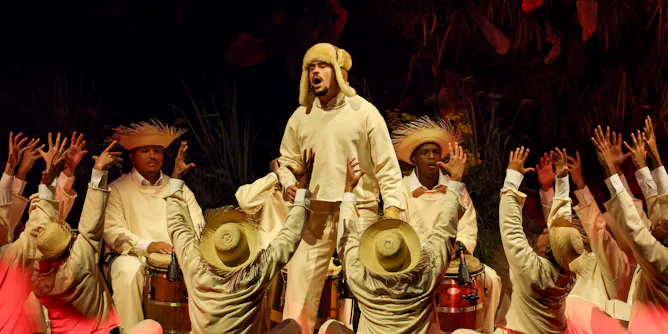
Culture wars once arose from impromptu events that struck a nerve among Americans, but they are now started by partisan agitators who introduce them to politicians and watch them take hold.
Articles on Confederate Monuments
Displaying 1 - 20 of 25 articles
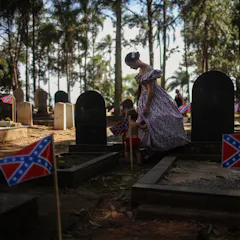
‘Ours is the only city in Brazil where the Confederate flag flies,’ said a city council member in Santa Bárbara d’Oeste. A new law there bans ‘symbols that promote racist and segregationist ideas.’
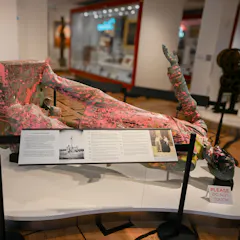
Protesters toppled and damaged a statue of Jefferson Davis in Richmond, Virginia, in 2020. It is now displayed at a museum just as they left it: prone and paint-splattered, with a toilet-paper noose.

At the turn of the 20th century, Southern sympathizers started building monuments to Confederate leaders. Black newspaper editors saw these emblems clearly for what they stood for – a lost cause.
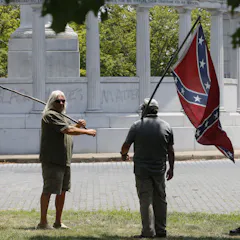
The drive to remove Confederate monuments links those monuments to modern racism. An economic historian shows that the intent and effect of those monuments from inception was to perpetuate racism.
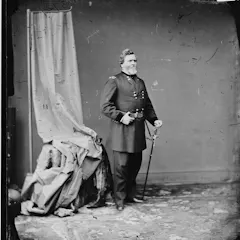
A Southerner, Maj. Gen. George H. Thomas was a racist enslaver before the Civil War. But he fought for the Union because he prioritized his oath to defend the Constitution over state interests.
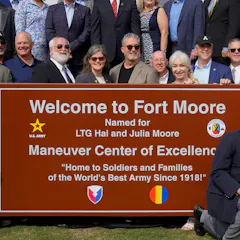
One of the last relics of ‘lost cause’ ideology is being removed as a federal panel renames US military bases that honor Confederate generals.
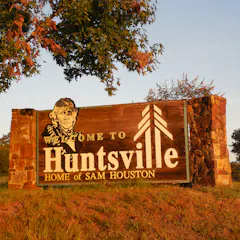
Texas’ most famous statesman, Sam Houston, was a slave owner who opposed the Confederacy. But white Texans tend to omit his dissent in current debates over removing Confederate markers.
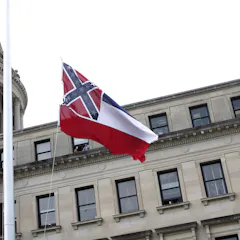
Public officials and individual citizens alike are more likely to oppose the presence of Confederate symbols when informed it may be bad for local business.
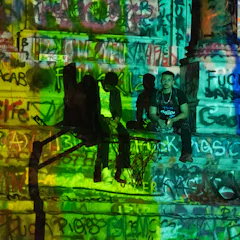
Protests of Confederate flags and monuments have grown since 2015, but resistance is not new. African Americans have been protesting against Confederate monuments since they were erected.

On June 19, a court will decide whether Virginia must obey a 1890 deed that gave the state a plot of prime Richmond land as long as it would ‘faithfully guard’ the Robert E. Lee statue erected there.

Take a good look at those old Christmas ornaments before hanging them on the tree – you may find it’s time to retire some family keepsakes.
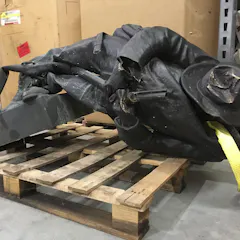
Where do old Confederate statues go when they die? The former Soviet bloc countries could teach the US something about dealing with monuments from a painful past.
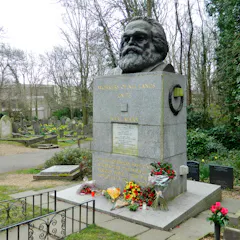
Statues to divisive figures are increasingly becoming the target of protest and vandalism.
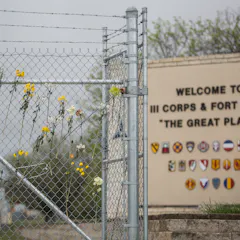
In scrutinizing statues honoring Confederate figures, journalists have overlooked military bases named after generals who fought to defend the slavery of black people.
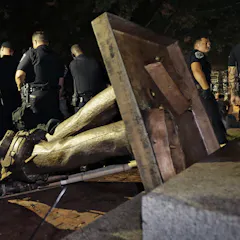
Toppling statues devoted to Confederate soldiers may be a joyous moment for protesters who fight white supremacy, but after the statues fall, structural racism remains, a scholar on slavery argues.

Many cities are removing their Confederate statues. But pioneer monuments represent a racist past, too. There are at least 200 of them, and their future is now being debated.
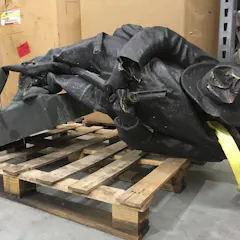
Over the course of human history, symbols and monuments have invoked violent impulses and destruction.
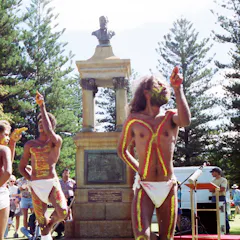
A Fremantle monument to three white explorers was revised in 1994 to acknowledge the violence committed against Indigenous owners. As Australia struggles to reconcile its racist past, perhaps this monument shows a way forward.

In defending white nationalists in Charlottesville, Donald Trump took aim at the founding fathers.
Top contributors
-

Associate professor emeritus, Journalism, Virginia Commonwealth University
-
Derek H. Alderman is a Friend of The Conversation.
Chancellor's Professor of Geography, University of Tennessee
-
Visiting Assistant Professor of Geography, Macalester College
-
Teaching Fellow, Queen Mary University of London
-
Professor of History, University of North Dakota
-
Professor of History, Binghamton University, State University of New York
-
Assistant Professor of US History, Durham University
-
Associate Research Fellow, Heritage Destruction Specialist, The University of Melbourne
-
Professor of Geography and Senior Research Associate in the Rock Ethics Institute, Penn State
-
Adjunct Professor at the School for Conflict Analysis and Resolution, George Mason University
-
Professor of History, Australian National University
-
Ruth Coulter Heede Professor of Art History, Case Western Reserve University
-
Professor of Political Science and Public Policy; Director, Democracy and Fair Elections Lab, USC Dornsife College of Letters, Arts and Sciences
-
Assistant Professor of Economics, University of Evansville; Institute for Humane Studies
-
Associate Professor, Media, Swinburne University of Technology