
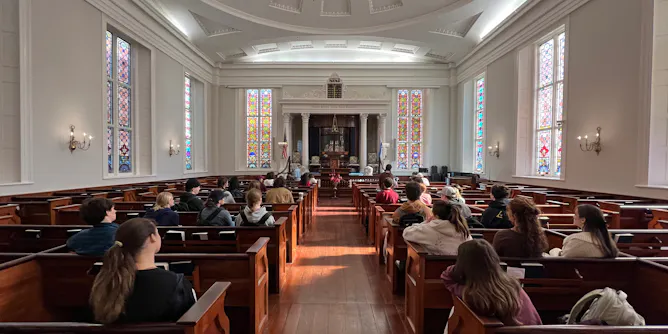
For many people, Jewish American history is synonymous with northern cities like New York and Chicago. But the South played an important role, especially in the early 1800s.
Articles on American South
Displaying 1 - 20 of 33 articles

‘The Bible Belt’ has been used for a century to describe religion and politics in the South. But it captured just some of life in the region then – and doesn’t capture what’s going on today.

The men responsible for the bloodshed 150 years ago were never prosecuted; instead, they rose to South Carolina’s highest offices.
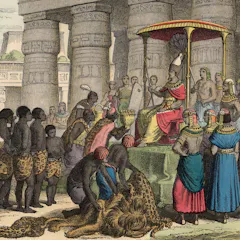
There was a reason Southern businessmen and thinkers were inspired by ancient Egypt: To them, it served as proof that all great civilizations were hierarchal societies sustained by enslaved labor.
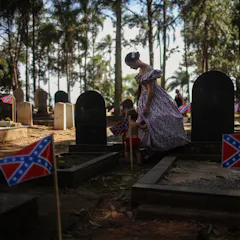
‘Ours is the only city in Brazil where the Confederate flag flies,’ said a city council member in Santa Bárbara d’Oeste. A new law there bans ‘symbols that promote racist and segregationist ideas.’

Even though her most famous work, ‘Bastard out of Carolina,’ deals with physical and sexual abuse, this merely constitutes one element of a broader emotional and physical landscape.

Language, geography, age and other factors can all affect how fast a person talks. But sometimes, these perceived differences are only in the listener’s head.
The Pulitzer Prize-winning author was always willing to experiment with his prose, pacing and narration, crafting an oeuvre that varied wildly in style and structure.
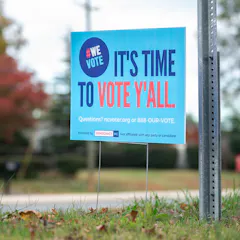
The use of ‘y'all’ has often been seen as vulgar, low-class and uncultured. That’s starting to change.
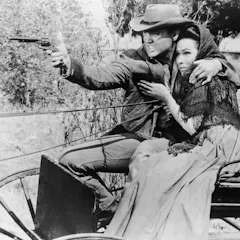
While you’ll often hear people say that violence is never the answer, in some communities violence is viewed as a perfectly reasonable response to personal slights.
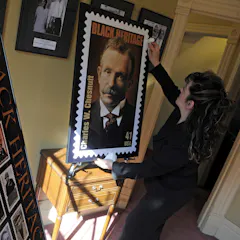
Black writers like Charles Chesnutt had to contend with a dilemma writers today know all too well: give the audience and editors what they want, or wallow in obscurity.

Why did Confederate flags start appearing in the country’s anti-lockdown protests?
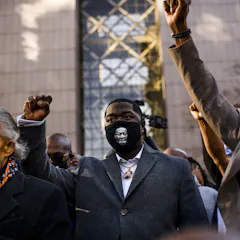
Research on racism and policing in the US, explained by the experts who study it.
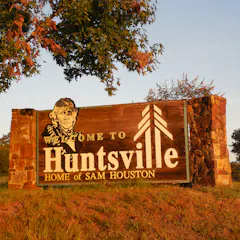
Texas’ most famous statesman, Sam Houston, was a slave owner who opposed the Confederacy. But white Texans tend to omit his dissent in current debates over removing Confederate markers.

Geographers are documenting slave-built infrastructure, from railroads to ports, in use today. Such work could influence the reparations debate by showing how slavery still props up the US economy.

Section 3 of the 14th Amendment was first used against Confederate leaders after the Civil War to expel seditionist politicians. Now it could be used against Donald Trump.
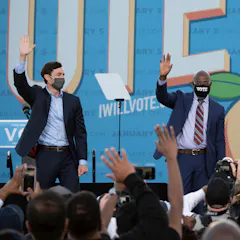
Georgia once had ‘the South’s most racist governor,’ a man endorsed by the KKK. Now its senators are a Black pastor and a Jewish son of immigrants. A scholar of minority voters explains what happened.
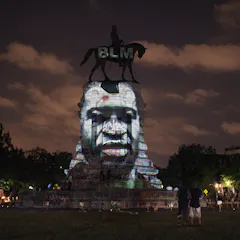
A Richmond court says the city cannot remove its controversial Robert E. Lee sculpture because an 1890 land deed gave the Confederate monument ‘to the people’ of Virginia, not its government.

On June 19, a court will decide whether Virginia must obey a 1890 deed that gave the state a plot of prime Richmond land as long as it would ‘faithfully guard’ the Robert E. Lee statue erected there.
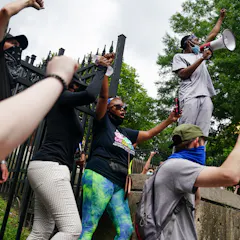
As protests over George Floyd’s death consume the country, students are forcing a reappraisal of a controversial editor and orator who helped build modern Atlanta.
Top contributors
-

Professor of Political Science, University of Florida
-
Visiting Assistant Professor of Geography, Macalester College
-
Professor of Law, University of Richmond
-
Professor of History, Arizona State University
-
Law Student, Mercer University
-
Provost’s PhD Fellow in English Literature, USC Dornsife College of Letters, Arts and Sciences
-
Professor of History, Kennesaw State University
-
Professor of Political Science, LaGrange College
-
Postgraduate researcher, University of East Anglia
-
Associate Professor of English, University of Tennessee
-
Lecturer, History Department, Sam Houston State University
-
Professor of History, Sam Houston State University
-
Lecturer of History, Sam Houston State University
-
Professor of Public Health, Texas A&M University
-
Professor, Dean of the School of Arts & Sciences, Tufts University