
If an alien landed on Earth, how would you decide if it had free will like us, or was a sophisticated automaton?
Articles on Computers
Displaying 81 - 100 of 173 articles

Passwords are an integral part of our daily IT life – and a major source of vulnerabilities. What are the problems and risks, and how can we reduce them?

Maths and science featured strongly in the 2018 Australian of the Year Awards. Along with physicist Michelle Simmons, maths teacher Eddie Woo and biologist Graham Farquhar were recognised.
Biologists’ growing reliance on computers advances the field – but comes with new risks. The first step toward improved cyberbiosecurity is increasing awareness of possible threats.
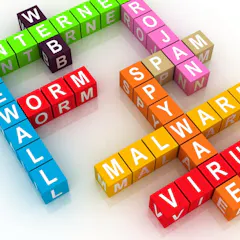
Like the recent WannaCry, viruses and other hacker software are now part of our digital lives. How big are the threats? How can we protect ourselves?

Humans and computers are collaborating to create a new genre of ‘synthetic literature’. But how does it work and can a computer ever really be creative?

Many parents are demanding less technology use in the classroom due to the amount of screen time children get at home. This story explores whether maths education and technology go hand in hand.
The mass generation of customised content may have very real social implications.
Dire dystopian predictions aside, the real danger of artificial intelligence is not the notorious “AI singularity” but job loss and misuse by malevolent people.
Video games have been helping kids to learn for years, here’s how.

Important advances have been made in the areas of automatic language processing and emotional computing, and that could have big implications for business.
Simply updating and patching an organisation’s computer software may not be enough to fend off another cyber attack. You could engage an ethical hacker to help out.

This is how Greater Manchester is set to become one of the world’s leading ‘digital cities’.
Born in the 1950s, the concept of an artificial neural network has progressed considerably. Today, known as “deep learning”, its uses have expanded to many areas, including finance.
Several methods can teach an algorithm to learn. With more or less important datasets, which are or are not previously labeled and categorized.
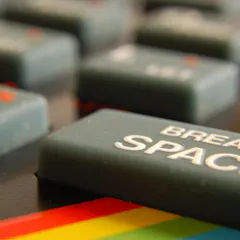
Pimania was a product of Thatcherite entrepreneurial spirit, mixed with a dash of cheekiness and drippings of subverted expectations.

For the papier-mache headed Frank Sidebottom, the ZX Spectrum was more than a basic computer – it was like a musical instrument
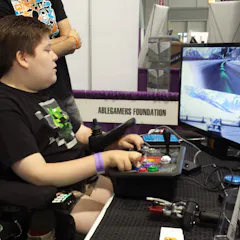
Video games can provide disabled people with a safe haven, if they can access it.

We have never been so connected and we are producing more data than ever before. But how can we manage our data effectively while making sure it remains safe?

Hidden Figures is certainly inspirational, but the racial politics of the space programme were hardly so easily settled.
Top contributors
-

Professor & Director, Hub for Apple Platform Innovation (HAPI), School of Computing Technologies, RMIT University
-
PhD; Lawrence Berkeley Laboratory (retired) and Research Fellow, University of California, Davis
-
Laureate Professor of Mathematics, University of Newcastle
-
Professor, ESCP Business School
-
Associate research scientist Cambridge Judge Business School and lecturer GEM, GEM
-
Lecturer in Computer Science, Queen Mary University of London
-
Professor, Harvard University
-
Lecturer in Digital Media and Cultures, The University of Queensland
-
Directeur de la Recherche et des Formations Doctorales, Directeur adjoint, Télécom SudParis – Institut Mines-Télécom
-
Professor Emeritus, Swinburne University of Technology
-
Pro Vice-Chancellor, research portfolio, The University of Melbourne
-
Senior Lecturer in Digital Media, Swansea University
-
Lecturer in Software Engineering, Monash University
-
Professor of AI, Research Group Leader, UNSW
-
Adjunct Professor of Mathematics, Prince George's Community College