
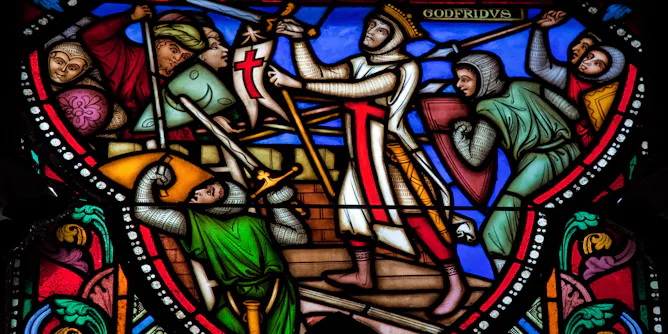
Long-standing Christian narratives about Islam continue to inform political language, argues a sociologist of Islam.
Articles on Colonialism
Displaying 21 - 40 of 740 articles

Health workers consistently move from poorer countries to richer ones, a pattern that tracks closely along lines drawn by colonial history.

The concept of ‘civilisation’ emerged in the 18th century – and it has been cursed from the very start.
Suspense-packed yet intellectually sharp, Cape Fever is far more than a chamber drama.
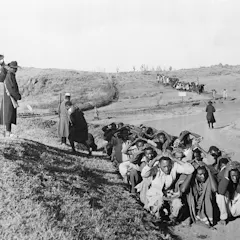
Characteristics that would come to define Mau Mau camps – neglect, forced labour and ill-health – were ingrained long before 1952.

Long before today’s decline in alcohol consumption, rum played a central role in Canada’s economy, shaping labour relations in the fisheries and fur trade.

Every city is different but they can learn from each other.

Plantations are having trouble finding young labourers to sustain production. Precarious working conditions that have hardly evolved since colonial times are a poignant reminder of the lack of job attractivity.

The Burmese meditation master Sayagyi U Ba Khin played a key role in shaping the meditation retreats that are popular today.

If archives were destroyed and public history suppressed, where else might the past be found?

In the late 1600s, hundreds of Irish people were transported to Jamaica as labourers.
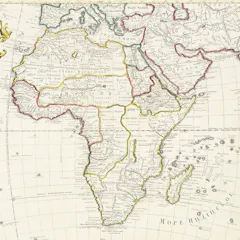
Archaeology offers a useful way to counter some biases.

Bad Bunny’s naming of ‘Canadá’ at the Super Bowl exposed Canada’s tendency to imagine itself as peripheral to Latin America, when its people and culture are central to its reality.

Immigration is fuelled by people moving for work, family or better opportunities.

When Bad Bunny and his dancers scaled power poles during his Super Bowl performance, he wasn’t just entertaining millions. He was spotlighting how Puerto Rico’s chronic power outages are a legacy of its…

Bad Bunny’s rise is inseparable from his activism, which is woven into his artistic choices, television appearances and live performances.

Aerial lidar raises ethical questions because it can collect data remotely without the knowledge or consent of Indigenous and descendant populations that are on the ground.

The story of donkeys in Namibia is one of colonial control but also resistance.

Tax records of the past can inform about governance, markets and inequality today.

Martin Luther King Jr. and Thich Nhat Hanh shared a vision of ‘beloved community’ that shows how democracy begins not with power, but with how we live together.
Top contributors
-

Professor of Indian and Colonial History, University of Liverpool; Independent Social Research Foundation
-
Professor of Sociology, University of the Witwatersrand
-
Extraordinary Professor, Department of Political Sciences, University of Pretoria
-
Research Fellow at the University of the Free State, South Africa and Assistant Professor in the History of International Relations, Utrecht University
-
Assistant Professor of Political Science, Lakehead University
-
Associate professor, McGill University
-
Professor in Political Science, Arnold Bergstraesser Institute
-
Head of Research Programme, Council for the Development of Social Science Research in Africa
-
Associate Professor Sport History, Stellenbosch University
-
Political Scientist, University of the Western Cape
-
Adjunct Professor, Stout Research Centre, Victoria University of Wellington and Auckland University of Technology, Professor of Political Science, Charles Sturt University
-
SSHRC Postdoctoral Fellow, Centre for South Asian Studies, Munk School of Global Affairs, University of Toronto
-
Curator & Section Head, Oceania, The British Museum
-
Associate Professor, Departments of History and Indigenous Studies, University of Manitoba
-
Professor, Department of Archaeology and Human Evolution Research Institute, University of Cape Town