
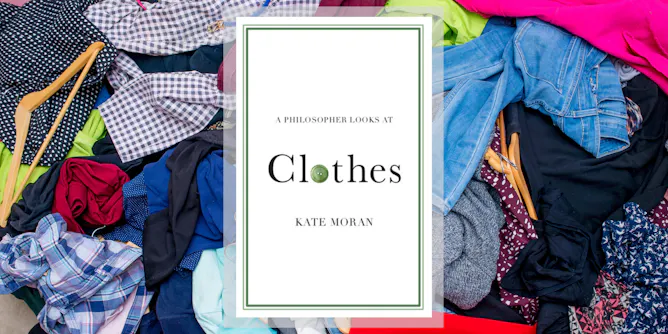
Few philosophers have dedicated time to thinking about clothes. This compelling book explains why they should.
Articles on Clothing
Displaying 21 - 40 of 98 articles

Donald Trump wants people to buy American, but his favourite suits are Italian.

A new Productivity Commission report finds regulations and costs are slowing Australia’s progress in becoming a circular economy.

Belle da Costa Greene, who was JP Morgan’s librarian, became a lively fixture at Gilded Age mansions, country retreats, auction houses and art galleries. She was also a Black woman who passed as white.
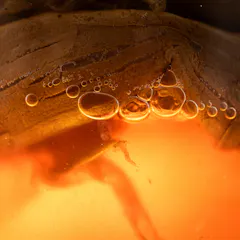
Give a bacteria-fungi biofilm access to sweetened tea and you can make not only kombucha – but a fibre vital to making clothing.

In Australia, clothing doesn’t have to carry a label with its fibre contents. That means we don’t always know how flammable a garment might be.
The industry has a reputation for pollution and waste, but it has psychological effects as well.
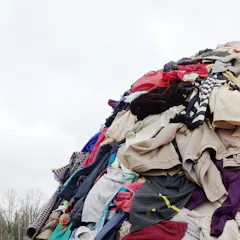
We give or throw away more and more clothes every year, overwhelming charities and triggering large exports of secondhand clothing. There’s a better way

From school shorts to tiny Gucci boxers, how the short-short became a summer fashion staple.
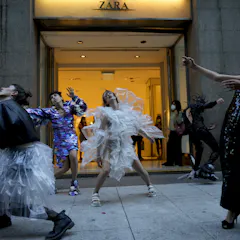
In a world dominated by fast fashion, building a slower wardrobe is the key to living more sustainably, saving money and standing out among the crowd.

Fanatics’ consolidation of the sports card industry risks a stagnant future for the hobby.
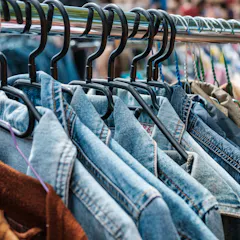
Secondhand markets are built to increase consumption, not cut it back.

Through their media savvy, two consultants were able to make the Oscars as much about the attire as the gold statuettes.
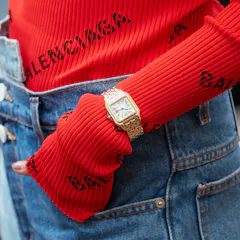
Should luxury brands display their logo on everything?

It is important to study clothing items to pinpoint the triggers for sensory over-stimulation.
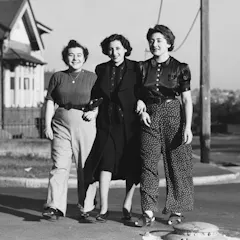
By 1933, women were increasingly wearing pants but, as one letter to the editor complained, ‘women look far from attractive in them’.
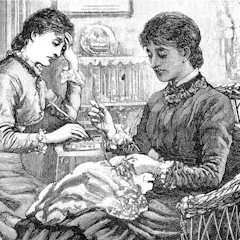
The Victorians were driven to care for their clothes for reasons of thrift, economy and to prevent waste.
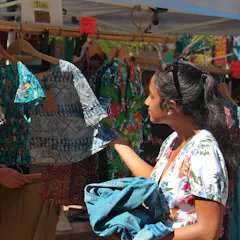
Australia has the world’s biggest carbon footprint from fashion. This is one area where changing our personal clothing choices can make a big difference, just as it did in the second world war.
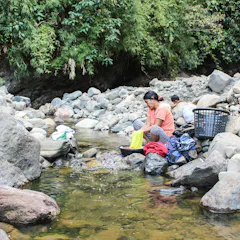
Simply trying to avoid synthetic clothing won’t fix our microfibre pollution problem
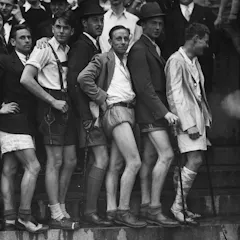
As fashion norms change, what people wear in public becomes ground zero for hashing out new ideas of race, class and gender.
Top contributors
-

Director & Associate Professor of Sports Product Design, University of Oregon
-
Senior Lecturer and Program Manager, Bachelor of Fashion (Enterprise) program, RMIT University
-
Associate Professor of History, University of Nevada, Las Vegas
-
-
Kluge Fellow at the Library of Congress
-
Professor and Dean of the School of Fashion and Textiles, RMIT, RMIT University
-
Associate Professor in Fashion and Material Culture, Nottingham Trent University
-
Furman Public Policy Scholar, New York University
-
Distinguished Professor of Design History, UTS, University of Technology Sydney
-
Lecturer, Cultural Heritage and Museum Studies, Deakin University
-
Senior Research Associate in Design for Sustainability, Manchester Metropolitan University
-
Postdoctoral Researcher in Fashion and Textiles, RMIT University
-
Lecturer, Fashion Design, School of Design and Architecture, Swinburne University of Technology
-
Assistant Professor of Organizational Behavior, Yale University
-
Honorary Associate Professor of History, The University of Queensland