
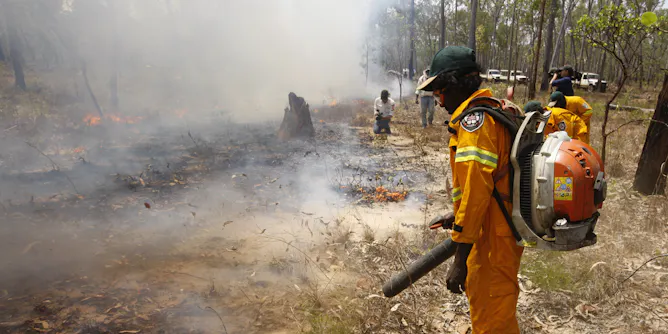
Mass unemployment is not a result of people choosing to remain on welfare. Attempts to close the “employment gap” ignore the real cause: unemployment is structural, not behavioural.
Articles on Closing the Gap
Displaying 61 - 80 of 138 articles
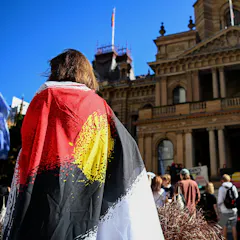
The Morrison government will provide $378.6 million for a new redress scheme for Stolen Generation survivors as part of more than $1 billion for its Closing the Gap implementation plan.
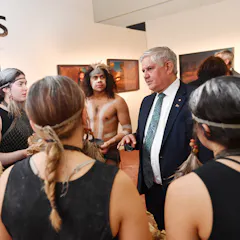
The Closing the Gap dashboard includes data on the 17 socioeconomic targets in the national agreement. But this information isn’t enough on its own to bring real change.

Reducing transport inequality and improving walkability in Indigenous communities are necessary to help close the health and social gap.
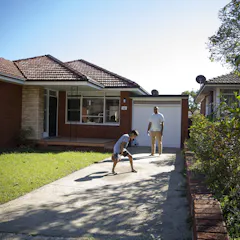
The recently announced $250 million NSW budget boost for housing for Aboriginal people, is much-needed. It’s critical this well-intentioned investment does not repeat the mistakes of the past.
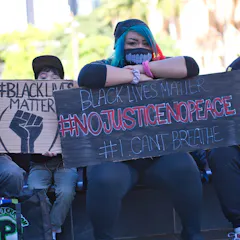
Despite the disproportionate numbers of Aboriginal people in prisons, there are near to no cultural protocols in place, and chronic illness is often not addressed.

A large study shows preschool benefits Aboriginal children’s development more than childcare or being taken care of at home. But the benefits of preschool are not as large as for non-Aboriginal kids.

The tertiary qualifications target requires higher education providers, schools and communities to work together. But higher education can also help close the gap in the other target areas.

Australian official guidelines need to reflect culturally safe dietary advice or risk worsening Indigenous people’s health.

It’s no wonder some Indigenous Australians are concerned about receiving different treatment in hospital.
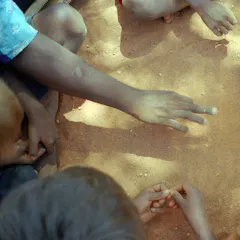
Strong language and culture is listed among the fresh Closing the Gap targets. But, as the latest research on speakers and learners shows, language is fundamental to well-being across the board.
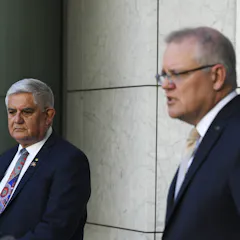
The latest Closing the Gap agreement has been billed as ‘historic’ and ‘practical’. But the fine print is vague and the targets lack ambition. Meanwhile, one key word is missing completely.

The new closing the gap targets are ambitious, especially in the area of early childhood education. But this doesn’t mean they can’t be met, with the right approach.
Michelle Grattan discusses the political week that was with Professor Paddy Nixon.
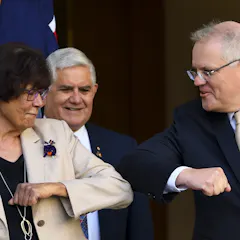
The revamped Closing the Gap agreement is a significant achievement for Indigenous organisations. But we need more detail about who will be responsible for what.
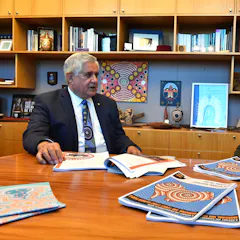
The government will unveil 16 targets for Indigenous advancement, when Scott Morrison announces on Thursday a new national agreement on “Closing the Gap”.

Rather than continually focusing on the “gap” between Indigenous and non-Indigenous Australians, we should look at pathways to success within First Nations communities.

The coronavirus crisis has demonstrated how vital local-level decision-making is in Indigenous affairs – and why the government needs to listen more often.
Policies for Indigenous Australians must better reflect and prioritise Indigenous cultural values.

A safe home, a working fridge and access to transport are all needed before western medicine has a chance of working in the long term. But a new way of providing care can help.
Top contributors
-

Professorial Fellow, University of Canberra
-
ARC DECRA Fellow, Australian National University
-
Professor of Economics and Public Policy, ANU College of Arts and Social Sciences, Australian National University
-
Director of Monash Indigenous Studies Centre, Chief Investigator for the Australian Research Council Centre of Excellence for the Elimination of Violence against Women (CEVAW), School of Philosophical, Historical & International Studies, School of Social Sciences (SOSS), Monash University
-
Senior Lecturer in Criminology and Social Policy, The University of Queensland
-
Professor of Indigenous Health, Executive Director, Carumba Institute, Queensland University of Technology
-
Senior Lecturer of Indigenous Studies, Indigenous Education and Research Centre, James Cook University
-
Professor of Law, University of Technology Sydney
-
Professor, Principal Research Fellow & Deputy Head of School, School of Education, The University of Queensland
-
Professor of Construction Management, University of Technology Sydney
-
Associate Professor, University of Tasmania
-
Emeritus professor, School of Regulation and Global Governance, ANU, Australian National University
-
Associate Professor of Public Policy, Crawford School of Public Policy, Australian National University
-
Dean, Medical School, Curtin University
-
Senior Lecturer in Social Research and Policy, UNSW