
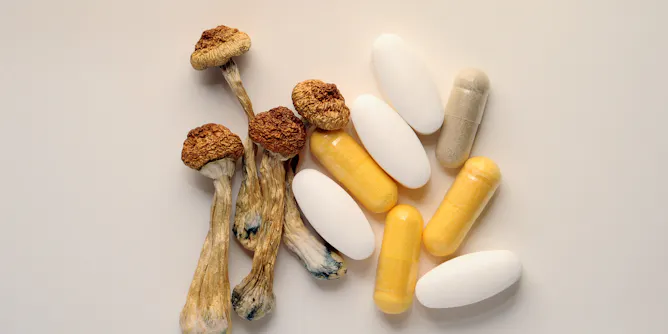
Substantial economic growth in the psychedelic drugs market has drawn interest from corporations and start-ups. While this may accelerate research, it also sparks concerns about conflicts of interest.
Articles on Clinical trials
Displaying 21 - 40 of 224 articles
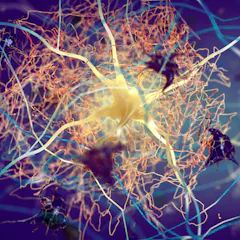
The drug has been hailed as a ‘turning point’ in Alzheimer’s treatment. But keep in mind the trial only included participants with early or mild disease. And while it slowed decline, it’s not a cure.

This latest research provides hope for people whose symptoms are harder to treat.
Health Canada continues to monitor newly approved drugs to determine if the benefits identified in the pre-market trials hold up to further scrutiny. Canadians need better access to that information.

In health care crises, researchers can avoid waiting for clinical trial results by using data from health care systems to analyze the effectiveness of treatments for COVID-19 and other illnesses.

Here’s why it’s taken so long to develop a vaccine for respiratory syncytial virus and what we can expect next.
Medicine works better when the treatments are tailored to fit each individual person’s biology and history. A first step is increasing diversity in clinical trials, but the end goal is precision medicine.
Despite technological advancements, many challenges remain in getting a drug from lab to pharmacy shelf. Reframing what is a “medicine” could expand treatment options for researchers and patients.

Overcoming the access barriers and biases that underrepresented and underserved communities face could not only improve research participation but also improve care.
In silico clinicial trials have the potential to speed up trials and cut costs.
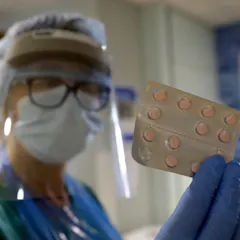
What prompts healthy volunteers to take part in clinical research? And how are they protected?

According to a letter from Biden’s doctor, the president has a runny nose, mild fatigue and a slight cough. The letter also noted that Biden began taking an antiviral drug the morning he tested positive.
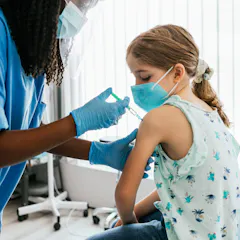
The COVID-19 vaccines continue to be effective against severe illness leading to hospitalization and death in all age groups, including children ages 5 to 11.
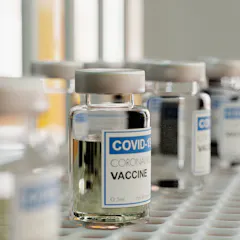
Existing coronavirus vaccines are not as effective against newer variants of the virus. Two vaccine experts explain how new vaccines currently in development will likely offer better protection.

Our study found a better way to treat eye problems in Indigenous communities – and some key considerations for undertaking culturally safe clinical trials.

Two Australians with bipolar have been successfully treated with poo transplants, allowing them to come off, or reduce, their medications. Here’s where the science is up to.
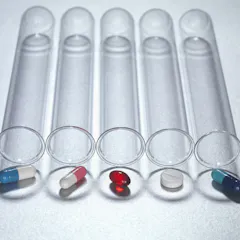
Drug development is a long and costly process that often ends in failure. Improving the way potential drug candidates are optimized could help boost success rates.
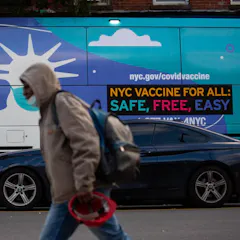
Vaccines and medical treatments can only go so far in an unequal society. Facing the ongoing history of racial discrimination and bias in the US would help end the pandemic.

For a number of reasons, as time goes on vaccines become less effective. So how do researchers calculate how well vaccines are working?

Emotive claims, like COVID vaccination being unethical or coercive, are more likely to be shared on social media. But we can fight back.
Top contributors
-

Professor and Director of the Stoneygate Centre for Excellence in Empathic Healthcare, University of Leicester
-
Professor of Pharmaceutical Chemistry, Macquarie University
-
Associate professor, Department of Family and Community Medicine, University of Toronto; York University, Canada; University of Sydney
-
Epidemiologist, Cochrane
-
Head of School and Dean of Pharmacy, University of Sydney
-
Professor of medicine, epidemiology & biostatistics, and philosophy, Western University
-
Professor of Immunology, RMIT University
-
Professor of Biostatistics and Epidemiology, Adelaide University
-
Distinguished Professor of Pharmacy Practice, University of Connecticut
-
Senior Lecturer Biostatistics and Data Management, The University of Queensland
-
Membre du comité d'éthique de l'Inserm, Inserm
-
Biostatistician, The University of Melbourne
-
Professor of Bioethics & Medicine, Sydney Health Ethics, Haematologist/BMT Physician, Royal North Shore Hospital and Director, Praxis Australia, University of Sydney
-
Professor of Law, Villanova University
-
Professor, UNSW