

Any large-scale policy affecting schools, like Montréal’s ambitious transition to zero waste, needs to reflect that success relies on the labour and care of students and education workers.
Articles on climate change mitigation
Displaying all articles
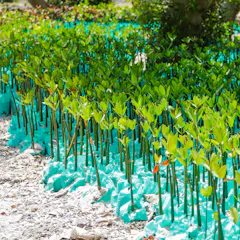
Universities in Senegal and South Africa are now teaching the skills of setting up nature-inspired projects to deal with some of the problems of climate change.
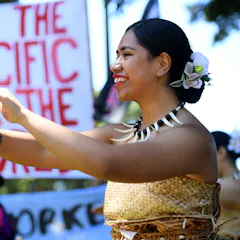
In the book Living Hot, Clive Hamilton and George Wilkenfeld argue humanity should stop trying so hard to reduce emissions, and adapt instead. But we must do both.

With the climate heating up rapidly, African cities must green every space to cool down and absorb more rain water, minimising floods. Nature-based solutions can make a huge difference.

There is growing evidence that termites have a substantial, but still poorly understood, role in the carbon cycle.
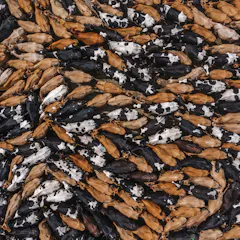
Knowing which parts of Africa best help to store carbon means funding and policy efforts can be directed to protecting and increasing this carbon ‘land sink’.
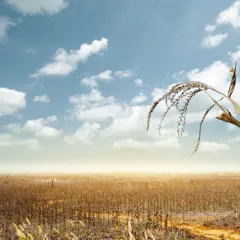
A new study reveals that from 2050, Africa will suffer from food and water scarcity, and a massive loss of jobs in agriculture, unless climate change mitigation measures are put in place now.
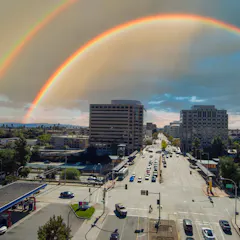
A new report explores options for managing the period after global warming exceeds 1.5°C. This is called ‘climate overshoot’, because we’re pushing past the safe zone into dangerous climate change.
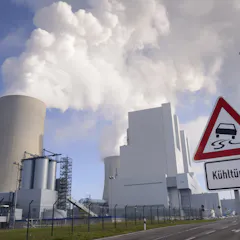
Degrowth will make the environmental crisis worse.
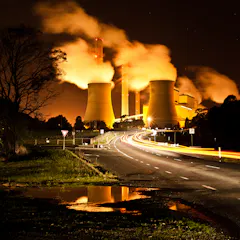
Victoria’s new renewable plan is welcome - but it relies on building unsexy and challenging new transmission lines across the state.
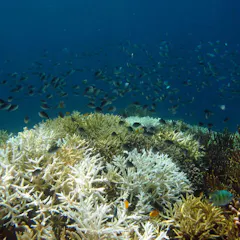
A new biodiversity index captures the climate risk for nearly 25,000 marine species and their ecosystems and lays the groundwork for climate-smart approaches to management and conservation.

The research reviewed the available evidence on microalgae as food supplements, livestock feeds, biofertilisers, biostimulants and biochar feedstocks.
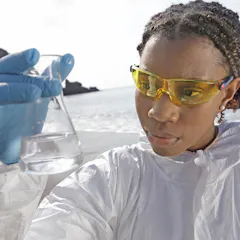
Universities in Kenya should be more sensitive to national policies aimed at addressing the effects of climate change.

With the world on track to blow the carbon budget for 1.5°C before the end of this decade, we must use offsetting carefully. It can no longer be a substitute for deep emissions cuts.
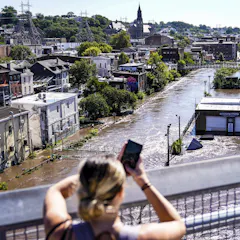
More than half of the world’s population lives in cities, and that share is growing. Rapid climate change could make many cities unlivable in the coming decades without major investments to adapt.
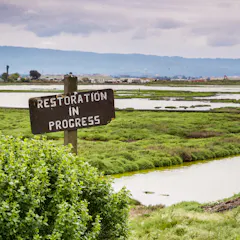
Every five years nations must evaluate their progress towards the goals of the Paris Agreement. But this “stocktake” lacks detail making it difficult to measure progress on climate action.
Top contributors
-

Research fellow, School of Global Development, University of East Anglia
-
Assistant Professor, Adult Education, Concordia University
-
Research Scientist, Bedford Institute of Oceanography, Fisheries and Oceans Canada, Adjunct Professor, Dalhousie University
-
Assistant Professor, Health Sciences, Wilfrid Laurier University; CGIAR
-
John Rennie Short is a Friend of The Conversation.
Professor Emeritus of Public Policy, University of Maryland, Baltimore County
-
Research Project Manager at the Alliance Bioversity and International Center for Tropical Agriculture, CGIAR and Associate Professor of Production Ecology and Resource Conservation, CGIAR
-
Distinguished Visiting Professor in Economics, University of Johannesburg, University of Johannesburg
-
Senior Fellow in Energy and Climate Change, Grattan Institute
-
Professor of Ecology, University of the Witwatersrand
-
Senior Lecturer in Social Sciences and Public Policy, Auckland University of Technology
-
PhD candidate, Africa Center of Excellence for Climate Smart Agriculture and Biodiversity Conservation. His research focuses on transfromative change pathways (Data science for climate resilience, Geography, Biodiversity, and Urban mobility), Haramaya University
-
SEnior Lecturer Extraordinary, Department of Soil Science, Stellenbosch University
-
Associate Professor, School of Public Health Sciences, University of Waterloo
-
Associate Professor, School of Economics and Finance, University of the Witwatersrand
-
Director of Research and Innovation, School of International Studies, Macquarie University