
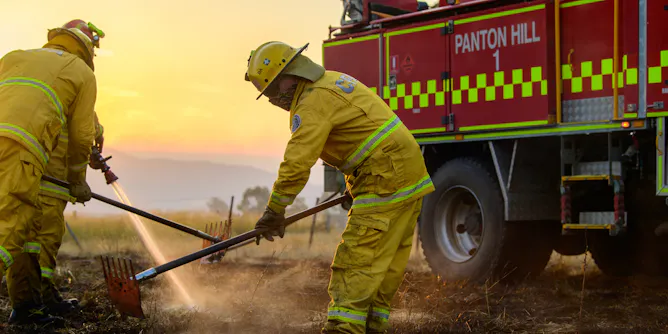
Over the past 12 months, the federal government has approved multiple fossil fuel projects and cut climate science funding.
Articles on Climate adaptation funds
Displaying all articles
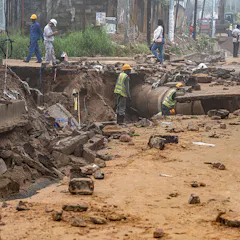
The most important thing to do is to lower the cost of capital for African countries.
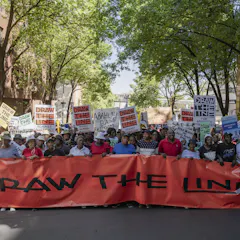
For the first time, countries now have a shared way to understand whether the world is actually improving at adapting to climate impacts.
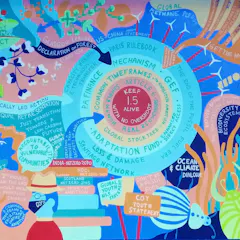
The region faces some of most acute challenges, including rising temperatures, water scarcity and conflict. Yet it receives such a small share of climate finance.
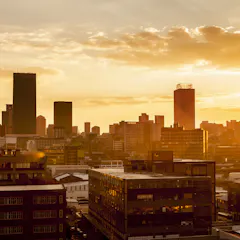
A new report by the non-profit organisation Action Aid calculates that wealthier countries owe Africa US$36 trillion in climate debt.
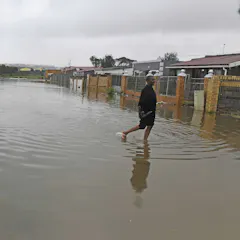
Sub-Saharan African countries should be given more financial and technical support to cope with climate change disasters, so that they can continue to spend funds on economic development.

The annual UN climate conference ended with a weaker deal than many countries hoped for, and with calls to overhaul the climate talks for the future.
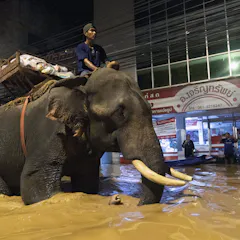
While poorer nations face more severe climate impacts, their ‘social cost of carbon’ remains disproportionately low, reflecting deeper economic inequities that complicate global climate action.
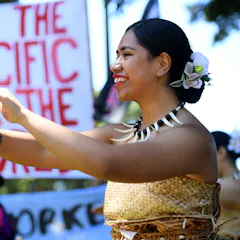
In the book Living Hot, Clive Hamilton and George Wilkenfeld argue humanity should stop trying so hard to reduce emissions, and adapt instead. But we must do both.

Katherine Browne and Margaret Angula talk to The Conversation Weekly podcast about a UN pilot in Namibia that’s pioneering community-led climate adaptation.

A new study reveals that from 2050, Africa will suffer from food and water scarcity, and a massive loss of jobs in agriculture, unless climate change mitigation measures are put in place now.
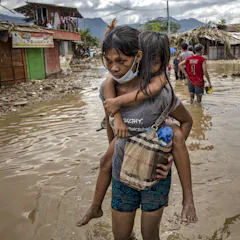
The agreement still leaves many unanswered questions, as well as concerns from vulnerable countries about who will qualify, who pays and who is in charge.
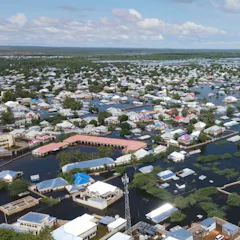
Funding climate adaptation in conflict areas may require engaging local communities and armed groups where national governments are absent.
COP28 gives Nigeria another chance to fight for financing it needs to adapt to climate change.

Getting climate funds to frontline communities may require rich countries and the UN easing control over how the money is spent.
Top contributors
-

Research Fellow, Stockholm Environment Institute
-
Associate Professor, School of Economics and Finance, University of the Witwatersrand
-
Professor of Environmental Studies, Political Science and International Relations, USC Dornsife College of Letters, Arts and Sciences
-
Lecturer (Political Science), University of Lagos
-
Senior Research Associate, Institute for Environment and Human Security (UNU-EHS), United Nations University
-
Producer, The Conversation Weekly Podcast, The Conversation
-
Research Associate, Overseas Development Institute, King's College London
-
Horizon Research Fellow and Lecturer in Social Science, University of Sydney
-
Adjunct assistant professor, Economics Department, Queen's University, Ontario
-
Visiting Assistant Professor of Political Science, Trinity College
-
PhD Candidate, University of Oxford
-
Research associate at African Centre for Cities, University of Cape Town
-
Director, Columbia Center on Sustainable Investment, Columbia University
-
PhD Candidate, Climate Finance, Nottingham Trent University
-
Senior Lecturer/Senior Researcher, Departmant of Geography, History and Environmental Studies, University of Namibia, University of Namibia