
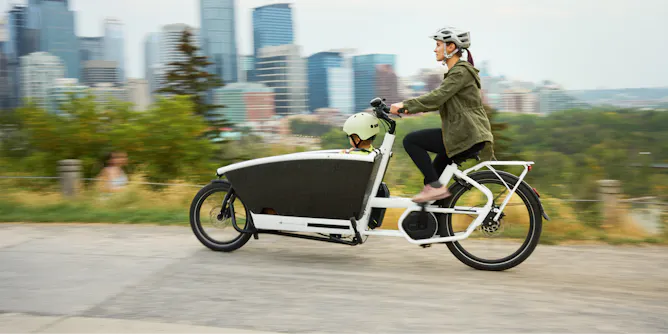
An e-bike is a good start. But training, guided rides and social connection give people the confidence to keep using them.
Articles on Emissions reduction
Displaying 1 - 20 of 99 articles

Satellites can be used to independently monitor emissions, helping to better understand emissions in regions where ground-based or other data are lacking.

Unless transport emissions are tackled head-on, Australia’s new climate target cannot be met.
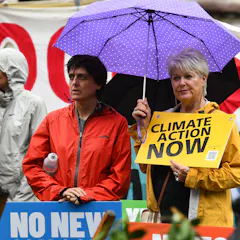
A few key questions can help us judge if the federal government’s 2035 targets will flop or fly.
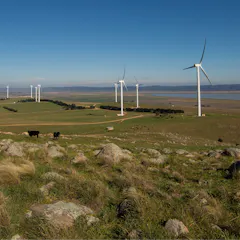
Communities hosting renewables projects often don’t receive meaningful benefits. Giving them cheap electricity could make the transition fairer – and faster.

Can the Albanese government strike the right balance: set a climate policy that’s strong enough to work, but isn’t branded reckless?
A strong 2035 target makes sense for the climate and the economy. The challenges for Australia are clear – but so too are the opportunities.

The landmark ruling means Australia must reduce emissions in line with the best science, and regulate the fossil fuel industry to prevent further harm.

The judge found Australia had not used the best available science to set emissions targets. The finding tightens the screws on Labor as it weighs our 2035 targets.

How can Australia reconcile its ambition to become a renewables superpower as it ships fossil fuels overseas? With a net-zero target on exports.
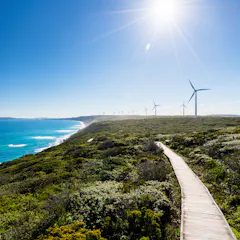
Under a Labor government, coal and gas have a fast-declining role to play in Australia’s energy mix – and nuclear has none at all.

In its previous term, Labor laid the groundwork for stronger climate action. Now, in an expanded majority government, it has the chance to capitalise.

Australia is running out of affordable, safe places to live – and climate change is getting worse. It makes sense to deal with both crises together.

As China seeks to expand its influence in our region, Pacific leaders have questioned Opposition Leader Peter Dutton’s climate action stance.
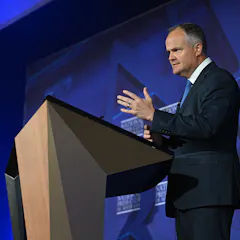
The Coalition reveals plans to review Australia’s 2030 emissions reduction target if they win government at the next federal election.
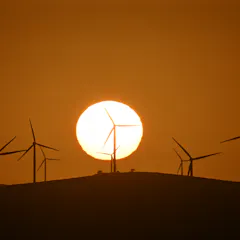
The trade war is likely to lead to more energy-intensive goods produced in the US, and dampen international investment in renewable energy.
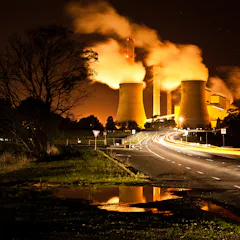
Both major parties agree Australia must reach net-zero emissions. That’s why winding back the safeguard mechanism would be reckless policy.

As the federal election looms, Labor is running out of time to show it cares about Australia’s precious natural environment.
Earth is crossing the 1.5°C limit outlined in the Paris Agreement, beyond which scientists predict catastrophic harm to systems supporting life on our planet.
Achieving net-zero emissions by 2050 is humanity’s only hope of achieving climate security. It’s time to think deeply about our chances of getting there.
Top contributors
-

Research Associate, Institute for Climate Risk and Response, UNSW
-
Professor, Crawford School of Public Policy and Director, Centre for Climate and Energy Policy, Australian National University
-
Professorial Fellow, University of Canberra
-
Professor and Director of Research, ANU Law School, Australian National University
-
ARC Future Fellow and Associate Professor in Climate Science, ARC Centre of Excellence for 21st Century Weather, The University of Melbourne
-
Adjunct Associate Professor, Public and Environmental Policy, University of Tasmania
-
Professor, Australian National University
-
Professor of Transport Technology and Sustainability, Swinburne University of Technology
-
Climateworks Centre CEO, Monash University
-
Climateworks Centre Country Lead, Australia, Monash University
-
Professor, School of Economics, The University of Queensland
-
Adjunct Professor of Transport, University of Technology Sydney
-
Adjunct Professor of Energy, Murdoch University
-
Senior lecturer, Australian National University
-
Honorary Fellow, Australian Museum