
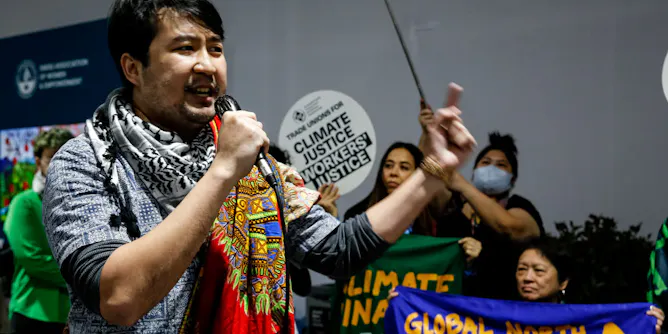
Reducing emissions, removing greenhouse gases, repairing ecosystems and building resilience are the four R’s that can save the planet.
Articles on Climate
Displaying 141 - 160 of 521 articles
Our energies would be better spent tackling the tangible effects of global heating than debating the future dollar value of failing to act.
The absence of the early warning network will affect Kenya’s ability to address food insecurity.

Health systems are made up of people who are often members of the same disaster-stricken communities they serve. They respond to climate-related events, but are affected by them too.

Weather and climate models are both governed by the same physical processes. But that’s where most of the similarities end.
Many of us prefer to avoid climate-affected produce altogether. But marketing messages that highlight its ‘resilience’ can encourage consumers to consider it, even when empathy towards farmers is low.

South Africa is working on how best to integrate labour and environmental justice and how its labour laws can be used to enable a just energy transition.
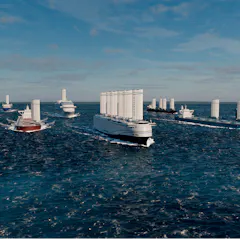
Shipping produces roughly the same amount of emissions as aviation, yet it is often overlooked. It’s time for change.
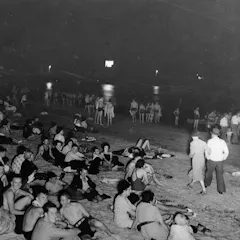
In 1939, Adelaide endured 13 straight days of extreme heat – residents’ diaries from the time reveal old-fashioned cooling strategies.

These ‘warming stripes’, adopted around the world as a symbol of climate awareness, action and ambition, now include another dark red stripe for 2024.

Reports of a rare summer La Niña are premature. It is also foolish to look at such climate drivers in isolation. But seasonal forecasting is becoming more complicated as the planet warms.
New Zealand generally compares well on global measures of freedom, happiness and transparency. But rankings in some important areas have been sliding for years now.
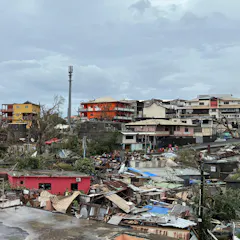
The ongoing conflict and terrorist violence, coupled with cyclones like Kenneth in 2019, has caused repeated evacuations and worsening living conditions.
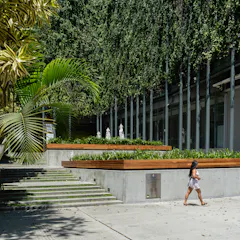
A new form of public-private partnership is reshaping urban landscapes: Community-centered, public-private partnerships, or CP3s.

Deep seabed mining is already controversial because of inherent environmental and biodiversity risks. A new study shows that its economic impacts may hit even harder.
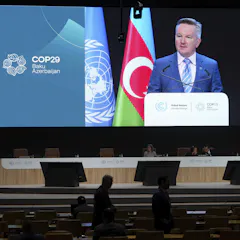
Australia and Pacific nations won’t know until June next year if they’re hosting the COP31 climate talks. But with tens of thousands of people potentially coming, they need to start planning now.
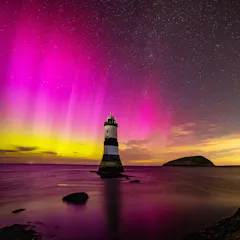
The northern lights have been interpreted in many ways down the centuries - from portents of political upheaval to signs of religious revival.
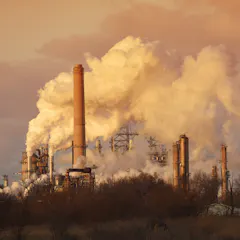
As world leaders gather at COP29 to consider reducing emissions, the latest global carbon budget shows CO₂ emissions from fossil fuels are still going up, not down, despite some promising signs.

As sea levels rose around this low-lying island nation, soil salinity increased beyond what even the salt-tolerant mangrove trees could handle.
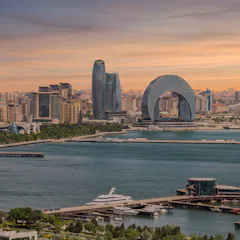
The succession of authoritarian fossil fuel producers hosting international climate negotiations is a concern. We must pay attention to political influences on the talks and beware of greenwashing.
Top contributors
-

ARC Future Fellow and Associate Professor in Climate Science, ARC Centre of Excellence for 21st Century Weather, The University of Melbourne
-
Climate scientist, Australian Bureau of Meteorology
-
Adjunct Professor (Practice) in the School of Earth, Atmosphere and Environment, Monash University
-
Climate Scientist, Australian Bureau of Meteorology
-
Deputy Director, Engagement and Impact, The ARC Centre of Excellence for the Weather of the 21st Century, Australian National University
-
Climate Scientist, Australian Bureau of Meteorology
-
Professor of Physical Geography, University of the Witwatersrand
-
Senior Climatologist, Australian Bureau of Meteorology
-
Research Associate, Institute for Climate Risk and Response, UNSW
-
Chief Research Scientist, CSIRO Environment; Executive Director, Global Carbon Project, CSIRO
-
Professorial Fellow, University of Canberra
-
Senior Lecturer, Climate Science and Science Communication, The University of Melbourne
-
Climate Projections Scientist, CSIRO
-
Professor of Physical Geography (Climate Science), Te Herenga Waka — Victoria University of Wellington
-
Senior Fellow in Energy and Climate Change, Grattan Institute