

Self-driving, shared, electric vehicles and increasing urban density represent four disruptions that will transform city life. But a transport utopia isn’t a guaranteed outcome of their interactions.
Articles on Cities & Policy
Displaying 341 - 360 of 837 articles
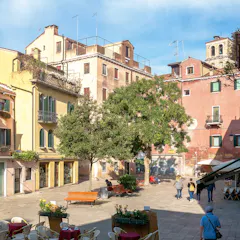
Done right, a plaza can bring life and a sense of identity to an area. So why has urban design in Australia neglected the town square in favour of green space, and what makes for a successful one?
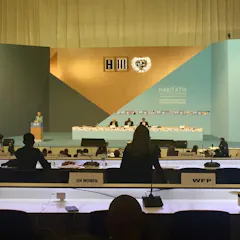
Australia and other United Nations member states signed up to the New Urban Agenda more than a year ago. But how well is health being integrated into sustainable urban development?

Based on research comparing projects across the country, a new assessment tool calculates cost-effective ways to fund affordable housing to meet specified needs in different markets.
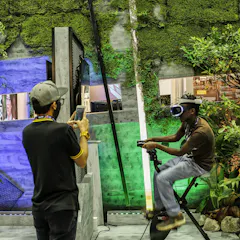
Representatives of nations around the world have come together to discuss how to achieve the New Urban Agenda. Collective political will is needed, but the Australian government didn’t show up.

People on moderate incomes, including police and emergency workers, have been forced to seek housing on the city fringes, far from their places of work. But there are ways to reverse this trend.

King tides and rising seas are an increasing and predictable threat, but adaptation plans to limit the damage to coastal property are still not managing the political obstacles.

One potential benefit of WestConnex, which remains untouched, is that it could relieve Sydney’s city centre from cars and make it more pedestrian-friendly.

For a public space to be seen as safe, welcoming and accessible, a diverse range of people need to actively use it. That’s why any space-changing project needs to engage broadly with the community.
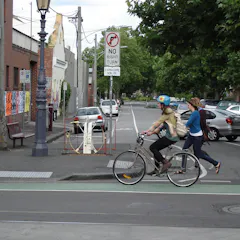
A comparison of Australian cities reveals cyclists and walkers are still very much a minority of commuters, despite the economic, health and environmental costs. Action on three fronts is needed.
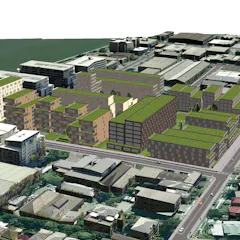
3D urban modelling is a transformative technology for designing cities. But incorporating new technologies into planning practice has its challenges.
Looking back through all Melbourne’s strategic plans from 1929 onwards, it becomes clear that the 20th-century legacy of car-centric planning and its focus on parking is still deeply entrenched.

There are three key cultural reasons why a share-bike business model that could be successful in Singapore is much less likely to be so in Australia.
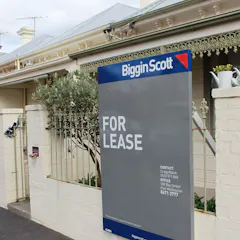
There is a risk that affordable housing policy may be colonised by for-profit interests if Australia imports the wrong rental housing ideas from overseas.

Australian cities generally minimise negative attributes such as crime, segregation and violence, but developing positive attributes such as inclusivity appears more challenging.

Welcome to the era of TechPlomacy where a new world order is emerging around cities and their economies, rather than nations and their borders.
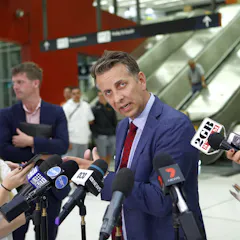
The real challenge is finding appropriate ways to invest in public transport that will not only take pressure off the system but also support improved travel on all modes, including cars.
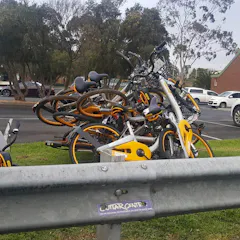
If we’re going to intervene to stop the dumping of share bikes, we need to understand the bad behaviour in the first place, then design effective measures to change how bike users behave.

Our health depends on the quality of air indoors, where most of us spend 90% of our time. The easiest solution is to open a window, but what if that’s not an option?

Across Japan, towns and villages are vanishing as the population ages and young people move to the cities. How the country manages this holds lessons for other developed nations facing a similar fate.
Top contributors
-

Transport and Cities Program Director, Grattan Institute
-
Head of Urbanism and Associate Professor of Urban Studies, School of Architecture, Design and Planning, University of Sydney
-
Emeritus Professor of Housing, UNSW
-
Senior Lecturer in Urban and Environmental Planning, Griffith University
-
Associate Professor in Urban Planning, The University of Queensland
-
Professor of Human Geography and Planning, University of Tasmania
-
Professor of Urban Policy and Director, Urban Futures Enabling Impact Platform, RMIT University
-
Honorary Professor of Planning, The University of Queensland
-
Associate Professor of Urban Planning, The University of Melbourne
-
Adjunct professor, School of Media and Communications, RMIT University
-
Senior Research Fellow, City Futures Research Centre, UNSW
-
Professor of Sustainability, Curtin University
-
Emeritus Professor, Urban Planning and Policy, University of Sydney
-
Housing Policy Researcher, Expert Advisor, Housing Assessment Resource Tools and Adjunct Professor, L’Université d’Ottawa/University of Ottawa
-
Professor of Housing Research, Adelaide University