
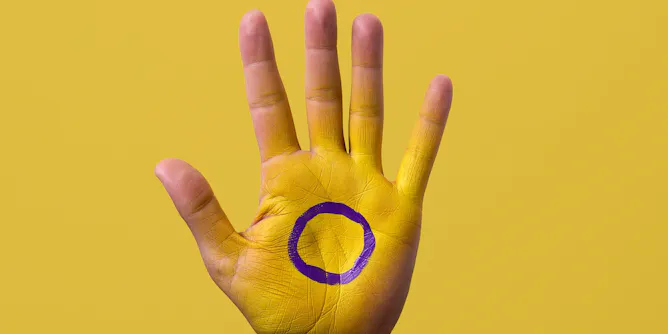
Biological sex isn’t always simple.
Articles on Chromosomes
Displaying 1 - 20 of 32 articles
The bill treats a complex cluster of biological traits as if it were one settled thing, and ties legal meaning to the pretence.

Humans have roughly the same number of male and female babies, but there may be variation between families. A new genetic analysis of huge human populations explores the reasons why
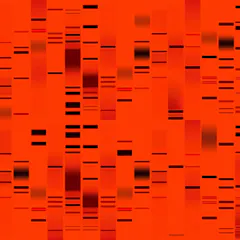
A failed experiment led the researchers to question their assumptions and realize that, contrary to popular belief, chromosomes interact with and affect genetic expression.

DNA of the male-determining Y chromosome has been completely sequenced end-to-end, and it’s just as weird as we expected. Will we finally be able to understand how it works?

People with Down syndrome have an extra chromosome 21. Understanding the effects of those triplicated genes could help improve the health of those with Down syndrome and other medical conditions.
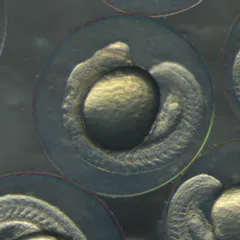
Some animals appear to use a ‘parliament’ of genes to determine sex. But a closer look reveals these are the exception rather than the rule.
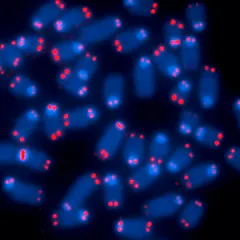
The protective caps at the ends of chromosomes naturally shorten over time. Researchers found that direct damage can prematurely trigger senescence and contribute to age-related diseases like cancer.

Millions of people do not fit neatly into male or female sex designations at birth, and wrong identification can set them up for a lifetime of physical and mental harm.

Our genomes are built from the tiny chromosomes of a small spineless creature that lived 684 million years ago.

Miscarriage occurs in 15% to 25% of diagnosed pregnancies, bringing heartache to millions of women, many of whom blame themselves. In most cases, however, miscarriage is due to random genetic errors.

The first full human genome was sequenced 20 years ago. Now, a project is underway to sequence 1 million genomes to better understand the complex relationship between genetics, diversity and disease.
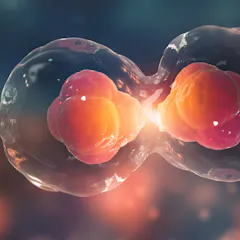
Perceptions about the role of sperm have changed over time, but asexual reproduction doesn’t need sperm for fertilization.

This new research shows that cognitive impairments are actually caused by extra copies of some genes on chromosome 21.

Women aged over 35 are sometimes offered genetic testing of their IVF embryos to rule out abnormalities. But it’s expensive and doesn’t increase their chance of a baby. In fact, it could reduce it.

Parkinson’s disease is twice as common in men than in women. A sex gene called SRY, found only in men, could go some way to explaining this – and might pave the way for potential treatments.

Athlete Caster Semenya will need to take hormone-lowering agents, or have surgery, if she wishes to continue her career in her chosen events. But the decision to ban her is flawed on many grounds.
16p11.2 deletion or duplication syndrome occurs in three out of every 10,000 people.
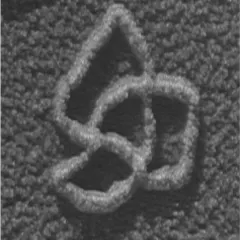
Mathematical models can describe the many shapes of DNA, as well as cellular processes like DNA replication.
They were discovered over 100 years ago – but we still don’t know exactly what genes are.
Top contributors
-
 Jenny Graves is a Friend of The Conversation.
Distinguished Professor of Genetics and Vice Chancellor's Fellow, La Trobe University
-
Professor of Applied Mathematics, Adelaide University
-
Lecturer in Molecular Biology and Reproduction, University of Kent
-
PhD student in Neuropsychiatric Genetics and Genomics, Cardiff University
-
Emeritus Scientific Member, Max Planck Institute for the History of Science
-
Professor of Genetics, University of Kent
-
Director of the Wildlife Crime Research Hub, Australian Research Council Industry Laureate Fellow, Adelaide University
-
Postdoctoral Researcher, University of Aberdeen
-
Chair, The Conversation Media Group
-
Adelaide University
-
Associate Professor, University of Exeter
-
Professor, University of Cambridge
-
PhD candidate in Biology, Stanford University
-
Senior Lecturer, School of Biological Sciences, Adelaide University
-
Professor of Mathematics, University of California, Davis