
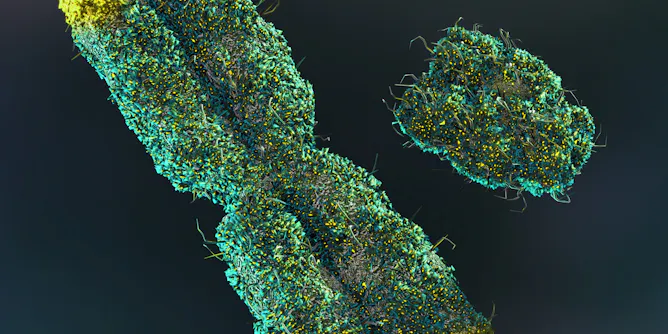
The Y chromosome doesn’t seem to do much except determine sex – but its loss in older men might be linked to heart disease, cancer and Alzheimer’s.
Articles on Y chromosome
Displaying all articles
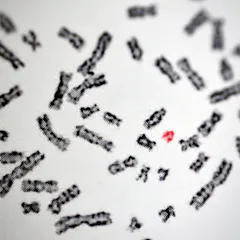
A mysterious century-old law of genetics may explain the puzzling genetic legacy of our extinct Neanderthal cousins.

DNA of the male-determining Y chromosome has been completely sequenced end-to-end, and it’s just as weird as we expected. Will we finally be able to understand how it works?
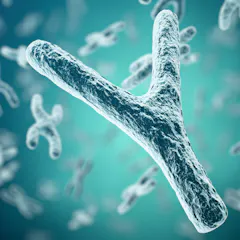
The smallest chromosome in humans, the men-specific Y chromosome, has just been sequenced after considerable hurdles.
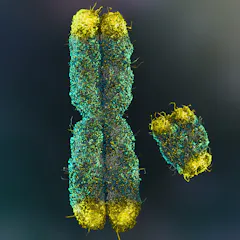
The human Y chromosome could disappear over time, putting our species in jeopardy. But some rodents have managed just fine without it – and we now know how.
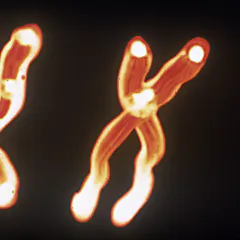
The negative health effects of Y chromosome loss could be one potential reason women tend to live longer than men.
A lie about children’s paternity back in 1700 means tens of thousands of South Africans today are using the wrong surname.

A new study of nearly 500,000 individuals finds that many genes affect same-sex behavior, including newly identified candidates that may regulate smell and sex hormones.
Understanding the sex lives of fungi can help in finding answers about disease control.

Like it or not, evidence now shows that men and women differ genetically far more profoundly that we previously recognised. An analysis from the 2017 winner of the Prime Minister’s Prize for Science.
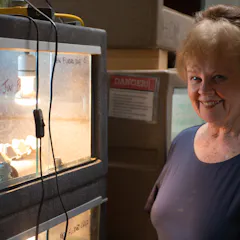
The 2017 Prime Minister’s Science Prize winner is genetic researcher Professor Jenny Graves, well known for her 2002 suggestion that the male Y chromosome will self-destruct.

Genetic evidence has become a critical aspect of modern criminal investigations. What are the methods and approaches used in present-day DNA forensics?

What produces the differences between men and women? Are they trivial or profound? Are they genetic or environmental, or both? And are men really closer genetically to chimpanzees than to women?

The Y chromosome, that little chain of genes that determines the sex of humans, is not as tough as you might think. In fact, if we look at the Y chromosome over the course of our evolution we’ve seen it…
Top contributors
-
 Jenny Graves is a Friend of The Conversation.
Distinguished Professor of Genetics and Vice Chancellor's Fellow, La Trobe University
-
Lecturer, Business School & Centre for Policy Futures, The University of Queensland
-
Research fellow, The University of Queensland
-
Postdoctoral fellow, University of Pretoria
-
Chair, The Conversation Media Group
-
Investigador científico del CSIC, Centro Nacional de Biotecnología (CNB - CSIC)
-
Professor of Internal Medicine, University of Virginia
-
Professor of Microbiology and Immunology, Indiana University
-
Professor in Genetics, University of Pretoria