
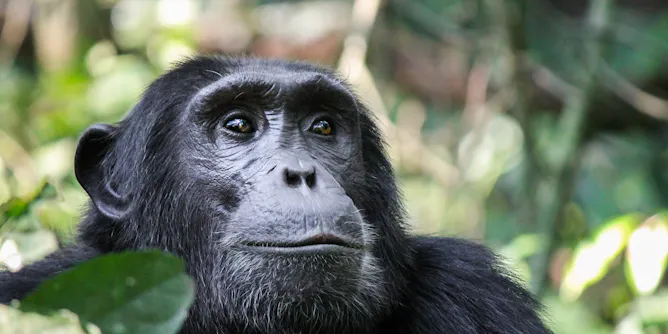
Human-to-ape disease transmission is thought to be a severe threat to the survival of great apes.
Articles on Chimpanzees
Displaying 41 - 60 of 85 articles
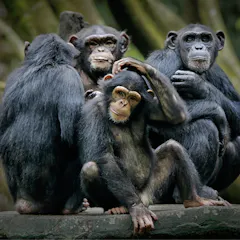
Our closest relatives show distinct cultural behaviour in different populations. But those differences are being erased.
An Ig Nobel Prize-winning study suggests we need to rethink why imitation evolved.
Somewhere along our evolutionary path, we lost the ability to defend against hepatitis C. But not all humans lost this ability.
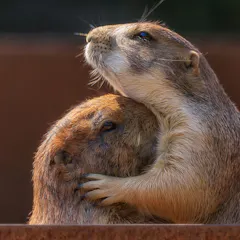
A growing body of evidence points to how animals are aware of death, can experience grief and will sometimes mourn for or ritualize their dead.
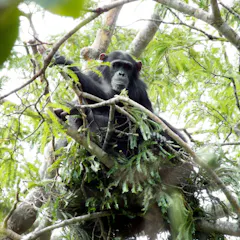
Early hominins are thought to have made a new shelter every night, which taught them how to adapt to changing conditions.
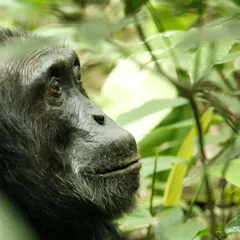
The medicinal plants that chimpanzees feed on in the wild could hold the key in dealing with common diseases.
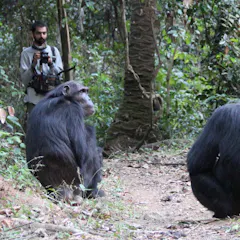
Do chimpanzee talk to each other? Scientists follow and record chimpanzees in the wild to find out – and to fill in details about how human language might have evolved.
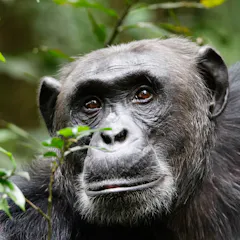
The short answer is no. An individual of one species cannot, during its lifetime, turn into another species. But your question helps us think about life, evolution and what it means to be human.
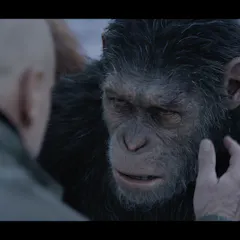
Using real apes and monkeys as actors in film and TV encourages people to see them as pets.

Wild chimpanzees are hard to find, but their DNA – left-behind genetic traces – are opening up a new way of studying them.
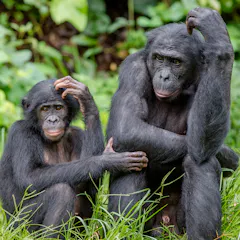
Scientists say humans are pretty similar to chimpanzees, gorillas and orangutans. So why don’t we have fur like they do?
A collection of The Conversation Global’s best articles on animals, from glow-in-the-dark frogs to the wood beetles that do humanity’s dirty work.
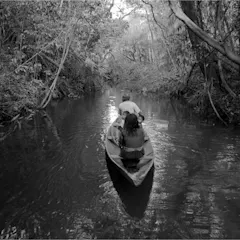
From the Amazon to Nicaragua, there are humans who never learn numbers. What can these anumeric cultures teach us about ourselves?
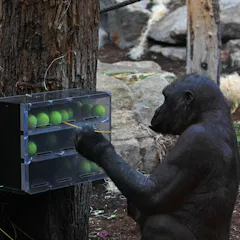
Our secret? We’re better at sharing our ideas.

How do scientists figure out when evolutionary events – like species splitting away from a common ancestor – happened? It turns out our DNA is a kind of molecular clock, keeping time via genetic changes.
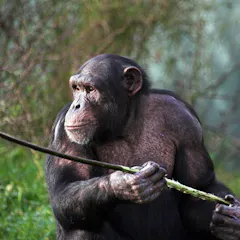
New, fascinating observations about the behaviour of wild chimpanzees showed that they can apply a complex technique to access honey.
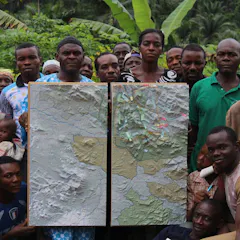
Combining new technologies, including Global Forest Watch, a Forest Monitoring App and Participatory 3D Modelling, brings out traditional knowledge of the elders.
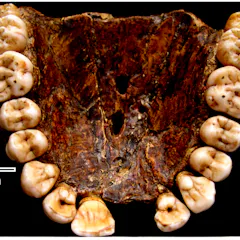
Anthropologists gather clues about how our ancient ancestors lived from their teeth. What will future anthropologists make of us based on the fossilized pearly whites we’ll leave behind?
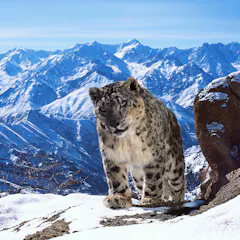
The most recent episode of the BBC’s Planet Earth II has got people asking some hard questions about the world’s most mysterious big cats.
Top contributors
-

Asso. Professor in Anthropology, University College London, UCL
-
Lecturer in Wildlife Conservation
-
Professor of Evolutionary Biology and Science Engagement, University of East Anglia
-
Professor of Wildlife Conservation, University of Salford
-
Postdoctoral researcher, Osnabrück University
-
Research Fellow, Primate Models for Behavioural Evolution Lab, University of Oxford
-
Mark Elgar is a Friend of The Conversation.
Emeritus Professor of Evolutionary and Behavioural Ecology, The University of Melbourne
-
PhD Researcher, Plymouth Marjon University
-
Assistant Professor of Psychology, Johns Hopkins University
-
Professor of Cognitive Neuroscience, Georgia State University
-
Lecturer, California State University, Long Beach
-
Postdoctoral Scientist in Human Paleobiology, George Washington University
-
Professor of Viral Hepatitis, University of Glasgow
-
PhD in Ecological Systems of Cooperation, UCL
-
Associate Professor, Ecology, Northumbria University, Newcastle