
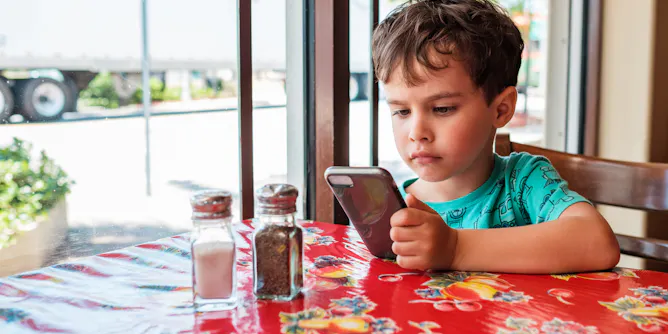
Rapid movement, abrupt edits and dynamic sound capture attention automatically.
Articles on Children online
Displaying 1 - 20 of 34 articles

We need a deeper understanding of what exactly children’s safety and wellbeing online looks like.

The media have been freaking out about children’s use of technology since at least the days of radio, and it doesn’t make parenting decisions any easier.

All experts expressed broader concerns about the upcoming age restrictions for social media users in Australia.

Kids who play Roblox games describe ‘scary’ virtual currencies and ‘cash grab’ random rewards.

In China, many people see video games as ‘spiritual opium’. However, laws restricting young people’s play have proven difficult to enforce in practice.
Roblox has just made some changes to its wildly popular gaming platform that could actually make it safer and better for kids.

Many parents will use strategies to minimise potential privacy risks, such as by blurring their children’s faces in online posts. But is that enough?
Australia is set to ban kids under 16 from social media. Depending on the definition, online games with social features could be in the firing line – which would be detrimental.

The Albanese government has announced a plan to ban kids under 16 from social media. There’s no explanation why this age was chosen, and the decision flies in the face of expert advice.

Meta has revised how teenagers will experience Instagram. It’s a win – especially if it prompts parents to talk to their kids about online safety.

Experts know simply banning kids from social media isn’t going to protect them from harm – but there’s lots of evidence on what we can do instead.

There’s ever-evolving ways for children and young people to be harmed online. Here’s what kids think about the harms they experience and how to prevent them.

Children under 14 would be banned from social media, while teens aged 14–15 would need parental consent. But this law will be challenging to implement.

Meta wants Apple and Google to force parents to approve apps on their child’s phone. A better solution would be for the tech giants to cooperate.

It’s neither practical nor helpful to keep children and teens off the internet in a hyper-connected, digital world.

The online games platform has nearly 80 million daily users and primarily targets children. However, like many large platforms, it has trouble moderating harmful content.

Major tech platforms have been given six months to come up with an enforceable code that protects children from harmful material online. What might that look like?
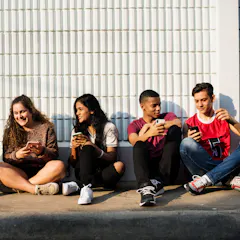
Regulating how kids access the internet – including social media – must balance protection from harm with children’s rights to expression and information.

There are various methods for estimating or verifying an online user’s age, none of them foolproof. Importantly, is this the social media future we want?
Top contributors
-

Professor of Information Sciences & Director, Social Change Enabling Impact Platform, RMIT University
-
Researcher, Digital Wellbeing, Western Sydney University
-
Professor in Human-Computer Interaction, ARC Future Fellow, University of Sydney
-
Associate Professor in Law, Australian National University
-
Senior Lecturer, Communication, Edith Cowan University
-
Professor of Cybersecurity, School of Computing and Information Systems, The University of Melbourne
-
Professor of Internet Studies, Curtin University
-
Co-Director, Young and Resilient Research Centre/Professorial Research Fellow, Institute for Culture and Society, Western Sydney University
-
Postdoctoral research fellow, RMIT University
-
Assistant Professor, Georgia State University
-
Associate Professor of Education, Charles Sturt University
-
Senior Lecturer in Management Systems, University of Hull
-
Professor, Canada Research Chair in Determinants of Child Development, Owerko Centre at the Alberta Children’s Hospital Research Institute, University of Calgary
-
PhD Student in Psychology, Neuroscience and Behavioral Genetics, University of Colorado Boulder
-
Professor of Management, University of North Carolina – Greensboro