
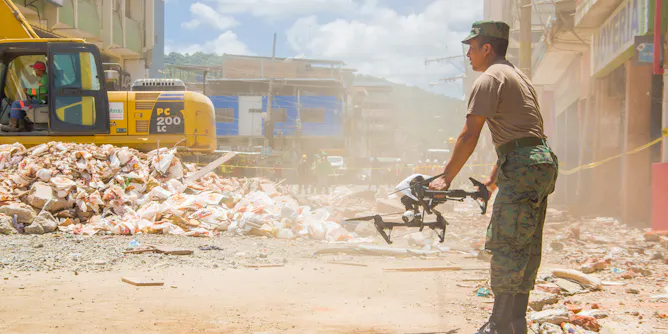
Stand by for drones, robots and sensors to the rescue.
Articles on Chernobyl
Displaying 41 - 60 of 60 articles
In recent years, the number of people traveling to sites of death, natural disaster, acts of violence, tragedy and crimes against humanity has dramatically increased. Is it immoral?
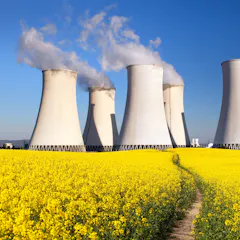
The next generation of reactors provide in-built safety systems and a way to reuse old fuel.

This year saw nuclear weapons tested, stockpiles renewed, and disasters remembered.

The Royal Commission into Institutional Responses to Child Sex Abuse has documented heart-rending testimonies and elicited shattering revelations. But how does a society witness itself failing at its most fundamental duty?

Disaster tourism and obsessions with sites of death and destruction can be a learning experience, not just voyeurism.
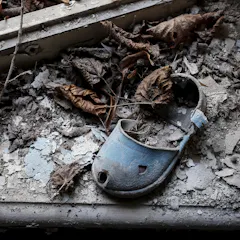
Chernobyl is already responsible for up to 5,000 cases of cancer in Europe.

The meltdown at the Chernobyl Nuclear Power Plant in 1986 exposed 572 million people to radiation. No other nuclear accident holds a candle to that level of public health impact.

How do we measure long-term impacts of nuclear accidents? Studies at Chernobyl and Fukushima show that radiation has harmed animals, birds and insects and reduced biodiversity at both sites.
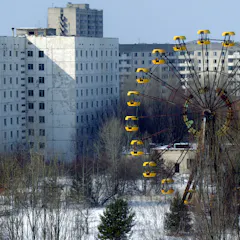
Chernobyl’s liquidators have come up with some intriguing ways of dealing with what they’ve gone through – without directly confronting painful memories.
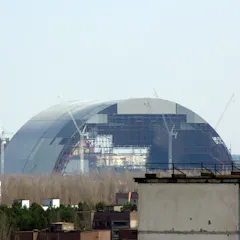
Engineers have devised an innovative way to dismantle Chernobyl’s reactor while preventing further radiation escaping.
Small nuclear reactors are one step closer to powering the UK’s future energy requirements.
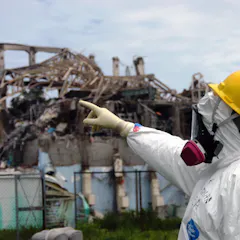
Estimating health impacts after a nuclear accident is more complicated than you might think.
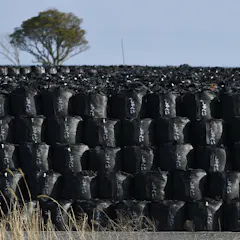
The nuclear operator was nowhere near adequately covered for the disaster. And it’s not just a Japanese problem.

Employing a unique literary method that blurred the genres of oral history and documentary prose, the Nobel Prize for Literature winner told the stories of a traumatized people.
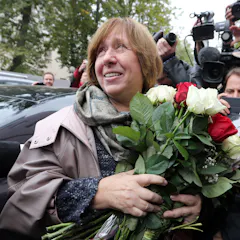
The Belarussian is a worthy winner, but the Nobel is getting further and further away from its lofty origins.
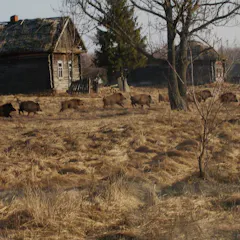
Elk, deer and wolves are becoming increasingly common in Chernobyl.

Any nuclear weapon exchange or major nuclear plant meltdown will immediately lead to a global public health emergency. What can we learn from past events to help prepare?
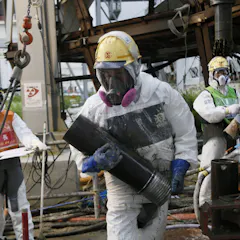
Is nuclear power worth it? No, says Mark Diesendorf – it’s never been a major world energy force, it has caused huge accidents, and its greenhouse emissions are higher than many people realise.
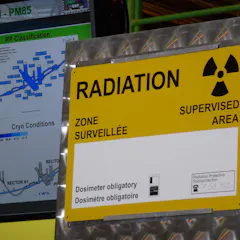
Radiation is everywhere. We catch it from the sun’s rays in the sky, and from the rocks beneath our feet. It comes from television sets, radios and mobile phones. We absorb it from certain fruits, vegetables…
Top contributors
-

Profesor Titular de Zoología / Associate Professor of Zoology, Universidad de Oviedo
-
Reader in Applied Ecology, University of Salford
-
Directeur du Centre de recherche sur les risques et les crises et chercheur au sein du Collège des Sciences Navales, Mines Paris - PSL
-
Investigador postdoctoral Juan de la Cierva Incorporación, Estación Biológica de Doñana (EBD-CSIC)
-
Professor of Environmental Science, University of Portsmouth
-
Professor of Biological Sciences, University of South Carolina
-
Research Fellow in nuclear waste disposal, University of Sheffield
-
Professor of Intelligent and Self-Organising Systems, Imperial College London
-
Lecturer in Peace Studies and International Development, University of Bradford
-
Associate Professor, Creative Writing, The University of Melbourne
-
Sociologue, IMT Atlantique – Institut Mines-Télécom
-
Post-doctoral Teaching Fellow in Literature & Languages, University of Stirling
-
Professor of English, University of Sussex
-
Timothy J. Jorgensen is a Friend of The Conversation.
Director of the Health Physics and Radiation Protection Graduate Program and Professor of Radiation Medicine, Georgetown University
-
Deputy Section Head Section of Environment and Radiation at IARC, International Agency for Research on Cancer (IARC)