
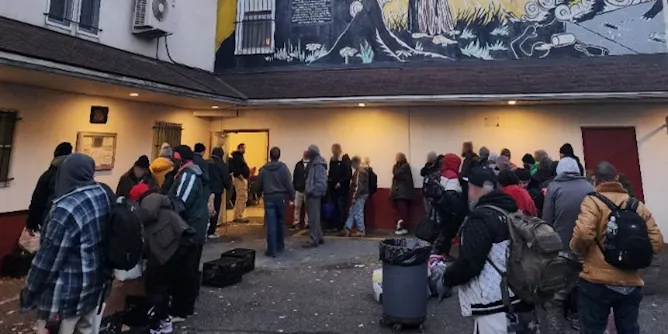
For 50 years, St. Francis Inn in Philadelphia has served the poorest and most vulnerable people in Kensington.
Articles on Character virtue
Displaying 21 - 40 of 47 articles

Love and hate seem like obvious opposites – but for philosophers of virtue, it’s not so simple.

The reasons colleagues stay silent when co-workers are mistreated may not be what you assume − and it’s not what companies typically spend money on in their efforts to create a fair environment.

Armed with new tools that reveal patterns of connection between brain areas, researchers are gaining clearer insights into how the brain regulates behavior.
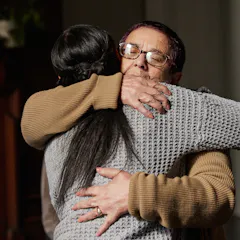
Forgiveness is key to relationships – but it’s not as simple as deciding you’d like to forget and move on. A counselor breaks down misconceptions.

Philosophers from Aristotle to Nietzsche have debated whether being virtuous only helps others, or if it benefits the virtuous person, too.

Though they lived centuries apart, Aristotle and Tsunetomo both explored what it means to live virtuously, and the risks of wanting praise or recognition.

Managing fire risk is about more than regulations and rules. It’s also about caring for neighbors and taking steps on your own property and in your community to help keep neighbors safe.
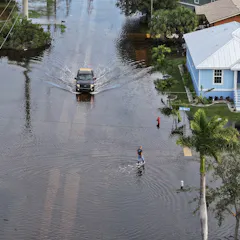
Real skeptics study the evidence and ask questions, rather than taking political dogma on faith. Experiencing disasters can open more eyes to the risks.

Obituaries reveal shifting cultural values across time and place. Here’s a glimpse into how the moral vocabulary has evolved over several decades.

If you view intrinsic motivation as a virtue, you likely judge yourself and your co-workers by ‘passion’ – which can backfire.

A psychology team distills the 6 principles of ‘consumer wisdom’: a set of habits that promotes well-being by aligning our values and behaviors.

Whichever side of an issue you’re on, it’s likely that at the root of what gets you fired up are deep, fundamental human fears about mortality, moral responsibility and meaning.

Kant’s 3 rules can offer a helpful check as to whether we are not only living well but thinking well.

Friendship isn’t a tit-for-tat balance sheet, but that’s how researchers have traditionally defined it. New studies are refining the model to be less about transactions and truer to real life.

Virtual reality might seem like an unlikely way to help kids develop empathy, but the right VR environment can do just that.

You don’t need to be a rebel to defy. Defiance isn’t about personality, it’s a practice – one that’s becoming essential in workplaces, politics and everyday life.

A polar scientist explains the changes hunters who rely on the ice are seeing off Utqiagvik, and how those shifts are echoed in satellite data and climate models.

Trying to change someone’s mind can seem futile. But there are approaches to political discourse that still matter, even if they don’t instantly win someone over.

The kind of power that motivates a leader shapes their behavior, two management scholars write.
Top contributors
-

Assistant Teaching Professor of Philosophy, Missouri University of Science and Technology
-
Research and Assessment Scholar, Wake Forest University
-
Postdoctoral Fellow and Visiting Assistant Professor of Government, Hamilton College
-
Professor of Philosophy, USC Dornsife College of Letters, Arts and Sciences
-
Assistant Professor of Psychological Science, Boise State University
-
Associate Director of the Huntington-USC Institute on California and The West, USC Dornsife College of Letters, Arts and Sciences
-
Assistant Professor of Social Psychology, University of Utah
-
Associate Professor of Psychology, Arizona State University
-
Professor of Economics and Environmental Studies, Wesleyan University
-
Professor of History, USC Dornsife College of Letters, Arts and Sciences
-
Associate Professor Emeritus of Management, Binghamton University, State University of New York
-
Lecturer of Public Administration and Policy, Binghamton University, State University of New York
-
Research Associate Professor of Nursing and Health Innovation, Arizona State University
-
Distinguished Professor of Counselor Education, University of Mississippi
-
Assistant Professor of Psychology, Arizona State University