
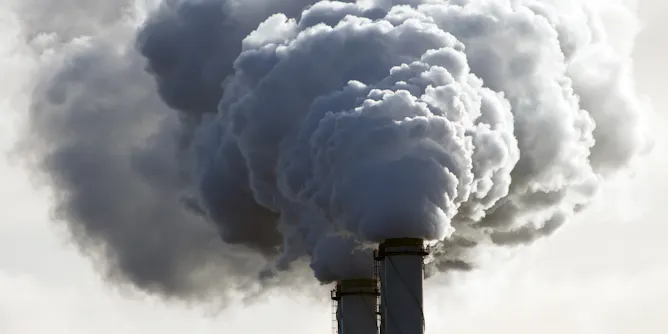
Environmentalists have long been sceptical of carbon capture and storage, which began in the oil and gas industry. But there’s nothing else like it for storing emissions from industry.
Articles on CCUS
Displaying all articles
Carbon capture is turning the oil and gas industry into a critical player for mitigating climate change – while its products continue to heat up the planet.

The combination of the source of the CO₂ and its end use determines its environmental and economic benefits or consequences.
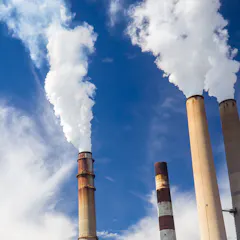
Fossil fuel power plants can avoid most emissions by capturing carbon dioxide and pumping it underground. But to be a climate solution, that carbon has to stay stored for thousands of years.
The recently released Emissions Reductions Plan aims to put Canada on track to reduce emissions by up to 45 per cent from 2005 and reach net-zero emissions by 2050. It will do neither.

Canada has emerged as a leader among its G20 peers in terms of green fiscal stimulus spending and policies.

Canada’s greenhouse gas emissions decreased by only one per cent between 2005 and 2019. A new climate plan charts the path to deep cuts in carbon emissions in only eight years.

A tax credit for companies that invest in carbon capture technology would divert financing away from cheaper and safer climate solutions.

Carbon capture technologies have been labelled as a distraction. But as we enter the all-hands-on-deck phase of tackling climate change, they must not be ignored.

A large-scale survey asked people exactly that. One use of recycled carbon dioxide stood out.
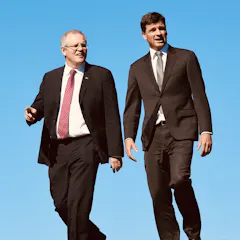
We cannot rely on technology development alone to deeply cut Australia’s emissions. Other policies and more money will be needed.

It may be just as well the UK government scrapped its previous carbon capture competition.
Top contributors
-

Professor of Advanced Energy Research, Director of the Global CO2 Initiative, University of Michigan
-
Adjunct professor, Environment and Sustainability, University of Saskatchewan
-
Professor of Political Science, University of British Columbia
-
Professor of Psychology, Biological Sciences and Environmental Studies, USC Dornsife College of Letters, Arts and Sciences
-
Professor, Crawford School of Public Policy and Director, Centre for Climate and Energy Policy, Australian National University
-
Distinguished Professor in Chemistry and Renewable Energy, RMIT University
-
Adjunct Professor of Environmental Communication, Tulane University
-
Assistant professor, Arizona State University
-
Professor of Engineering and Director of the Center for Negative Carbon Emissions, Arizona State University
-
Post-Doctoral Research Fellow, Peter B. Gustavson School of Business, University of Victoria
-
Associate Professor of Finance, Gustavson School of Business, University of Victoria
-
Associate Professor, School of Public Administration, University of Victoria
-
Professor in Chemical Engineering, University of British Columbia
-
PhD student, USC Dornsife College of Letters, Arts and Sciences
-
Interdisciplinary Director for Energy Transition & Professor of Geoscience, University of Aberdeen